


AI Generated Summary
- Early on 21 August, a 27-year-old man with a documented history of violence—released from federal prison only the previous day—entered Nanaksar Gurdwara in Edmonton during morning prayers and stabbed two men, including a priest and a longtime volunteer.
- Canadian Security Intelligence Service reports have stated that a small group of Canada-based Khalistani extremists continues to pose a national security concern by using the country as a base to promote, fundraise for, or plan violence directed primarily at India.
- Across Canada, the United Kingdom, the United States, and Australia, Sikhs have built businesses, filled critical roles in transport, healthcare, and agriculture, and practised the principle of seva through langar kitchens open to all.
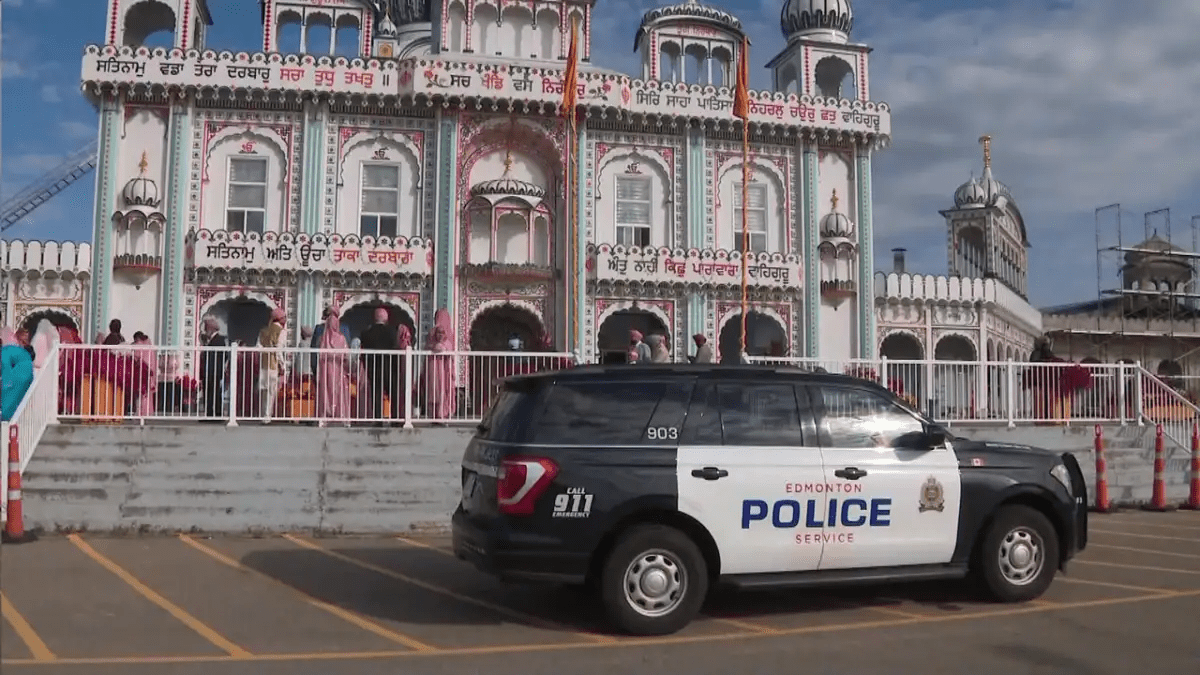
In the space of a few days in August 2026, two Canadian Gurdwaras became the focus of fear. The Dashmesh Culture Centre in Calgary received repeated phone calls threatening demolition. Callers claimed heavy equipment was on its way and urged people to clear the premises. A second Calgary Gurdwara received a similar threat. Police increased security and investigated while local leaders condemned the intimidation. Then, early on 21 August, a 27-year-old man with a documented history of violence—released from federal prison only the previous day—entered Nanaksar Gurdwara in Edmonton during morning prayers and stabbed two men, including a priest and a longtime volunteer. Both suffered non-life-threatening injuries. Witnesses restrained the attacker. Police are examining whether hate played a role.
These events should unite every Sikh in concern. Places of worship must remain inviolable. No community should live under threat. Yet the incidents also force a harder question that many prefer to avoid: why does a community with such a strong record of constructive contribution find itself repeatedly associated, in Western public perception, with violence, organised crime, and political extremism?
The larger Sikh story in the West is one of achievement. Across Canada, the United Kingdom, the United States, and Australia, Sikhs have built businesses, filled critical roles in transport, healthcare, and agriculture, and practised the principle of seva through langar kitchens open to all. During the pandemic and natural disasters, Gurdwaras and Sikh organisations fed tens of thousands of people regardless of background. Political representation has been significant relative to population size. This record of hard work, enterprise, and service is real and deserves recognition. It is the lived experience of the overwhelming majority.
A minority, however, has damaged that reputation in ways that are measurable and visible. In British Columbia, organised crime groups drawing heavily from young men of Punjabi background have been major players in the drug trade for years. Rival networks have fought for control of cocaine, fentanyl, and methamphetamine routes, producing more than 200 gang-related homicides in the province since 2007. South Asian Canadians have accounted for roughly one-fifth of gang-related deaths in multi-year periods despite forming a much smaller share of the population. Large-scale seizures continue—hundreds of kilograms of drugs, sophisticated production labs, and significant arsenals of firearms. Extortion rackets targeting South Asian businesses have become systematic in parts of British Columbia, Alberta, and Ontario, using threats, shootings, and arson. Canadian and American authorities have repeatedly charged individuals of Punjabi origin in trafficking, weapons offences, and violence linked to these networks.
Migration pathways have compounded the problem. Significant numbers of young people from Punjab have arrived on student visas. Official reporting has documented fraud, overstays, and subsequent criminal charges among study-permit holders. Between 2019 and 2023 alone, thousands of Indian study-permit holders faced criminal charges in Canada, with a substantial portion classified as serious or organised-crime related. Some networks have drawn financially vulnerable arrivals into extortion and violence. These patterns are not inventions of hostile media. They appear in police statistics, border agency assessments, and court records.
Alongside the criminality sits a political fringe that has made itself highly visible. Canadian Security Intelligence Service reports have stated that a small group of Canada-based Khalistani extremists continues to pose a national security concern by using the country as a base to promote, fundraise for, or plan violence directed primarily at India. CSIS distinguishes this clearly from lawful, non-violent advocacy. Yet the public face of the fringe often includes posters glorifying individuals designated as terrorists, separatist flags at religious processions, and rhetoric that frames past violence as martyrdom. Some Gurdwaras have become platforms for this agenda. Leadership contests and political mobilisation turn places of worship into arenas for a distant separatist project. Local politicians are courted for electoral advantage on issues that have little relevance to the daily concerns of most citizens in those cities. The result is predictable: sections of the host population conclude that imported conflicts and the celebration of violence are being normalised within the community.
This combination—organised crime involving young men from the community, illegal migration pathways feeding vulnerability and recruitment, and the open politicisation of Gurdwaras by separatist elements—creates a damaging public impression. It suggests to many Western observers that criminality and militancy are more mainstream than they actually are. The hardworking majority pays the price in reputation and, at times, in heightened security concerns and social friction.
Protecting the community’s future in the West requires clarity rather than defensiveness. Gurdwaras should remain centres of faith, education, and service, not stages for separatist mobilisation or soft tolerance of criminal networks. Unequivocal rejection of drug trafficking, extortion, fraud in immigration channels, and the glorification of terrorists is consistent with Sikh values of justice, honest living, and responsibility. It is also necessary for the community’s own security and standing. Host societies have every right to expect that religious institutions will not be used to advance violent political agendas or shield those engaged in serious crime.
The threats in Calgary and the attack in Edmonton are unacceptable. They also serve as a reminder that reputation is shaped by the loudest and most visible actions. The majority of Sikhs who contribute constructively deserve institutions and leadership that defend that record by confronting the problems within. Silence or deflection will not do it. Honest self-examination will.
