


AI Generated Summary
- From the graceful Sarus Crane to thousands of winter visitors from distant lands, this community-protected wetland in Gurdaspur is a remarkable example of biodiversity conservation and the enduring relationship between people and nature.
- Situated in the Bari Doab region between the Ravi and Beas rivers, approximately 15 kilometres from the Pakistan border, the wetland differs from several other prominent water bodies in Punjab.
- Regarded as the tallest flying bird in the world, the species can reach a height of approximately 1.
From the graceful Sarus Crane to thousands of winter visitors from distant lands, this community-protected wetland in Gurdaspur is a remarkable example of biodiversity conservation and the enduring relationship between people and nature.
As winter approaches the plains of Punjab, a quiet transformation unfolds in the marshlands of Keshopur. The still waters begin to echo with the calls of migratory birds, while flocks arriving from distant northern landscapes turn this otherwise tranquil wetland into a thriving sanctuary of life.
Located in Gurdaspur district, close to the India-Pakistan border, Keshopur Chhamb is much more than a seasonal refuge for birds. It represents a significant chapter in India’s conservation history, having earned recognition as the country’s first notified community reserve. Its ecological importance received international acknowledgement in 2019, when it was designated a Ramsar site under the global convention for the protection of wetlands.
What makes Keshopur particularly remarkable is the role played by local communities in its preservation. Unlike conventional wildlife sanctuaries managed primarily through government ownership and regulation, a community reserve allows local people and private landowners to participate directly in protecting natural habitats.
The reserve owes its existence to the collective contribution of five neighbouring villages—Keshopur, Miani, Dala, Matwa and Magarmudian—which made land available for conservation. Their involvement has helped establish a model in which traditional livelihoods and ecological protection can coexist.
A Last Refuge for Punjab’s Sarus Crane
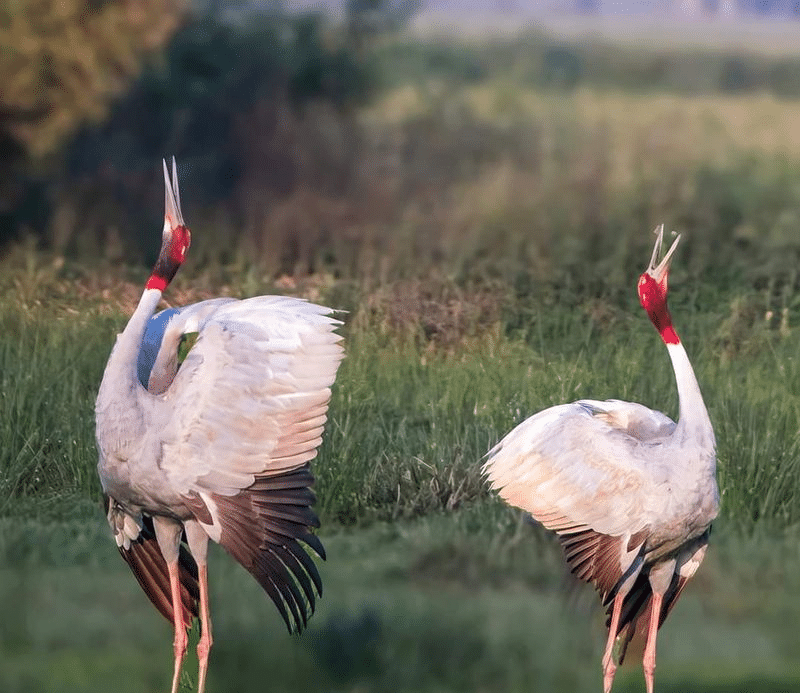
Among the many species associated with Keshopur, none is perhaps more emblematic than the Sarus Crane. Regarded as the tallest flying bird in the world, the species can reach a height of approximately 1.8 metres. Its imposing stature, elegant grey body and distinctive crimson head and upper neck make it an unmistakable presence in the landscape.
Keshopur holds particular significance as one of Punjab’s last remaining strongholds for this magnificent bird.
Beyond its physical appearance, the Sarus Crane occupies a special place in the cultural imagination of the Indian subcontinent. Known for forming enduring pair bonds, the bird has long been associated with loyalty, companionship and marital devotion.
Its courtship rituals are equally extraordinary. Pairs engage in synchronised movements, spreading their wings, leaping into the air and calling to one another in resonant, trumpet-like notes. These elaborate displays are among the most fascinating behaviours observed in wetland birds.
The cranes depend on shallow marshes and adjoining habitats for sustenance, feeding on aquatic plants, roots, tubers, insects, crustaceans and small vertebrates. Their continued presence at Keshopur underlines the importance of preserving the wetland’s delicate ecological balance.
A Winter Haven for Birds from Across Asia
With the arrival of colder weather in northern Asia, Keshopur becomes a temporary home to thousands of migratory birds escaping the harsh conditions of their breeding grounds.
Situated along the Central Asian Flyway, one of the world’s major migratory bird corridors, the wetland receives avian visitors from regions including Siberia, Central Asia and the Tibetan Plateau.
Among the species commonly recorded during winter are the Gadwall, Common Teal, Northern Pintail, Northern Shoveler, Eurasian Wigeon, Bar-headed Goose and Common Crane.
For these birds, the marshland offers an essential combination of food, shelter and relatively undisturbed resting grounds during their seasonal journeys.
Wildlife officials have indicated that the winter bird population could reach approximately 15,000, potentially setting a new record for the reserve. Anjan Singh, District Forest Officer (Wildlife), Pathankot, who also holds additional charge of Gurdaspur, has linked expectations of higher bird numbers to broader weather conditions influencing migration.
Such seasonal congregations highlight the wetland’s importance not merely as a local conservation area but as part of an interconnected network of habitats supporting bird populations across international boundaries.
An Ecosystem Sustained by Rainfall
Keshopur’s ecological character is closely connected to its geographical setting.
Situated in the Bari Doab region between the Ravi and Beas rivers, approximately 15 kilometres from the Pakistan border, the wetland differs from several other prominent water bodies in Punjab.
While many wetlands rely substantially on river inflows, Keshopur is sustained largely by monsoon rainfall, surface runoff and groundwater recharge.
This dependence on natural rainfall makes the marshland especially sensitive to variations in precipitation, groundwater conditions and changes in surrounding land use.
Its aquatic vegetation plays a crucial role in maintaining the health of the ecosystem. Far from being an incidental feature of the landscape, these plants help filter water, retain moisture, regulate nutrients and stabilise the wetland’s margins.
The vegetation also provides shelter, breeding areas and feeding grounds for numerous organisms, supporting an intricate web of life extending far beyond the migratory birds that attract public attention.
Wetlands such as Keshopur also contribute to carbon storage, water regulation and the maintenance of local biodiversity, making their ecological value considerably greater than their geographical size might suggest.
Conservation Rooted in Community Participation
Perhaps the most compelling aspect of Keshopur’s story is the relationship between the wetland and the villages surrounding it.
For generations, local communities have lived alongside these marshes, drawing upon their natural resources while remaining closely connected to the seasonal rhythms of the landscape.
The community reserve framework seeks to preserve this relationship by encouraging sustainable use of resources alongside active wildlife protection.
Residents, conservation organisations, birdwatchers and wildlife authorities all have a stake in ensuring that the habitat remains healthy.
This collaborative approach is particularly relevant at a time when wetlands across India face mounting pressures from changing land-use patterns, pollution, encroachment and disruption of natural water systems.
Keshopur demonstrates that conservation need not always involve separating human communities from nature. Instead, the participation of those who live closest to an ecosystem can become one of its strongest safeguards.
Nevertheless, continued protection requires careful attention to water availability, habitat quality and the pressures generated by surrounding human activity.
From Neglected Marshland to Ecological Treasure
Not long ago, wetlands were frequently regarded as unproductive stretches of waterlogged land, suitable for drainage, agricultural expansion or construction.
That perception has gradually changed as scientific understanding has revealed the essential services these ecosystems provide.
Wetlands help moderate floods, improve water quality, support groundwater systems and sustain a remarkable diversity of plants and animals. They also provide critical resting and feeding habitats for migratory species whose survival depends on the availability of suitable wetlands across vast geographical distances.
Keshopur Chhamb embodies this changing understanding.
Its international recognition, exceptional birdlife and community-led conservation model have transformed the way this marshland is valued.
Yet its greatest significance may lie in the lesson it offers for the future: protecting biodiversity is not simply about preserving individual species or picturesque landscapes. It is about maintaining the natural systems upon which wildlife and human communities alike depend.
As the calls of wintering birds once again fill the air over Keshopur, the wetland stands as a reminder that some of nature’s most valuable landscapes are also among its most easily overlooked.
In a world where natural habitats are steadily disappearing, Keshopur Chhamb offers both a warning and a possibility—a warning against taking fragile ecosystems for granted, and a possibility that conservation, when supported by local communities, can secure a living natural heritage for generations to come.