


AI Generated Summary
- Finding Khalistan is a timely reminder that the greatest threat to the Sikh community’s dignity is not external prejudice alone, but the internal rot of an ideology that betrays both the faith and the people it claims to champion.
- The Gurus taught courage in the service of justice and truth, not perpetual grievance in the service of a map that never existed and a state that the vast majority of Sikhs do not want.
- The result is Finding Khalistan, a documentary co-presented with Guneet Singh that traces the movement from the blood-soaked aftermath of Partition through the 1980s insurgency to its present-day echo chambers in the West.
Two years after pro-Khalistan radicals stormed the Sabha Mandir in Brampton, attacking devotees with sticks and flagpoles during a consular camp, Canadian journalist Daniel Bordman found himself unexpectedly at the centre of the story. CBC’s framing of the violence as somehow revolving around him sparked a two-year global investigation. The result is Finding Khalistan, a documentary co-presented with Guneet Singh that traces the movement from the blood-soaked aftermath of Partition through the 1980s insurgency to its present-day echo chambers in the West.
After the attack on the Hindu Sabha Mandir two years ago the CBC decided that it was a story about me for some reason. What followed was a 2 year journey across the world to film a documentary. Here is your first look at FINDING KHALISTAN: https://t.co/TtMEZxxCSl
— Daniel Bordman (@DanielBordmanOG) October 16, 2026
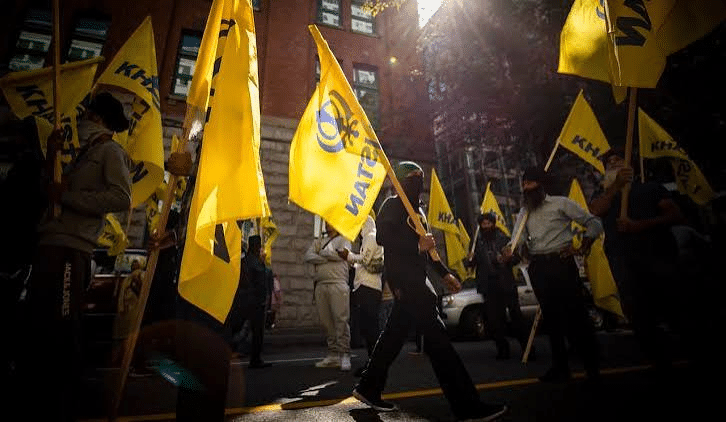
The film arrives at a moment when the cost of this ideology is impossible to ignore. Khalistan is not a legitimate expression of Sikh aspiration. It is a political project that has repeatedly turned violent, that has been sustained by external patrons, and that stands in direct contradiction to the core teachings of the Gurus. Guru Nanak rejected religious bigotry and political division; the Guru Granth Sahib repeatedly stresses the oneness of humanity (“Na koi bairi nahin begana”). The Khalsa was created to defend the oppressed, not to carve out an ethno-religious state through terror and intimidation. Modern Khalistani activism—temple attacks, glorification of terrorists, and “referendums” staged in Canadian community centres—bears no resemblance to that spiritual and ethical inheritance.
For the overwhelming majority of Sikhs, both in India and in the diaspora, the movement is a liability rather than a cause. In Punjab it has negligible electoral support. In Canada, former British Columbia premier Ujjal Dosanjh has repeatedly stated that less than five per cent of Canadian Sikhs endorse it; most simply want to work, raise families, and practise their faith without being tarred by association. Yet the loud minority has succeeded in equating “Sikh” with “Khalistani” in the public mind. The result is a global reputational tax paid by ordinary Sikhs: the hard-working truck drivers, entrepreneurs, soldiers, and professionals whose community is known for seva and prosperity now find their identity co-opted by those who traffic in grievance and, in some cases, organised crime.
The Brampton attack was only the most visible symptom. It formed part of a pattern of intimidation directed at Hindu places of worship and Indian diplomatic events, often accompanied by explicit calls from figures such as Gurpatwant Singh Pannun. When such incidents occur, moderate Sikh voices are drowned out by fear of reprisal and by media outlets that treat the fringe as representative. Bordman’s documentary appears designed to cut through that distortion by examining the historical record, the political incentives, and the human consequences rather than repeating activist talking points.
Khalistan has already extracted a heavy price in blood—from the Air India bombing to the years of militancy in Punjab. Its continued promotion in Western capitals does not advance Sikh interests; it isolates the community, invites suspicion, and distracts from the real challenges of integration, youth radicalisation, and the drug-and-gang networks that some reports now link to separatist funding. The Gurus taught courage in the service of justice and truth, not perpetual grievance in the service of a map that never existed and a state that the vast majority of Sikhs do not want. Finding Khalistan is a timely reminder that the greatest threat to the Sikh community’s dignity is not external prejudice alone, but the internal rot of an ideology that betrays both the faith and the people it claims to champion.