

AI Generated Summary
- is Washington genuinely reforming a flawed immigration system, or is it sacrificing a strategically valuable partnership for domestic political gains.
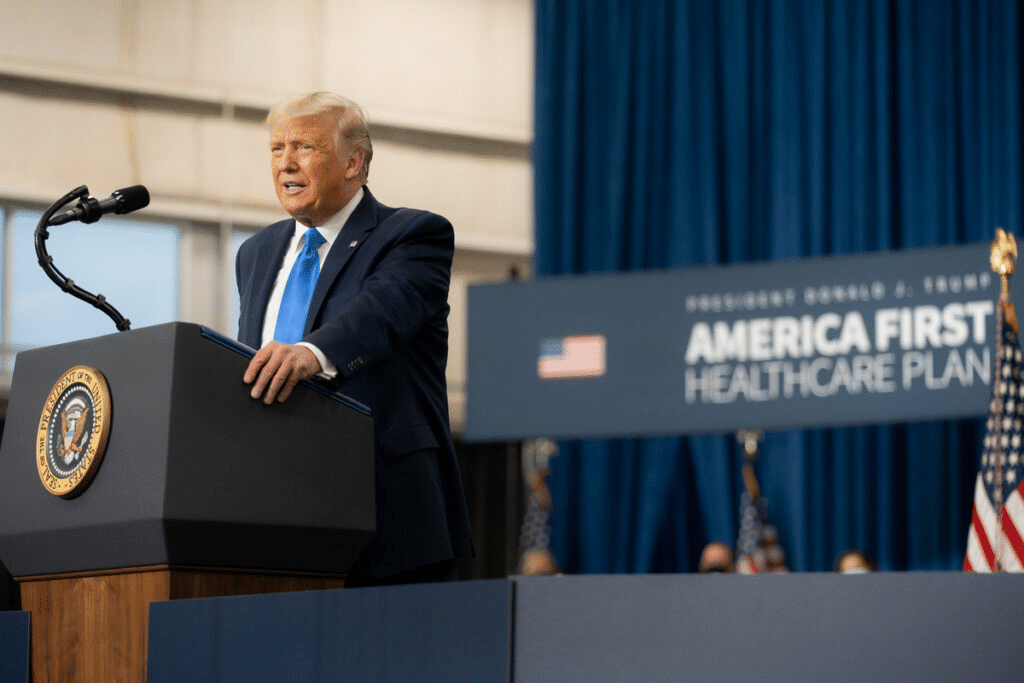
- Under the banner of “America First”, the Trump administration has defended its immigration restrictions as necessary measures to protect American workers, eliminate visa fraud and discourage the misuse of foreign labour.
- Washington’s H-1B crackdown may appeal to domestic political sentiment, but in attempting to protect American jobs, the United States risks undermining one of its most consequential strategic and economic relationships.
Washington’s H-1B crackdown may appeal to domestic political sentiment, but in attempting to protect American jobs, the United States risks undermining one of its most consequential strategic and economic relationships.
For decades, the United States has built much of its economic and technological supremacy on a simple proposition: the world’s brightest minds should find their greatest opportunities on American soil. From Silicon Valley to leading research institutions, this openness has helped transform the country into an unrivalled centre of innovation. Yet Washington’s increasingly restrictive approach to the H-1B visa programme now threatens to undermine that very advantage, while placing an extraordinary strain on its relationship with India.
Under the banner of “America First”, the Trump administration has defended its immigration restrictions as necessary measures to protect American workers, eliminate visa fraud and discourage the misuse of foreign labour. These are legitimate policy objectives. However, the decision to impose a $100,000 fee on certain new H-1B petitions raises a fundamental question: is Washington genuinely reforming a flawed immigration system, or is it sacrificing a strategically valuable partnership for domestic political gains?
The distinction matters particularly to India, whose professionals have long been among the largest beneficiaries of America’s skilled immigration system. Indian nationals accounted for approximately two-thirds of H-1B approvals in 2024, reflecting their substantial presence in American technology, engineering and other specialised industries. Any sweeping restriction on the programme, therefore, inevitably carries disproportionate consequences for Indian workers, businesses and families.
The implications extend far beyond immigration.
India’s information technology industry has spent decades building an intricate economic relationship with the United States. Indian technology firms support American businesses across banking, healthcare, telecommunications, manufacturing and digital infrastructure. Meanwhile, Indian professionals have contributed extensively to American innovation, often working alongside domestic employees in industries where specialised expertise is essential.
This relationship has never been entirely free of controversy. Critics of the H-1B programme have raised legitimate concerns about wage suppression, outsourcing practices and employers exploiting regulatory loopholes. Such abuses deserve investigation and corrective action. But addressing misconduct through targeted enforcement is fundamentally different from imposing financial barriers so steep that legitimate employers may find international recruitment commercially unviable.
A fee of $100,000 for applicable new petitions is not an ordinary administrative adjustment. It fundamentally alters the economics of hiring foreign professionals, particularly for smaller businesses, emerging technology companies and firms operating on comparatively narrow margins.
More importantly, restricting access to skilled foreign workers does not automatically translate into additional employment opportunities for Americans. Where domestic expertise is genuinely unavailable, businesses may instead relocate projects, expand overseas operations or redirect investment to jurisdictions with more predictable immigration policies.
Washington could consequently achieve the opposite of what it intends: rather than bringing jobs back to America, it could encourage certain high-value activities to move elsewhere.
Yet the greater contradiction lies in the geopolitical sphere.
For more than two decades, successive American administrations have invested considerable diplomatic capital in cultivating India as a strategic partner. Defence cooperation has expanded, technology partnerships have deepened, and the two countries have increasingly found common ground in maintaining stability across the Indo-Pacific.
India has been repeatedly described as indispensable to America’s long-term strategic interests, particularly amid intensifying competition with China.
But strategic partnerships are not sustained through military exercises, diplomatic declarations and summit photographs alone. Their durability depends equally on economic interdependence, institutional confidence and the movement of people.
The Indian-American community, numbering more than four million, represents one of the strongest foundations of bilateral relations. Indian students, researchers, entrepreneurs and professionals have helped establish connections between the two countries that extend well beyond government-to-government diplomacy.
When immigration policies begin to portray foreign professionals primarily as economic liabilities rather than contributors, they risk eroding the confidence upon which these relationships have been built.
For Indian students considering American universities, the uncertainty surrounding future employment opportunities may influence decisions long before they apply for a visa. For entrepreneurs, the prospect of unpredictable immigration costs may make alternative business destinations more attractive. For Indian technology firms, continued regulatory volatility provides an incentive to diversify operations away from excessive dependence on the American market.
None of these consequences is likely to produce an immediate diplomatic rupture. Their significance lies instead in their cumulative effect.
A student who chooses Britain over America, a technology company that expands in Singapore rather than California, or an entrepreneur who establishes operations in the Gulf instead of the United States may appear individually insignificant. Collectively, however, such decisions could gradually weaken the economic and human networks that have made the India-US partnership exceptionally resilient.
There is also the question of political intent.
It would be premature to conclude that Washington’s H-1B restrictions constitute a coordinated attempt to pressure New Delhi into making concessions on trade or other bilateral issues. Publicly available evidence does not establish such a direct connection, and American immigration policy has historically been shaped by domestic political pressures extending well beyond its relationship with India.
Nevertheless, international relations are influenced as much by the consequences of policies as by the intentions behind them.
Even if the restrictions are primarily designed to satisfy American voters, their disproportionate impact on Indian professionals and companies can reasonably be interpreted in New Delhi as an indication of Washington’s willingness to subordinate bilateral interests to domestic political considerations.
This creates a particularly uncomfortable contradiction for India. On one hand, the United States seeks deeper Indian cooperation in defence, critical technologies, supply-chain security and regional geopolitics. On the other, it is making professional mobility increasingly difficult for the very workforce that has helped sustain the technological dimension of that partnership.
Washington appears to be asking India to become a closer strategic partner while simultaneously narrowing one of the most productive channels of bilateral engagement.
Such an approach may have been easier to sustain when India’s economic options were more limited. That is no longer the case.
India today possesses a substantial technology ecosystem, an expanding domestic market and growing diplomatic and commercial relationships across Europe, the Middle East and Asia. Although the United States remains an exceptionally important economic and technological partner, New Delhi has increasingly emphasised strategic autonomy and the diversification of its international relationships.
An unpredictable American immigration regime may reinforce precisely that instinct.
The danger for Washington is not necessarily that India will abandon its American partnership. The bilateral relationship is too extensive, and the countries’ strategic interests too significant, for such a simplistic outcome. Rather, India may increasingly conclude that cooperation with the United States must be accompanied by safeguards against American policy reversals.
That would represent a quieter but consequential shift: from partnership built partly on long-term confidence to cooperation increasingly shaped by caution.
There is, however, an alternative.
The United States has every right to protect domestic workers and prevent the exploitation of its immigration system. It can strengthen wage protections, investigate fraudulent petitions, penalise employers who misuse visas and improve transparency in recruitment. These measures would address genuine deficiencies without indiscriminately discouraging skilled immigration.
It can also establish clearer distinctions between legitimate specialised recruitment and practices designed primarily to circumvent domestic labour protections. A predictable, merit-based system, accompanied by reasonable compliance requirements, would better serve both American workers and American competitiveness.
Equally important, Washington should recognise that immigration decisions affecting large numbers of Indian professionals have consequences for a bilateral relationship it otherwise considers strategically indispensable.
For New Delhi, the appropriate response is neither diplomatic outrage nor unquestioning accommodation. India should continue strengthening domestic research capabilities, expanding opportunities for skilled professionals at home, diversifying technology exports and negotiating more dependable mobility arrangements with other economic partners.
Such diversification need not be directed against the United States. It is simply a prudent response to an international environment in which even close partners can abruptly change the terms of engagement.
Ultimately, the H-1B controversy exposes a deeper tension within America’s approach to global leadership.
The United States wants to remain the world’s foremost centre of innovation while becoming increasingly selective about admitting the international talent that has helped sustain that position. It wants India’s strategic cooperation while adopting policies that disproportionately burden Indian professionals. And it seeks to strengthen domestic economic security through measures that may encourage companies and skilled workers to pursue opportunities beyond American borders.
The contradiction cannot be resolved through political slogans.
America’s greatest competitive advantage has never been merely its economic size, military power or technological infrastructure. It has also been its ability to attract talent from across the world and transform individual ambition into collective prosperity.
If “America First” comes to mean that foreign talent is welcome only when politically convenient, Washington risks weakening one of the foundations of its own success.
For India, the lesson is to preserve the partnership without becoming dependent on its permanence. For the United States, the lesson may prove more expensive: a country that repeatedly raises barriers to the world’s talent should not be surprised when that talent begins building the future somewhere else.