


AI Generated Summary
- It is a reminder of the region’s immense contribution to a global conflict and a long-overdue acknowledgement of thousands of soldiers whose sacrifices had remained unrecorded for over a century.
- The recognition is the result of the Punjab Registers Project, a five-year collaboration between the Commonwealth War Graves Commission (CWGC), the UK Punjab Heritage Association (UKPHA) and the University of Greenwich.
- The addition marks the largest single expansion of the CWGC’s casualty database since the Second World War and brings long-overdue recognition to thousands of servicemen whose names had remained absent from official commemoration despite losing their lives during the war.
More than a century after the First World War, the sacrifices of 9,909 Indian Army soldiers from undivided Punjab have finally been formally recognised, following their inclusion in the Commonwealth War Graves Commission’s (CWGC) official casualty records.
The addition marks the largest single expansion of the CWGC’s casualty database since the Second World War and brings long-overdue recognition to thousands of servicemen whose names had remained absent from official commemoration despite losing their lives during the war.
The recognition is the result of the Punjab Registers Project, a five-year collaboration between the Commonwealth War Graves Commission (CWGC), the UK Punjab Heritage Association (UKPHA) and the University of Greenwich. Researchers digitised and studied a rare collection of recruitment registers preserved at the Lahore Museum, containing the names and service details of nearly 3.2 lakh recruits from undivided Punjab.
During the research, scholars found that thousands of soldiers who had died during the conflict had never been included in the CWGC’s records. Many of the omitted casualties were personnel who died in non-operational areas within India during the war, leading to their exclusion from official remembrance.
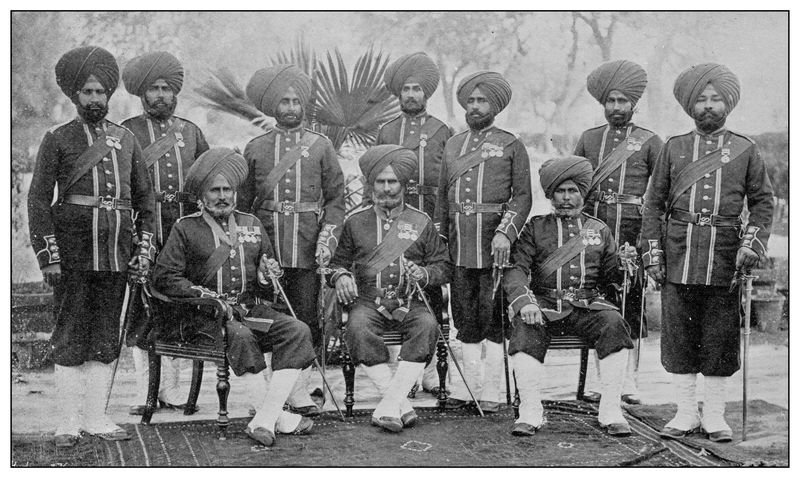
The findings also serve as a reminder of Punjab’s immense contribution to the First World War. Historical records indicate that nearly half a million men from undivided Punjab served during the conflict, forming a substantial part of the more than one million soldiers recruited from pre-Partition India. Sikh, Muslim, Hindu and Christian soldiers from the region fought across multiple theatres of war, making Punjab one of the British Indian Army’s most significant recruiting grounds.
For many families, the project has answered questions that had remained unresolved for generations.
Among them is Dr Inder Singh Palahey, a Leicester-based dentist, whose great-grandfather, Kesar Singh, left for the war but never returned. Years of research through the Punjab Registers Project enabled the family to identify his regiment and confirm his sacrifice.
Speaking to the CWGC, Palahey said the discovery was deeply moving. He noted that his great-grandfather’s death left behind a widow and two young children in poverty, and that having his sacrifice formally recognised ensures the family’s history will now be remembered for future generations.
Amandeep Madra, British historian, author and Chair of the UK Punjab Heritage Association, described the project as the restoration of a missing chapter in Punjab’s shared history.
“These men were never commemorated—not because they did not serve, but because of decisions taken over a century ago that excluded them from the official record,” he said. “Correcting that omission gives families across the world back a part of their history while ensuring these soldiers receive the equal recognition they always deserved.”
Madra also acknowledged the contribution of the Lahore Museum for preserving the fragile records for over a century, along with the researchers and volunteers whose painstaking work helped identify each missing serviceman.
CWGC Director General Claire Horton said the project reflects the organisation’s continuing commitment to ensuring that every Commonwealth serviceman who died in service is commemorated equally.
“The recovery of every one of these 9,909 names restores missing chapters in both family histories and the history of the First World War,” she said.
For Punjab, where countless families trace their ancestry to those who served in the British Indian Army, the initiative is more than a historical correction. It is a reminder of the region’s immense contribution to a global conflict and a long-overdue acknowledgement of thousands of soldiers whose sacrifices had remained unrecorded for over a century.