


AI Generated Summary
- As his experience in agriculture grew, so did his curiosity about fruit cultivation, prompting him to experiment with a range of crops better suited to the region.
- A marginal farmer from Taragarh Talawan village near Jandiala, Harmanpreet had left India in 2013 at the age of 23 in search of better livelihood opportunities.
- Besides catering to individual gardeners, it has also supported farmers in establishing commercial plantations of dragon fruit and even apple orchards in the region.
A decade ago, Harmanpreet Singh could hardly have imagined that two avocado saplings sent home from Ethiopia would one day redefine his career and inspire a shift toward horticulture in Punjab.
A marginal farmer from Taragarh Talawan village near Jandiala, Harmanpreet had left India in 2013 at the age of 23 in search of better livelihood opportunities. His journey took him to Ethiopia, where he initially leased farmland to cultivate cotton. As his experience in agriculture grew, so did his curiosity about fruit cultivation, prompting him to experiment with a range of crops better suited to the region.
His pursuit of horticulture eventually extended beyond Ethiopia. Over the years, he acquired small plots of land across East African countries, including Kenya, Rwanda and Uganda, where he continued exploring fruit farming.
The turning point came in 2020, when Harmanpreet returned to India for his wedding. During his visit, he found that the two avocado saplings he had sent back years earlier had matured into healthy, fruit-bearing trees.
“I was delighted to see that they had not only survived but were producing fruit,” he recalled. “That made me realise the possibilities of growing such crops here.”
Soon after, the nationwide COVID-19 lockdown gave him an unexpected opportunity to reassess his future. Choosing to remain in Punjab, he decided to focus entirely on fruit cultivation and nursery development.
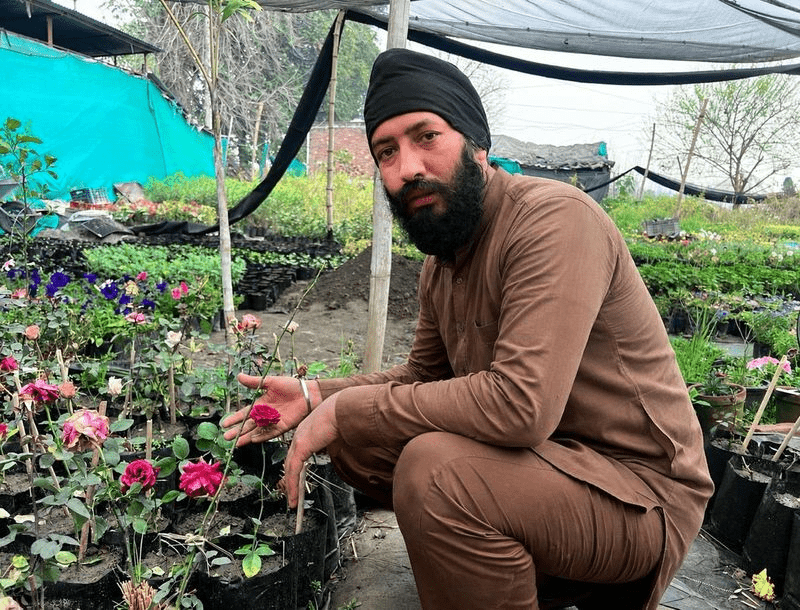
Starting with a modest nursery at his home, Harmanpreet gradually expanded the venture into Singh Agro Farm and Nursery. Today, the enterprise supplies avocado fruits and saplings alongside a wide range of fruit trees, ornamental plants, flowering varieties and vegetable seedlings.
The nursery now houses more than 500 varieties of fruits, vegetables and flowers. Besides catering to individual gardeners, it has also supported farmers in establishing commercial plantations of dragon fruit and even apple orchards in the region.
According to Harmanpreet, Punjab’s prolonged dependence on the wheat-paddy cropping cycle has reduced farmers’ exposure to quality planting material and diversified horticulture. His nursery focuses on maintaining healthy mother plants to ensure reliable propagation and better-quality saplings for growers.
He believes horticulture presents significant opportunities for farmers seeking higher-value crops. With agricultural land shrinking and the demand for fresh fruits steadily increasing, he feels diversification has become increasingly important.
Emphasising the importance of continuous learning, Harmanpreet advises aspiring horticulturists to combine traditional farming knowledge with scientific practices. He also encourages farmers to seek guidance from experienced professionals and begin on a manageable scale before expanding their operations.