


AI Generated Summary
- A new exhibition by DAG in New Delhi, opening on July 10, brings together the complete published series of her celebrated lithographs alongside previously unseen archival material and Company School paintings, presenting a vivid glimpse into the world of Maharaja Ranjit Singh during the twilight of the Sikh Empire.
- The inclusion of the Eden Family Archives and Lahore Company School paintings offers visitors a more comprehensive understanding of Punjab during the final years of Maharaja Ranjit Singh’s reign and the period immediately following it.
- Meeting the Sikh ruler towards the end of his life, Eden portrayed him not in ceremonial splendour but in a plain red silk robe and simple turban, deliberately omitting the jewels that characterised the grandeur of his court.
Emily Eden’s portraits from her travels across northern India in the late 1830s are offering audiences a rare visual record of Punjab at a defining moment in its history. A new exhibition by DAG in New Delhi, opening on July 10, brings together the complete published series of her celebrated lithographs alongside previously unseen archival material and Company School paintings, presenting a vivid glimpse into the world of Maharaja Ranjit Singh during the twilight of the Sikh Empire.
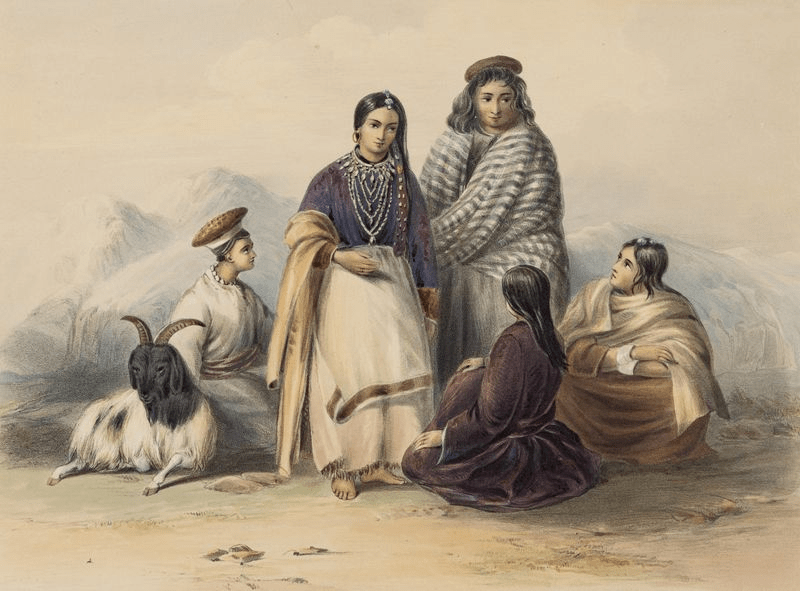
Curated by art historian and author Mary Ann Prior, Princes & People of India: Portraits by Emily Eden marks the first time in India that the complete set of lithographs from Eden’s 1844 publication Portraits of the Princes and People of India will be exhibited together. The show also features notebooks and documents from the recently acquired Eden Family Archives, along with a rare collection of Lahore Company School paintings dating to around 1850.
Emily Eden (1797–1869), an accomplished artist, writer and poet, arrived in India in 1836 with her brother George Eden, better known as Lord Auckland, who served as Governor-General of India from 1836 to 1842. Unmarried and deeply interested in art, Emily accompanied her brother on official tours across the country, joined by their younger sister Frances, or Fanny.
One of the most significant journeys undertaken by the siblings was their expedition from Calcutta to Lahore in 1838 to visit the court of Maharaja Ranjit Singh. Throughout the journey, Emily documented the remarkable diversity of people she encountered. Her subjects extended well beyond royalty and nobility to include soldiers, ascetics, attendants, servants, hunters and ordinary people, producing an unusually broad visual chronicle of life in northern India.
Among the exhibition’s highlights is her portrait of Maharaja Ranjit Singh, drawn during her stay in Lahore. Meeting the Sikh ruler towards the end of his life, Eden portrayed him not in ceremonial splendour but in a plain red silk robe and simple turban, deliberately omitting the jewels that characterised the grandeur of his court. Seated quietly in an armchair with his blind eye visible, the portrait captures a reflective ruler whose personal simplicity contrasted with the magnificence of his empire.
Another notable work depicts Maharaja Karam Singh of Patiala, whom the Edens met during their travels in January 1839. Shown riding a richly adorned state elephant, the portrait records one of the British visitors’ earliest encounters with the ruler of the influential Phulkian dynasty, who hosted them during their journey through Punjab.
Emily’s fascination with the Akali Nihangs also finds expression in one of her best-known lithographs. Although she described the warrior order in her letters as fierce and intimidating, she was captivated by their striking appearance. Her detailed rendering faithfully records their flowing blue neela bana, towering dastaar bunga turbans, and the distinctive array of muskets, swords and steel chakrams worn across their bodies.
The exhibition also includes portraits of lesser-known figures, such as a young hill ruler from the western Himalayan states. Depicted in traditional attire with a sword and arrow resting across his lap, the portrait reflects Eden’s ability to convey confidence and authority irrespective of her subject’s age or status.
According to Ashish Anand, CEO and Managing Director of DAG, the exhibition goes beyond displaying Emily Eden’s published works by placing them alongside archival material that enriches the historical context of her travels. The inclusion of the Eden Family Archives and Lahore Company School paintings offers visitors a more comprehensive understanding of Punjab during the final years of Maharaja Ranjit Singh’s reign and the period immediately following it.
Taken together, the works reveal a society in transition through the eyes of an observant traveller whose artistic curiosity extended across class, community and profession. Nearly two centuries after they were created, Emily Eden’s portraits continue to serve as an invaluable visual archive of a region on the cusp of profound political and social change.