


AI Generated Summary
- Especially when it comes to Sikh pilgrimages, the Kartarpur Corridor, or other religious events, the government and administration there leave no stone unturned in presenting themselves as a tolerant and liberal nation.
- The safety of minority girls, the protection of their religious rights, and the restoration of trust among their families are essential for any claim of religious tolerance to be credible.
- The irony is that while Pakistan invites Sikh and other minority pilgrims from India with messages of respect and devotion, minorities living within its own borders are often forced to live in fear, insecurity, and discrimination.
For years, Pakistan has tried to project itself as a well-wisher of minorities and a supporter of religious freedom. Especially when it comes to Sikh pilgrimages, the Kartarpur Corridor, or other religious events, the government and administration there leave no stone unturned in presenting themselves as a tolerant and liberal nation. But the question remains: if Pakistan is truly such a strong protector of minority rights, then why does the condition of minority religious sites within its own country appear so deteriorated?
Since the partition of the country, thousands of temples, gurdwaras, and other religious sites in Pakistan have either been completely destroyed, illegally occupied, or converted for other purposes. The recent incident of the demolition of a nearly 125-year-old gurdwara in Faisalabad (formerly known as Farooqabad) has once again exposed the reality behind Pakistan’s claims of religious tolerance. Similarly, reports have repeatedly emerged of Guru Granth Sahib being removed from several historic gurdwaras, which have then been turned into schools or other institutions. This is not merely about buildings, but about the faith and cultural heritage of millions of people.
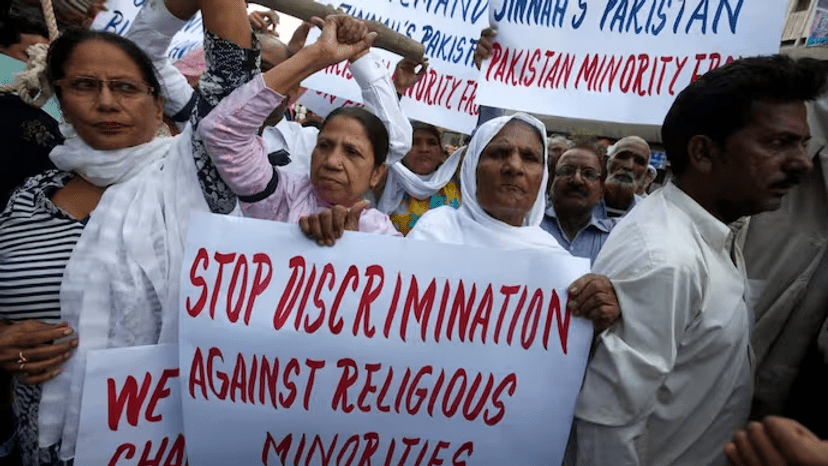
The irony is that while Pakistan invites Sikh and other minority pilgrims from India with messages of respect and devotion, minorities living within its own borders are often forced to live in fear, insecurity, and discrimination. Issues such as encroachment on religious sites, forced conversions, abduction of minority girls, and difficulties in accessing justice have frequently been raised on international platforms.
In such a situation, the gap between Pakistan’s words and actions becomes clearly visible. If Pakistan truly believes in religious freedom and respect for minorities, it must go beyond publicity and symbolic events. It must ensure the protection of all religious sites within its territory, remove illegal encroachments, take strict action against offenders, and genuinely guarantee constitutional rights to minorities.
Simply making grand claims on international platforms or organizing elaborate events for foreign pilgrims does not change reality. It is welcome that the Government of India has raised this issue with Pakistan. Additionally, organizations such as the Delhi Sikh Gurdwara Management Committee and various Sikh bodies have also demanded that Pakistan ensure the protection of minority religious sites and safeguard their rights.
This is not just an India or Sikh community issue, but a global question related to human rights and religious freedom. Pakistan must understand that a nation’s image is not built by propaganda, but by the treatment it gives to its citizens—especially minorities. Until religious sites are protected, faith is respected, and fundamental rights are genuinely secured, claims of religious tolerance will remain nothing more than showmanship and political drama.
Furthermore, incidents involving forced conversions and forced marriages of Sikh and Hindu girls in Pakistan have also raised serious concerns. Time and again, such cases have emerged where minority families have alleged that their daughters were lured through false promises of love or pressured into conversion and later married off. In several instances, affected families have demanded impartial investigations and justice.
Human rights organizations at both national and international levels have also expressed concern over these issues. If Pakistan truly claims to be committed to protecting minorities and ensuring religious freedom, it must go beyond formal statements and ensure fair investigations, strict punishment for offenders, and justice for victims.
The safety of minority girls, the protection of their religious rights, and the restoration of trust among their families are essential for any claim of religious tolerance to be credible. The true test of any democratic and constitutional system lies in how effectively it protects its most vulnerable and minority citizens.