


AI Generated Summary
- Rather than relying solely on the Evacuee Trust Property Board or the Pakistani government, the global Sikh community may also need to take a more proactive role in advocating for the documentation, conservation, and restoration of this priceless heritage through international heritage organizations and collaborative preservation initiatives.
- Pakistan is home to countless sites associated with Sikh history, including places connected to the Sikh Gurus, the Sikh Empire, and the legendary Sikh warriors who sacrificed their lives in defense of faith, human rights, and their nation.
- Is Pakistan truly as committed to preserving Sikh history and heritage as it portrays itself to be on the international stage.
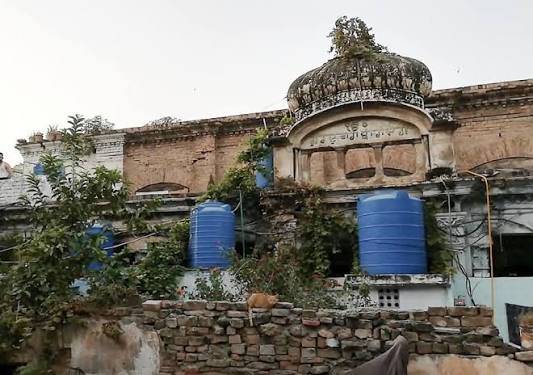
The dilapidated grave of Maharani Moran, the queen of Sher-e-Punjab Maharaja Ranjit Singh, located in Lahore’s historic Miani Sahib Cemetery, is not merely a neglected monument. It symbolizes the broader crisis that Sikh heritage in Pakistan has faced for decades. Crumbling walls, overgrown vegetation, and years of neglect raise a serious question: Is Pakistan truly as committed to preserving Sikh history and heritage as it portrays itself to be on the international stage?
According to historical records, Maharani Moran was born around June 10, 1823, and passed away on August 11, 1867. Her grave is situated within the historic Miani Sahib Cemetery in Lahore. Today, however, its deteriorating condition reflects the unfortunate fate shared by many Sikh monuments of historical significance across Pakistan.
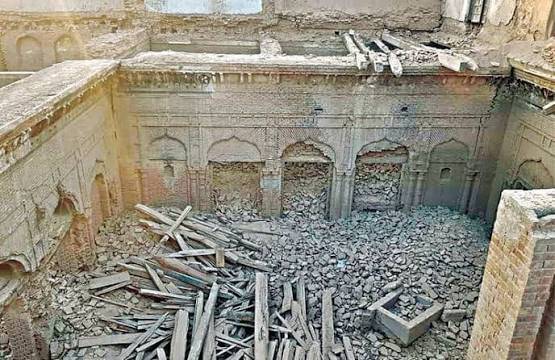
This is not simply the story of one neglected grave. Pakistan is home to countless sites associated with Sikh history, including places connected to the Sikh Gurus, the Sikh Empire, and the legendary Sikh warriors who sacrificed their lives in defense of faith, human rights, and their nation. More than 400 historic Sikh gurdwaras linked to the lives of Sri Guru Nanak Dev Ji and the other Sikh Gurus are located in present-day Pakistan. However, in provinces such as Khyber Pakhtunkhwa, Balochistan, and Sindh, many of these historic sites have either disappeared entirely or been reduced to ruins.
Pakistan frequently highlights Gurdwara Janam Asthan Nankana Sahib and Gurdwara Darbar Sahib Kartarpur as examples of its commitment to preserving Sikh heritage. Yet, in the age of social media and digital documentation, it has become increasingly difficult to conceal the broader reality. Every year, Pakistani Sikh leaders reportedly raise funds from the global Sikh diaspora in the name of maintaining gurdwaras, while the condition of numerous lesser-known historical sites continues to deteriorate.
Historic sites such as Nankana Sahib, Kartarpur Sahib, Panja Sahib, Dera Sahib, Rohri Sahib, Sacha Sauda, Guru Ka Bagh, and countless others are not merely places of worship—they represent the shared cultural heritage of humanity. Likewise, Pakistan is home to numerous forts, palaces, samadhis, and monuments associated with Maharaja Ranjit Singh’s empire. The memories of great Sikh warriors such as Hari Singh Nalwa, Akali Phula Singh, Sardar Sham Singh Attariwala, and many others remain rooted in this land. Unfortunately, many monuments associated with them have fallen victim to neglect, encroachments, illegal construction, and the natural decay of time.
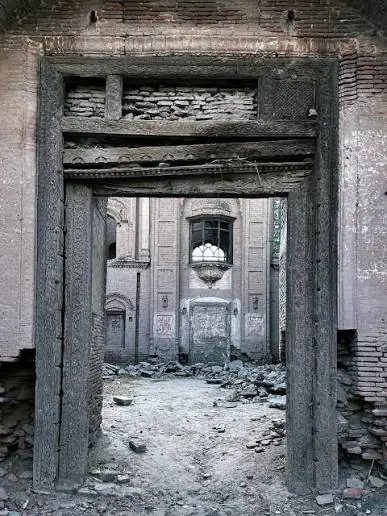
For years, historians and heritage conservation researchers have expressed concern that numerous historic Sikh gurdwaras, memorials, sacred ponds, and samadhis across Pakistan have been encroached upon or abandoned. Many Singh Sabha gurdwaras and smaller heritage sites have virtually disappeared from public records altogether. Several monuments have lost their original architectural identity, some have been converted to private use, while others have collapsed into ruins. In many cases, even local residents are no longer aware of the historical significance of these places. As time passes, their identity continues to fade.
Rather than relying solely on the Evacuee Trust Property Board or the Pakistani government, the global Sikh community may also need to take a more proactive role in advocating for the documentation, conservation, and restoration of this priceless heritage through international heritage organizations and collaborative preservation initiatives.
Pakistan often showcases the Kartarpur Corridor and a handful of prominent gurdwaras as symbols of religious tolerance. Undoubtedly, the Kartarpur Corridor has enabled millions of pilgrims to visit one of Sikhism’s holiest shrines. However, the development of one or two major religious sites cannot be regarded as evidence of comprehensive heritage preservation. The real test lies in protecting the hundreds of smaller, lesser-known, and historically significant sites that receive little public attention.
Even today, access to several historic Sikh sites remains limited, and regular pilgrimages are not always possible. Some locations remain inaccessible due to security concerns, administrative restrictions, or local circumstances. Displaying a few prominent monuments therefore cannot represent the overall condition of Sikh heritage in Pakistan.
Whenever a country possesses monuments of global religious and historical importance, preserving them becomes not only a responsibility toward a particular community but also a moral obligation toward world heritage itself. Heritage cannot be safeguarded through speeches, publicity campaigns, or image-building alone. Genuine preservation requires consistent maintenance, scientific restoration, proper documentation, legal protection, and meaningful public access.
The neglected grave of Maharani Moran reminds us that history cannot protect itself. Without timely conservation, future generations may know these remarkable personalities only through books, while the physical evidence of their legacy disappears forever.
If Pakistan genuinely wishes to demonstrate respect and goodwill toward the Sikh community, it must move beyond symbolic gestures. It should undertake a comprehensive survey of all Sikh heritage sites, remove illegal encroachments, ensure scientific conservation and restoration, provide regular maintenance, and guarantee transparent and respectful access for pilgrims, researchers, and historians alike.
Sikh heritage is not the legacy of Sikhs alone. It is an invaluable chapter in the shared history of the Indian subcontinent and the cultural heritage of humanity. Its preservation demands sincere commitment, practical action, and international cooperation before these irreplaceable monuments are lost forever.