


AI Generated Summary
- In a city defined by constant motion, the sight of strangers sitting together over a shared meal carried a quiet reminder of the Sikh principle of seva—selfless service—and the idea that abundance is meant to be passed on.
- On this day, the practice was brought to one of the world’s busiest intersections by Indian-American hotelier and Padma Bhushan awardee Sant Singh Chatwal, working with Onkar Singh, coordinator of the “Let’s Share a Meal” initiative, and a team of volunteers.
- For Chatwal, Onkar Singh, and the volunteers, the Times Square Langar was both a commemoration of Guru Nanak’s message and a practical demonstration of it.
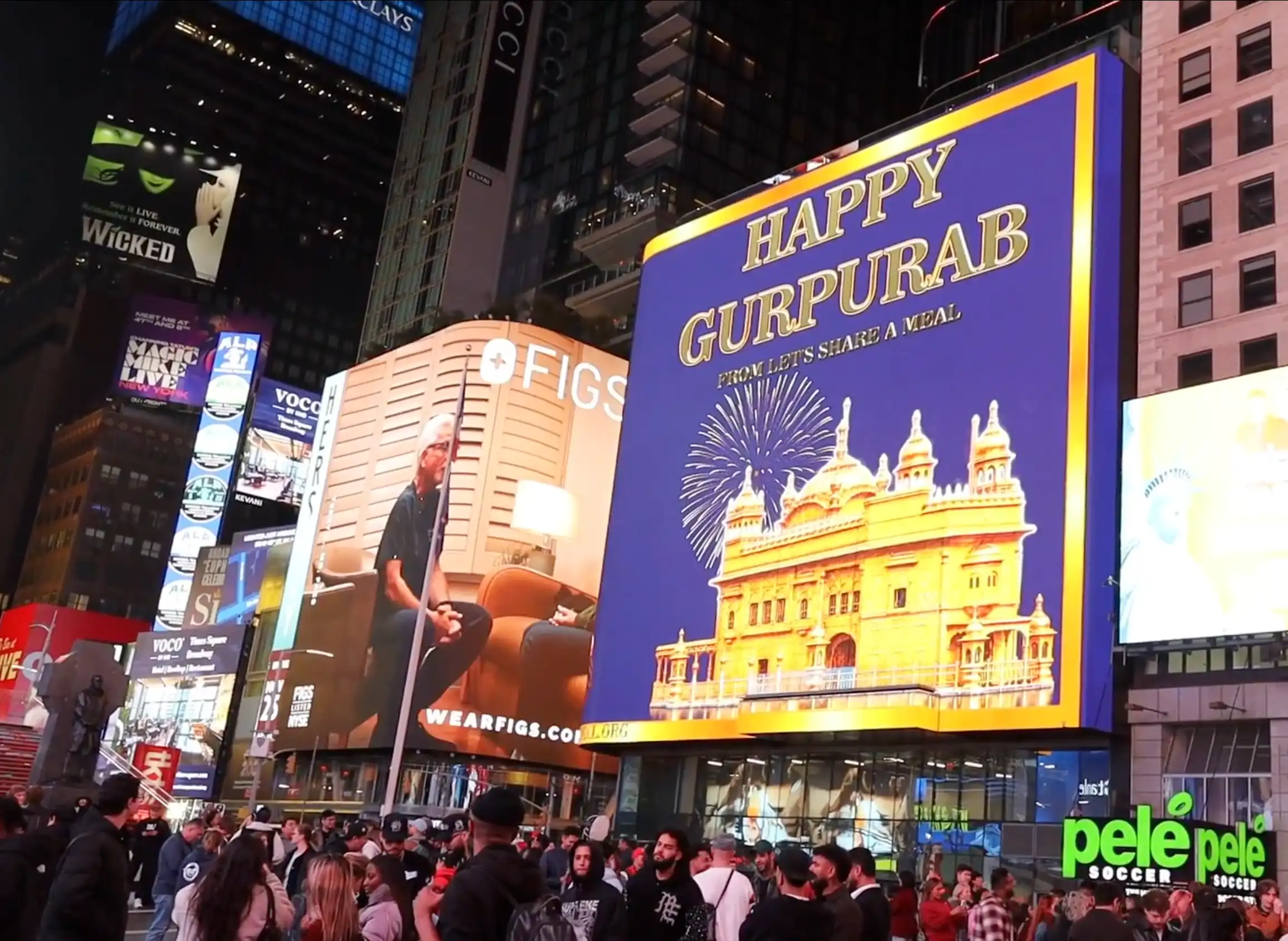
In the heart of Times Square, amid the usual rush of neon lights and tourist crowds, a different kind of gathering took shape one afternoon. Volunteers in simple aprons set up long tables along the sidewalk, stirring large pots of warm dal, vegetable curry, and fresh rotis. The aroma drifted over the usual street smells, drawing passersby who slowed, curious, then stopped.
This was a Langar, the free community kitchen tradition rooted in the teachings of Guru Nanak Dev Ji, the founder of Sikhism. The idea is simple and radical: everyone sits together and shares a meal as equals, with no one turned away. On this day, the practice was brought to one of the world’s busiest intersections by Indian-American hotelier and Padma Bhushan awardee Sant Singh Chatwal, working with Onkar Singh, coordinator of the “Let’s Share a Meal” initiative, and a team of volunteers.
Chatwal, known for his hospitality work and longstanding community involvement, moved among the servers, handing plates and speaking with visitors. Onkar Singh directed the flow, ensuring hot meals reached tourists clutching shopping bags, office workers on lunch breaks, and New Yorkers simply walking through. Some recipients paused to ask questions. Others accepted the food with a quiet thank-you and stayed a few minutes longer than they had planned.
“Langar is not charity,” one volunteer explained while ladling dal. “It is service. Guru Nanak taught that sharing what we have is how we remember we are all connected.” The meals themselves were straightforward—no elaborate presentation, just nourishing food served with consistency and care. Volunteers refilled trays, wiped tables, and kept the line moving so no one waited long.
By the time the pots were nearly empty, several hundred people had eaten. The event did not shut down traffic or dominate the square; it simply occupied a corner of it, offering a brief pause. In a city defined by constant motion, the sight of strangers sitting together over a shared meal carried a quiet reminder of the Sikh principle of seva—selfless service—and the idea that abundance is meant to be passed on.
For Chatwal, Onkar Singh, and the volunteers, the Times Square Langar was both a commemoration of Guru Nanak’s message and a practical demonstration of it: food prepared with intention, given without condition, and received by whoever happened to be there.