


AI Generated Summary
- At issue is whether a province can make allegiance to the monarch a condition of entering the legal profession when an applicant demonstrates that such an oath conflicts with a sincerely held religious belief.
- As an Amritdhari Sikh, he maintains that the commitment he has made to Akal Purakh — the divine being in Sikhism — is absolute and exclusive, preventing him from making an equivalent pledge of allegiance to a temporal sovereign.
- The appellate court held the requirement unconstitutional and directed that the provincial law be amended or repealed in a manner that would provide accommodation for those unable to take the oath on religious grounds.
A Sikh lawyer’s refusal to swear allegiance to the British monarch has set the stage for a significant constitutional battle in Canada, raising questions over how far professional requirements can go when they conflict with an individual’s religious obligations.
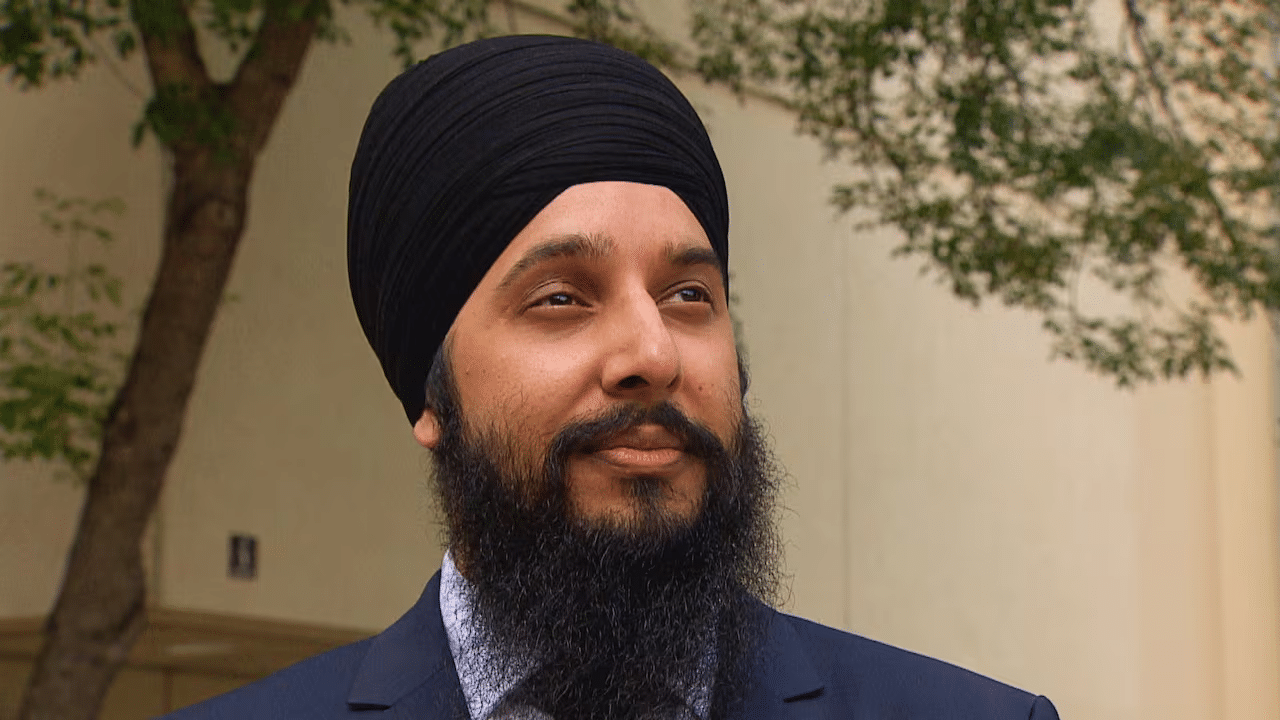
Prabjot Singh Wirring, an Amritdhari Sikh from Edmonton, challenged an Alberta requirement that lawyers pledge “true allegiance” to the reigning monarch before being admitted to practise law.
For Wirring, taking the oath was incompatible with his faith. As an Amritdhari Sikh, he maintains that the commitment he has made to Akal Purakh — the divine being in Sikhism — is absolute and exclusive, preventing him from making an equivalent pledge of allegiance to a temporal sovereign.
What began as a dispute over admission to the legal profession has since developed into a wider constitutional case involving religious freedom, equality of professional access and the continuing place of the Crown in Canadian institutions.
Challenge began in 2022
Wirring took the matter to court in June 2022, filing a lawsuit against the Alberta government and the Law Society of Alberta. He argued that compelling him to swear allegiance to the monarch violated the protection of freedom of religion guaranteed under Canada’s Constitution.
His first attempt failed.
In October 2023, Alberta’s Court of King’s Bench rejected the challenge, concluding that the oath was essentially symbolic and did not directly interfere with Wirring’s ability to practise his religion.
Wirring appealed.
More than two years later, the legal position shifted decisively in his favour. On December 16, 2025, a three-judge panel of the Alberta Court of Appeal unanimously found that the compulsory oath unjustifiably infringed religious freedom.
The appellate court held the requirement unconstitutional and directed that the provincial law be amended or repealed in a manner that would provide accommodation for those unable to take the oath on religious grounds.
Alberta takes fight to Supreme Court
The dispute, however, did not end with the appellate ruling.
The Alberta government sought to challenge the decision, filing an appeal in February 2026. In August, the Supreme Court of Canada agreed to hear the case, placing the controversy before the country’s highest judicial authority.
Its eventual judgment could have implications extending beyond Wirring himself. At issue is whether a province can make allegiance to the monarch a condition of entering the legal profession when an applicant demonstrates that such an oath conflicts with a sincerely held religious belief.
The case also brings Alberta’s rules into focus alongside those elsewhere in Canada. Provinces including British Columbia, Saskatchewan and Ontario have already either removed the requirement for lawyers to swear allegiance to the monarch or provided alternatives to the traditional oath.
Faith, profession and the Crown
The dispute is particularly significant for observant Sikhs who understand their religious commitments as preventing competing declarations of allegiance.
Wirring’s position is not that he should be exempt from the professional duties expected of a lawyer. Rather, the constitutional question centres on whether fulfilling those duties must also require a declaration of loyalty to the Crown when another form of professional undertaking could serve the same purpose.
That distinction has transformed an individual licensing dispute into a broader examination of religious accommodation in modern Canada.
The Supreme Court’s decision will ultimately determine whether Alberta’s royal oath can withstand constitutional scrutiny and, potentially, how Canadian institutions should reconcile longstanding traditions associated with the Crown with the religious freedoms of those seeking to participate in public and professional life.
For Wirring, the issue that began with a decision not to recite an oath has therefore become something much larger: a test of whether entering a profession can require a person to make a choice between conscience and career.