


AI Generated Summary
- Haryana’s successful export of 24 metric tonnes of frozen food products to Canada has highlighted new opportunities for agricultural diversification and value addition in northern India, particularly in neighbouring Punjab, where strengthening farm incomes and reducing dependence on traditional cropping patterns remain important priorities.
- As Punjab continues to explore crop diversification and opportunities to strengthen farm incomes, export-oriented food processing could become an important component of its agricultural development strategy, complementing traditional farming with higher-value products and wider market access.
- It provides a practical example for agricultural states such as Punjab to examine how farmer-owned enterprises, supported by processing infrastructure and international market linkages, can create new sources of agricultural value.
Haryana’s successful export of 24 metric tonnes of frozen food products to Canada has highlighted new opportunities for agricultural diversification and value addition in northern India, particularly in neighbouring Punjab, where strengthening farm incomes and reducing dependence on traditional cropping patterns remain important priorities.
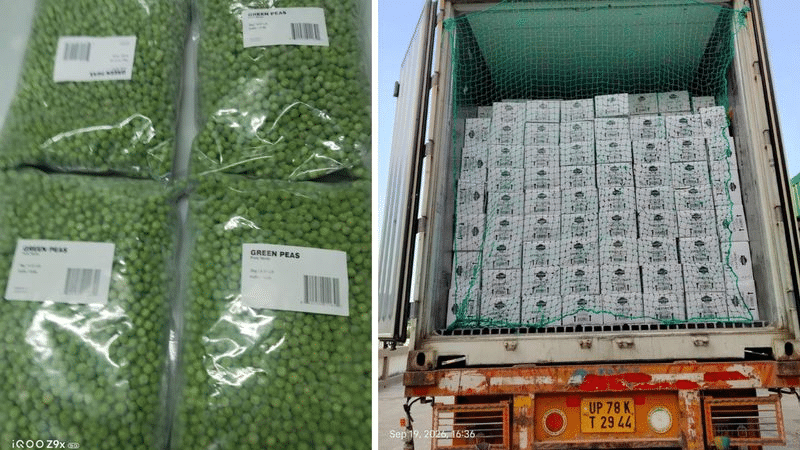
The consignment, exported by Sonipat-based Aterna Foods Producer Company Limited with support from the Agricultural and Processed Food Products Export Development Authority (APEDA), comprised 2,295 boxes of frozen food products valued at CAD 35,140.
The shipment included green peas, mixed vegetables, peas and carrots, sweet corn, samosas and other processed food items intended for international consumers.
While the consignment originated in Haryana, the initiative offers a potentially replicable model for Punjab’s agricultural sector. With its established farming infrastructure, agricultural expertise and production capabilities, Punjab could explore similar opportunities by strengthening farmer producer organisations (FPOs), developing food-processing facilities and connecting agricultural enterprises with overseas buyers.
Punjab has traditionally been a major contributor to India’s foodgrain production, particularly wheat and paddy. However, the need for crop diversification, improved value realisation and more sustainable agricultural practices has increasingly brought attention to alternative agricultural enterprises.
The expansion of export-oriented food processing could create additional commercial opportunities for farmers cultivating vegetables, maize, peas and other horticultural crops. Processing agricultural produce into frozen and ready-to-cook products can extend shelf life, reduce dependence on immediate sales after harvesting and create access to markets beyond conventional agricultural mandis.
The Haryana initiative demonstrates how farmer-led enterprises can move beyond supplying raw agricultural commodities and participate in processing, packaging and international distribution, where additional value is generated.
APEDA supported the exporting company through its Financial Assistance Scheme, reflecting the government’s efforts to strengthen agricultural export infrastructure and improve market access for producer organisations.
APEDA Chairman Abhishek Dev highlighted the importance of establishing stronger relationships between farmers, exporters and international buyers. He observed that such initiatives could expand market opportunities for agricultural producers and strengthen their participation in global supply chains.
Dev also acknowledged the contribution of the National Institute of Food Technology Entrepreneurship and Management (NIFTEM) and expressed optimism about expanding processed food exports to the Canadian market.
For Punjab, the development is particularly relevant given the potential to build agricultural value chains around crops other than wheat and paddy. Greater investment in cold storage, food-processing units, grading, packaging and quality certification could help farmer collectives develop products that meet international standards.
Canada also represents a market worth exploring for Punjab-based food enterprises, particularly because of its substantial Indian-origin population and established demand for Indian food products. However, translating this opportunity into sustained exports would require consistent product quality, competitive pricing, reliable logistics and compliance with Canadian food safety and import regulations.
The farmer producer company model offers another possible avenue for Punjab’s smaller agricultural producers. By pooling produce, sharing processing infrastructure and collectively accessing buyers, farmers may be able to participate in commercial opportunities that would otherwise be difficult to pursue individually.
Such initiatives could also encourage rural entrepreneurship and generate employment in food processing, packaging, cold-chain logistics and related services, provided adequate investment and market demand are secured.
APEDA, functioning under the Ministry of Commerce and Industry, has been facilitating connections between farmer producer organisations and exporters to promote greater participation in international agricultural trade.
Haryana’s latest shipment therefore carries significance beyond the immediate export transaction. It provides a practical example for agricultural states such as Punjab to examine how farmer-owned enterprises, supported by processing infrastructure and international market linkages, can create new sources of agricultural value.
As Punjab continues to explore crop diversification and opportunities to strengthen farm incomes, export-oriented food processing could become an important component of its agricultural development strategy, complementing traditional farming with higher-value products and wider market access.
