


AI Generated Summary
- The average Sikh in India believes in the teachings of the Sikh Gurus, the Constitution of India, and the unity of the nation.
- Shaheed-e-Azam Bhagat Singh, Shaheed Udham Singh, countless freedom fighters, soldiers who displayed exceptional bravery on the battlefield, recipients of the Param Vir Chakra, farmers, scientists, industrialists, and Sikhs who have risen to the highest constitutional offices all stand as living testimony to the Sikh community’s immense contribution to India’s strength and progress.
- While the Constitution of India guarantees fundamental rights to every citizen, it also places importance on preserving the unity and integrity of the nation.
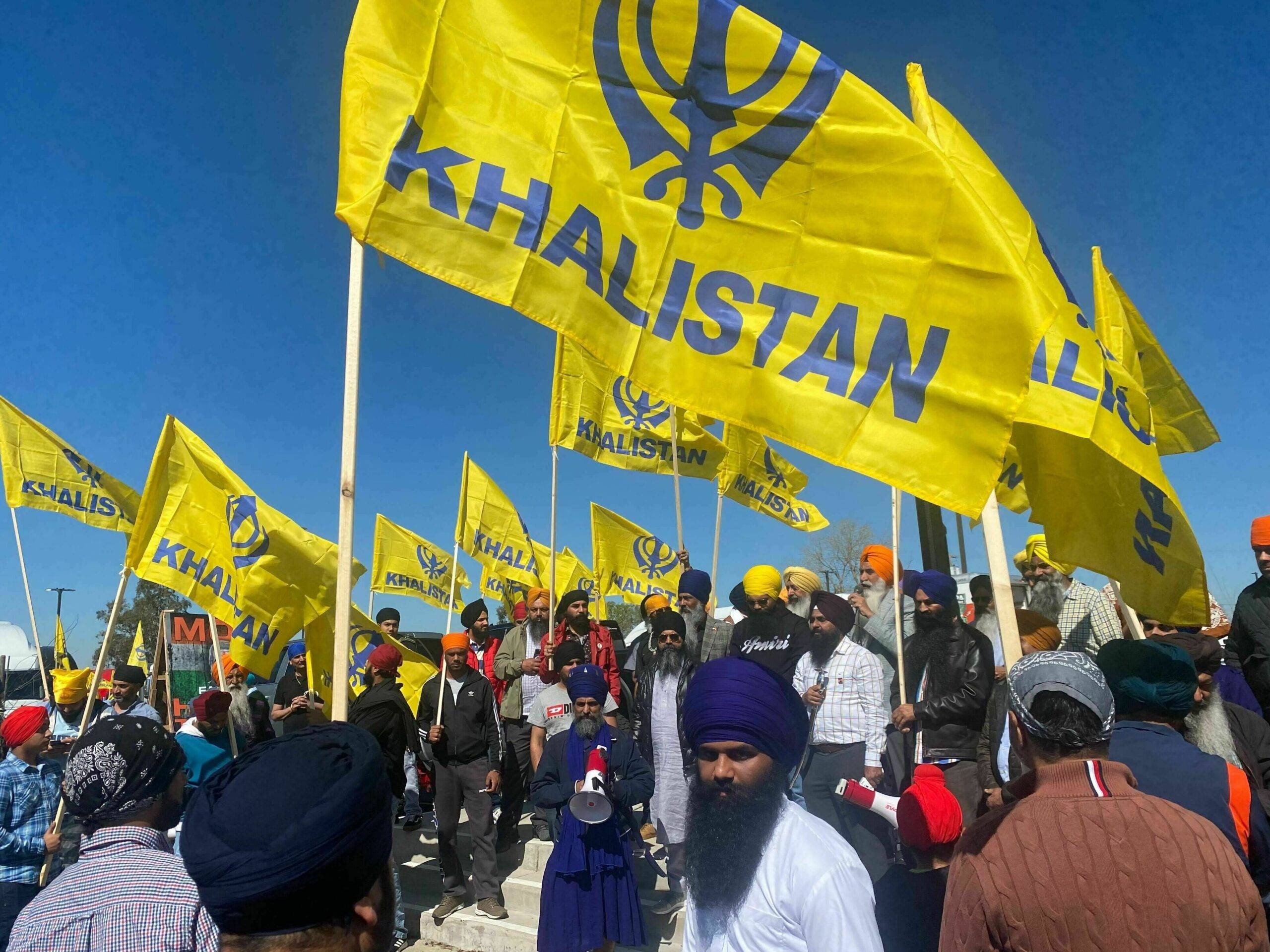
Once again, attempts are being made on foreign soil to challenge India’s sovereignty, unity, and territorial integrity under the banners of the so-called “Khalistan Referendum” and “Khalistan Car Rally.” These events are often portrayed as if they represent the aspirations of the entire global Sikh community. However, the reality is very different. This campaign does not reflect the voice of millions of Sikhs living in India; rather, it represents the political agenda of a handful of separatist organizations and fringe groups that are attempting to spread misinformation from abroad.
It is important to understand that the Indian Sikh community and the demand for Khalistan are two entirely different things. The average Sikh in India believes in the teachings of the Sikh Gurus, the Constitution of India, and the unity of the nation. Some individuals living overseas attempt to project themselves as representatives of the entire Sikh community, despite lacking the support of the overwhelming majority of Sikhs in India. If their ideology truly enjoyed widespread public backing, it would be reflected in India’s democratic and political landscape. The reality, however, is quite the opposite.
The history of the Sikh community is a history of service, sacrifice, and nation-building. Sri Guru Tegh Bahadur Ji laid down his life not for the protection of a single community, but for the defense of religious freedom and the rights of humanity. Sri Guru Gobind Singh Ji established the Khalsa Panth to stand against tyranny and injustice and sacrificed all four of his Sahibzadas in that cause. His message was rooted in justice, courage, and the protection of righteousness—not in dividing nations.
From India’s freedom struggle to the present day, Sikhs have played an extraordinary role in shaping the nation. Shaheed-e-Azam Bhagat Singh, Shaheed Udham Singh, countless freedom fighters, soldiers who displayed exceptional bravery on the battlefield, recipients of the Param Vir Chakra, farmers, scientists, industrialists, and Sikhs who have risen to the highest constitutional offices all stand as living testimony to the Sikh community’s immense contribution to India’s strength and progress. It is neither fair nor historically accurate to suggest that a community which has sacrificed so much for the nation’s unity would seek to divide it.
It is equally important to ask why those advocating the division of India from abroad rarely speak about the challenges faced by the Sikh community in Pakistan. The Sikh population there remains very small, and concerns regarding the protection of religious sites, minority rights, and the preservation of Sikh heritage continue to emerge from time to time. If the genuine objective is the welfare of the Sikh community, greater attention should be paid to addressing these real issues rather than promoting separatist politics directed against India.
History also offers a clear perspective. During the Partition of 1947, when the future of the subcontinent was being decided, Sikh leadership chose to remain with India. Had the creation of a separate Sikh nation been the objective at that time, the historical circumstances were very different. Instead, the Sikh community chose India because this country represents an inseparable part of its history, faith, and future. Today, Sikhs contribute to India as farmers, soldiers, scientists, judges, entrepreneurs, and public servants, with members of the community having reached even the highest constitutional office in the country. This reflects the equal opportunities and respect that India provides to all its citizens.
Today, Sikhs in India enjoy full constitutional protection to practice their faith, manage their Gurdwaras, celebrate their religious festivals, and preserve their distinct identity with dignity and respect. Across the country, the Sikh community continues to contribute to every sphere of national life while exercising its religious and democratic rights. Therefore, the claim that Sikhs in India require a separate nation does not reflect the experiences or aspirations of the overwhelming majority of Indian Sikhs.
It must also be remembered that in any democracy, freedom of expression does not extend to undermining a nation’s sovereignty and territorial integrity. While the Constitution of India guarantees fundamental rights to every citizen, it also places importance on preserving the unity and integrity of the nation. Campaigns conducted from foreign countries to promote separatism or spread anti-India narratives will neither weaken India nor change the outlook of the Sikh community living within the country.
The truth is that the dream of Khalistan may remain the political ambition of a few individuals, but it is not the aspiration of millions of Sikhs in India. The Indian Sikh community continues to move forward with faith in the teachings of the Sikh Gurus, respect for the Constitution, and pride in the Indian tricolour. Attempts to undermine India’s unity and integrity have failed in the past and will continue to fail in the future.
India’s greatest strength lies in its diversity, democracy, and social harmony. Every attempt to divide the nation has ultimately failed because the forces that unite India have always been stronger than those that seek to break it apart.
