


AI Generated Summary
- What was once treated as farm waste has become part of a profitable cropping strategy for two brothers in Barnala district, who say managing paddy residue without setting it on fire has helped them improve yields and cultivate as many as three crops a year.
- He said alternatives to burning paddy straw had also become easier to access, with a large number of balers operating in Barnala district and strong demand for paddy residue this year.
- Urging other farmers to consider alternatives to setting crop residue on fire, Sukhpal said burning stubble damages beneficial organisms in the soil besides affecting air quality, human health, animals and the wider environment.
What was once treated as farm waste has become part of a profitable cropping strategy for two brothers in Barnala district, who say managing paddy residue without setting it on fire has helped them improve yields and cultivate as many as three crops a year.
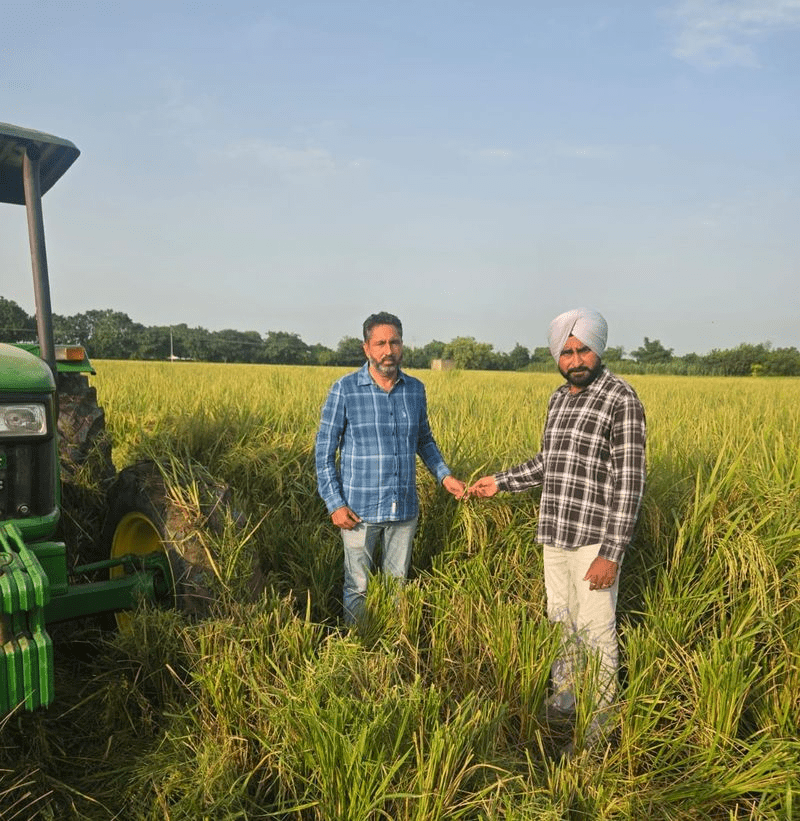
Tarsem Singh Jawandha, 46, and Sukhpal Singh Jawandha, 43, farmers from Kothe Surjitpura village, have adopted mulching and mechanised residue management on their fields while expanding beyond the traditional paddy-wheat cycle.
The brothers cultivate around 21 acres of their own land and take additional farmland on lease. Following the paddy harvest, they grow potatoes on nearly 80-85 acres and wheat on about 20 acres. Once the potato crop is harvested, maize is sown on around 40 acres. Moong and watermelon are also part of their cropping pattern.
The combination allows them to harvest three crops from parts of their farmland during the year while reducing their dependence on conventional crop rotations.
Sukhpal Singh said the family earlier managed paddy straw by getting it baled. In 2024, however, they moved towards mulching the residue into the fields — a decision that, he said, has produced encouraging results, particularly in potato cultivation.
According to him, potato productivity has increased from about 250-300 bags per acre to nearly 350 bags per acre. Each bag weighs around 50 kg.
The farmers use a combination of machinery for residue management and field preparation. They received a Super Seeder under a government subsidy programme and use it for sowing wheat. An MB plough and a rotavator were purchased by the family in 2024.
Sukhpal said incorporating crop residue into their farming practices had not created operational difficulties and had instead coincided with better production and returns.
After accounting for cultivation costs, the brothers save approximately Rs 40,000 per acre annually, he said.
Their potato crop also has an established commercial market, with produce supplied to Haldiram and other food-processing companies. Sukhpal said they have not encountered significant problems in selling their produce and have been able to secure remunerative prices.
He said alternatives to burning paddy straw had also become easier to access, with a large number of balers operating in Barnala district and strong demand for paddy residue this year.
Urging other farmers to consider alternatives to setting crop residue on fire, Sukhpal said burning stubble damages beneficial organisms in the soil besides affecting air quality, human health, animals and the wider environment.
The brothers’ farming model has also drawn appreciation from the district administration. Barnala Deputy Commissioner Harpreet Singh praised them for combining sustainable paddy-residue management with crop diversification, describing their approach as an example of how farmers can move away from stubble burning while improving agricultural returns.