


AI Generated Summary
- For New Zealand, a country rich in high-quality dairy, horticulture, wine, wool, and forestry products, this deal provides unprecedented access to India’s vast and rapidly expanding consumer market—one of the world’s largest and fastest-growing economies.
- This isn’t just a technical milestone—it’s a testament to India’s proactive engagement with the Indo-Pacific, forging deeper economic bonds that promise mutual growth, innovation, and resilience in an uncertain global landscape.
- This levels the playing field for Indian MSMEs and exporters, while New Zealand’s commitment to significant investments—potentially up to $20 billion—will fuel technology transfer, skills development, and collaborative ventures in sectors like renewable energy, education, and agritech.
As Prime Minister Narendra Modi prepares for his visit to New Zealand, the announcement from Kiwi Prime Minister Christopher Luxon underscores a pivotal moment in bilateral ties: under the newly signed India-New Zealand Free Trade Agreement (FTA), 57% of New Zealand’s exports to India will enjoy immediate tariff-free access, with overall coverage reaching 95% of exports through phased reductions. This isn’t just a technical milestone—it’s a testament to India’s proactive engagement with the Indo-Pacific, forging deeper economic bonds that promise mutual growth, innovation, and resilience in an uncertain global landscape.
The India-New Zealand FTA, signed in April 2026 after swift negotiations, opens exciting doors for both nations. For New Zealand, a country rich in high-quality dairy, horticulture, wine, wool, and forestry products, this deal provides unprecedented access to India’s vast and rapidly expanding consumer market—one of the world’s largest and fastest-growing economies. Forecasts suggest New Zealand exports could surge by $1.1–1.3 billion annually over the coming decades, creating jobs, boosting rural economies, and diversifying trade away from traditional partners.
For India, the benefits are equally compelling. The agreement grants zero-duty access for 100% of Indian exports to New Zealand, spanning textiles, apparel, engineering goods, pharmaceuticals, leather, marine products, and more. This levels the playing field for Indian MSMEs and exporters, while New Zealand’s commitment to significant investments—potentially up to $20 billion—will fuel technology transfer, skills development, and collaborative ventures in sectors like renewable energy, education, and agritech. It’s a win-win that aligns perfectly with India’s vision of “Viksit Bharat” through strategic global partnerships.
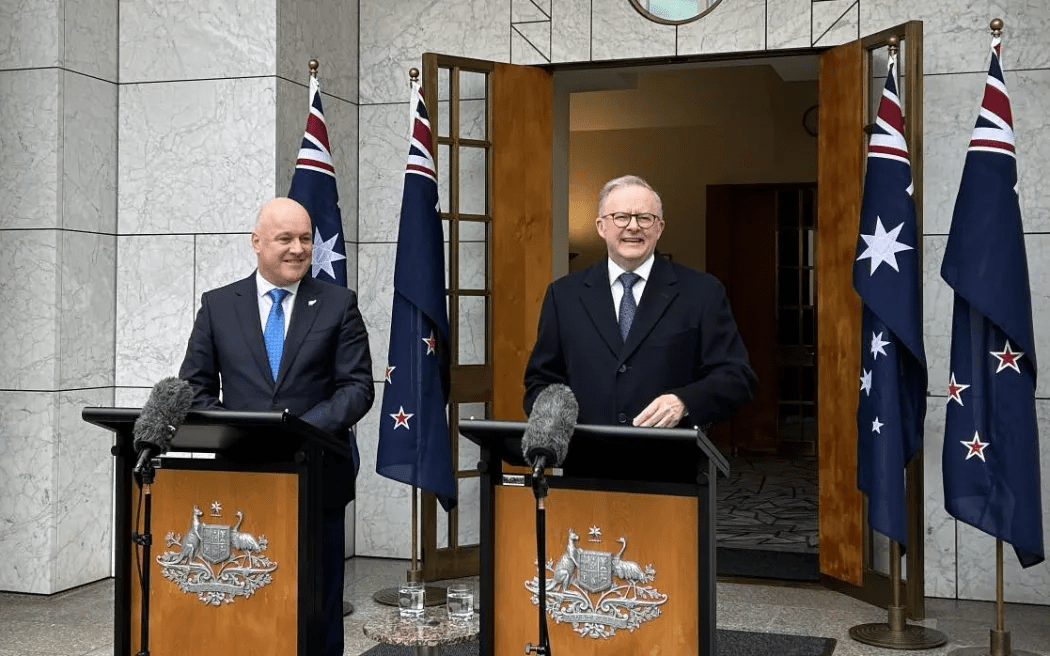
This momentum doesn’t stop at New Zealand. Parallel developments with Australia reinforce India’s strategic pivot toward trusted, high-standard partners in the region. The India-Australia Economic Cooperation and Trade Agreement (ECTA), which entered into force in late 2022, has already delivered strong results: 90% of Australian goods exports to India are now tariff-free by value, with further liberalizations. Critically, from January 1, 2026, India enjoys zero-duty access across 100% of Australian tariff lines, a major boon for Indian exporters in labor-intensive and value-added sectors.
Bilateral trade between India and Australia has climbed impressively, reaching around $24 billion in recent years, with strong growth in goods and services. Negotiations for a more comprehensive Economic Cooperation Agreement (CECA) are advancing, promising even deeper integration in critical minerals, defense, education, and clean energy—areas where complementarities abound. Australia’s resources and India’s manufacturing and services prowess create a natural synergy, enhancing supply chain resilience amid global disruptions.
These deals with New Zealand and Australia exemplify a mature, confident Indian trade policy: one that prioritizes quality FTAs with like-minded democracies, emphasizes balanced market access, and leverages India’s demographic dividend and economic dynamism. In a world grappling with protectionism and fragmentation, such agreements signal India’s role as a stabilizing force and growth engine. They not only expand export opportunities and attract investment but also foster people-to-people ties—through easier movement of professionals, students, and tourists—and strengthen broader strategic cooperation in the Indo-Pacific.
PM Modi’s visit to New Zealand will undoubtedly build on this foundation, showcasing cultural affinities, diaspora connections, and a shared commitment to democracy and sustainable development. As tariffs fall and barriers dissolve, the real winners will be businesses, workers, and consumers on both sides. This is the promise of ambitious diplomacy: turning geographic distance into economic closeness, and potential into prosperity.
India’s deepening ties across the Pacific aren’t just about trade figures—they’re about building a future of collaborative success. With partners like New Zealand and Australia, the journey toward a more interconnected and resilient global economy looks brighter than ever.