


AI Generated Summary
- It was the sound of machinery tearing into a building their grandparents’ grandparents had prayed in — a gurdwara built over a century ago, when the Singh Sabha movement was still reshaping what it meant to be Sikh in a modernizing Punjab.
- Delhi Minister Manjinder Singh Sirsa put words to that grief when he called the demolition a grave sin, and noted the bitter irony of a country that presents itself internationally as a guardian of minority rights while allowing gurdwara after gurdwara to be encroached upon or converted into markets.
- From Pathankot, a Sikh granthi’s appeal was simpler and sadder still — a plea that gurdwaras are sacred places for all faiths where people gather and find solace, and that despite living across the border, Sikhs feel a deep, enduring connection to a shrine most of them will never get to visit.
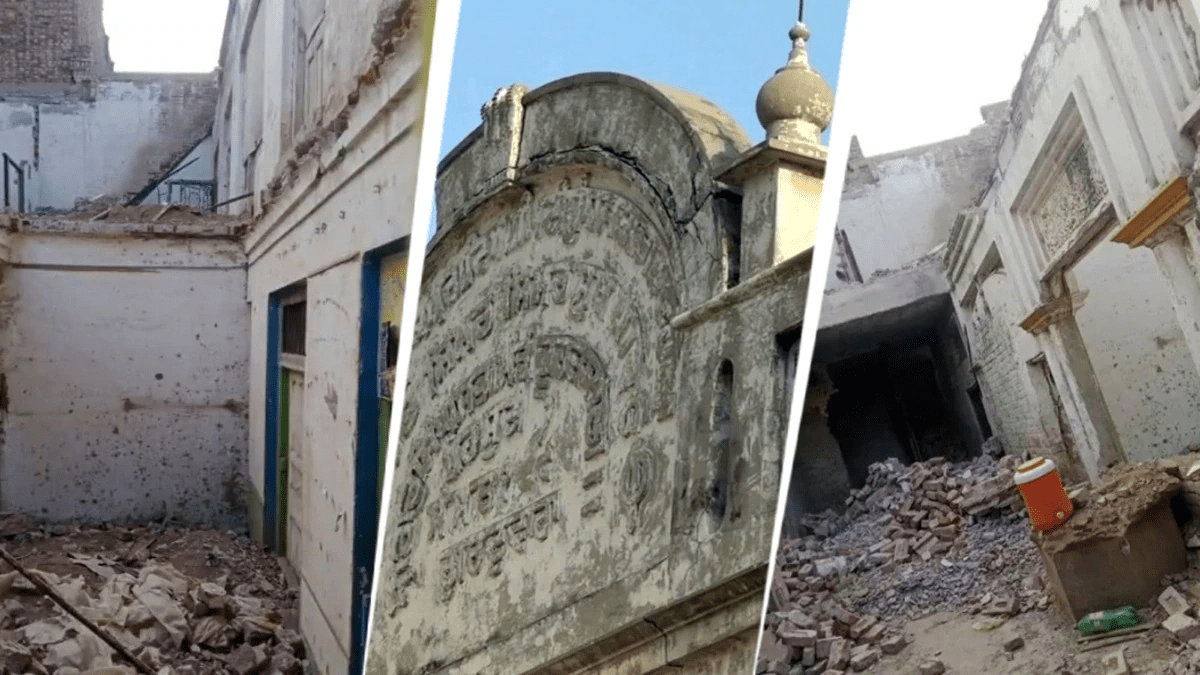
For the Sikh community of Farooqabad, the night of June 24 was not an abstraction. It was the sound of machinery tearing into a building their grandparents’ grandparents had prayed in — a gurdwara built over a century ago, when the Singh Sabha movement was still reshaping what it meant to be Sikh in a modernizing Punjab. By morning, portions of the Gurdwara Sri Guru Singh Sabha Sahib lay in rubble, demolished by a local businessman who never bothered to seek the legal clearance required to touch it. No court order. No warning to the community that has treated this ground as sacred for generations.
What happened next says everything about what it costs, in Pakistan today, to be a religious minority guarding your own history. It wasn’t the heritage department that stopped the bulldozers. It wasn’t the Evacuee Trust Property Board, the very institution created to protect Sikh religious property. It was ordinary Sikh residents of Farooqabad who had to pour into the streets — who had to make noise, take risks, and force a confrontation with indifference — before anyone in authority even acknowledged that a 125-year-old shrine was being erased. An official later admitted as much: the department took no notice of the demolition until the Sikhs of the area protested. Let that sit. The only reason anyone in power reacted was that a minority community, already carrying the weight of decades of institutional neglect, had to physically stand between their history and its destruction.
That is the real story here — not a bureaucratic lapse, but a community once again forced to fight for the right to simply exist and be remembered. The Sikhs of Farooqabad did not have the luxury of trusting their government to protect what mattered to them. They had to protest to be seen at all.
This did not happen in isolation, and Sikhs on both sides of the border know it. India’s Ministry of External Affairs called the demolition a highly deplorable and targeted act of vandalism against a revered Sikh shrine, and pointedly noted that no meaningful action had been taken by local authorities before the outcry. More pointedly still, the MEA said this was not an isolated incident, describing a systemic targeting of religious minorities and their places of worship in Pakistan that continues unabated. For the Sikh diaspora, that sentence isn’t news — it’s confirmation of something they have watched unfold for years: shrines shuttered, heritage sites left to decay, sacred land quietly swallowed by encroachment, one gurdwara at a time. Of the nearly 160 historic gurdwaras that once served Sikh communities across the country, only around 20 to 24 remain functional today. That number alone is a form of grief.
Delhi Minister Manjinder Singh Sirsa put words to that grief when he called the demolition a grave sin, and noted the bitter irony of a country that presents itself internationally as a guardian of minority rights while allowing gurdwara after gurdwara to be encroached upon or converted into markets. From Pathankot, a Sikh granthi’s appeal was simpler and sadder still — a plea that gurdwaras are sacred places for all faiths where people gather and find solace, and that despite living across the border, Sikhs feel a deep, enduring connection to a shrine most of them will never get to visit. That connection is the whole point. A gurdwara in Farooqabad is not simply Pakistani real estate. It belongs to a global Sikh community, most of whom carry it only in memory and inherited longing — which makes its casual destruction, and the silence that briefly followed it, feel less like negligence and more like abandonment.
To be fair, the pressure worked, eventually. Punjab’s Minorities Minister Ramesh Singh Arora visited the site and promised restoration, and ordered an inquiry into the land’s legal status. That is a real, if belated, concession — and Sikh advocacy groups, including the Delhi Sikh Gurdwara Management Committee, are right to keep pushing for follow-through rather than settling for a press appearance. But promises made only after protests, only after diplomatic condemnation, only after the story became too visible to ignore, are promises extracted under pressure — not proof of a system that values Sikh heritage on its own terms.
That is the deeper wound here. It is not just that a wall came down. It is that a minority community had to march, had to make itself heard above institutional silence, had to rely on a foreign government’s condemnation to get its own history taken seriously. The traders and families now anxious about potential eviction from the surrounding land deserve humane treatment too — but their fate should not overshadow the more basic injustice: that Sikhs in Pakistan continue to be treated as custodians of a heritage nobody else is willing to actively protect, forced again and again to prove that their sacred spaces matter.
A gurdwara can be rebuilt with brick and mortar. What’s harder to restore is the sense, for a community that has already lost so much of its physical heritage since Partition, that it doesn’t have to fight this hard just to be remembered.