


AI Generated Summary
- Violent protests erupted in the southern English city of Southampton following the conviction of a British Sikh man for the fatal stabbing of an 18-year-old teenager, with tensions further inflamed by the release of police body-camera footage showing officers handcuffing the dying victim during his final moments.
- The case has also reignited discussion about the legal right of Sikhs in the United Kingdom to carry a kirpan, a ceremonial dagger that forms one of the five articles of faith in Sikhism.
- A joint statement issued by members of the British Sikhs All Party Parliamentary Group emphasised that the case concerned the actions of an individual and should not be used to stigmatise an entire faith community.
London: Violent protests erupted in the southern English city of Southampton following the conviction of a British Sikh man for the fatal stabbing of an 18-year-old teenager, with tensions further inflamed by the release of police body-camera footage showing officers handcuffing the dying victim during his final moments.
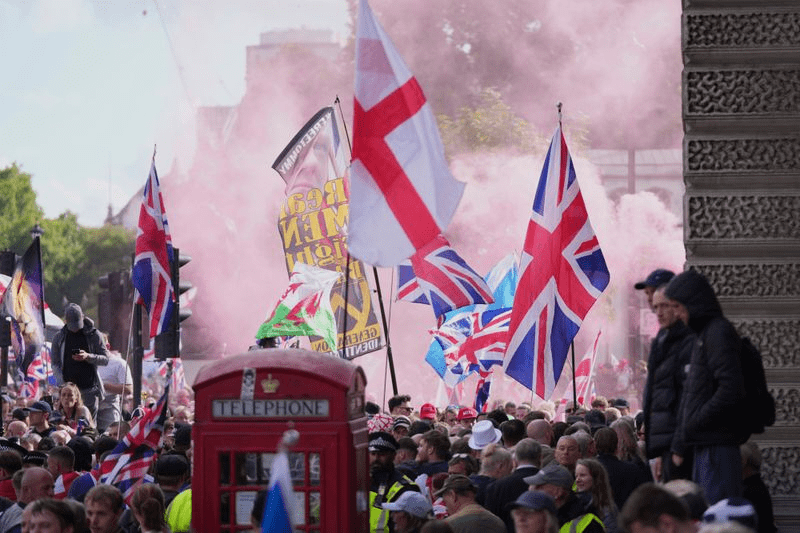
The unrest broke out shortly after 23-year-old Vickrum Digwa was sentenced to life imprisonment for the murder of Henry Nowak, who was stabbed during an altercation in December last year. Crowds gathered near Digwa’s residence on Tuesday evening, where demonstrators clashed with police officers deployed in riot gear.
According to Hampshire and Isle of Wight Constabulary, protesters hurled stones and bottles at officers, leaving 11 police personnel and a police dog injured. Authorities said the disturbances were fuelled by claims from anti-immigration activists alleging unequal treatment by law enforcement agencies.
Chief Constable Alexis Boon condemned the violence, describing it as an attempt to exploit a tragic incident and sow division within the community. UK Home Secretary Shabana Mahmood echoed those concerns, warning that individuals responsible for the disorder would face legal consequences.
The controversy has intensified due to an ongoing investigation into the conduct of officers at the crime scene. Video footage that emerged during the trial showed police restraining Nowak after reports that he had made racist remarks. Critics have questioned whether officers properly assessed the situation, while the victim’s family has appealed for calm and urged the public not to allow the tragedy to deepen social tensions.
Prime Minister Keir Starmer has backed those calls, stressing the importance of allowing the Independent Office for Police Conduct to complete its inquiry before conclusions are drawn.
The case has also reignited discussion about the legal right of Sikhs in the United Kingdom to carry a kirpan, a ceremonial dagger that forms one of the five articles of faith in Sikhism. Digwa, who belongs to the Nihang Sikh tradition, argued during the trial that he acted in self-defence using a 21-centimetre blade carried for religious reasons.
However, Judge William Mousley rejected that defence, stating that the accused had misrepresented aspects of the incident and misused the responsibilities attached to religious freedoms. The court heard that Digwa falsely claimed he had been subjected to racial threats before the stabbing.
In response to growing public debate, several Sikh organisations and lawmakers have distanced the wider community from the crime. A joint statement issued by members of the British Sikhs All Party Parliamentary Group emphasised that the case concerned the actions of an individual and should not be used to stigmatise an entire faith community.
The statement noted that the murder had generated fear among Sikhs themselves and warned against attempts to exploit the case to promote hostility or division. Parliamentarians also highlighted that legal protections for the kirpan remain enshrined in British law, including provisions under the Offensive Weapons Act.
The case has additionally prompted scrutiny of policing policies related to race and equality. Britain’s National Police Chiefs’ Council confirmed it is reviewing anti-racism guidance issued last year following concerns over language suggesting differential treatment to achieve equal outcomes.
Legal proceedings linked to the case remain ongoing. Digwa’s mother, Kiran Kaur, is awaiting sentencing after being convicted of removing the murder weapon from the scene. Separately, Digwa’s father and elder brother have been granted bail while facing charges related to the possession of offensive weapons discovered during a police search of the family home.
As investigations continue and political debate intensifies, officials have appealed for restraint, warning that efforts to turn the tragedy into a wider cultural or communal conflict risk deepening divisions across British society.