


AI Generated Summary
- This is a very positive step, long overdue, and a welcome correction to years of misplaced tolerance that allowed a fringe separatist movement to harass communities, glorify violence, and strain Canada-India relations.
- ” Glorifying designated terrorist groups that have murdered civilians should receive no special exemption simply because the target is India or because the perpetrators wrap themselves in Sikh identity.
- By enforcing consistent rules against terrorist glorification—rather than selective outrage depending on the ideology—Canada signals that it will no longer be a soft touch for imported conflicts.
Canada’s House of Commons has taken a meaningful stand against extremism by passing the Combating Hate Act (Bill C-9). If the Senate follows through, displaying symbols of listed terrorist organizations—including flags of Khalistani groups like Babbar Khalsa International—and intimidating or obstructing people outside places of worship will become criminal offences. This is a very positive step, long overdue, and a welcome correction to years of misplaced tolerance that allowed a fringe separatist movement to harass communities, glorify violence, and strain Canada-India relations.
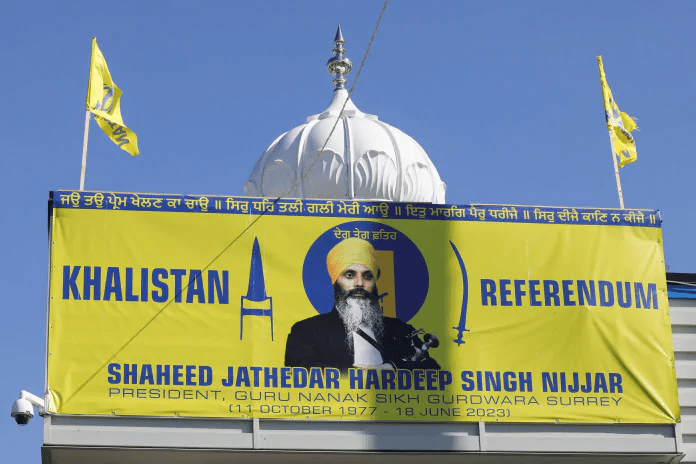
Khalistan extremism is not a legitimate political cause in the Canadian context; it is a toxic ideology rooted in terrorism. Groups like Babbar Khalsa were behind the 1985 Air India bombing, which killed 329 people—mostly Canadian citizens—in the deadliest terrorist attack in Canadian history. The recent murder of vocal anti-Khalistan influencer Nancy Grewal points to Khalistan actors. Canada itself has listed Babbar Khalsa International and the International Sikh Youth Federation as terrorist entities. Yet for years, their flags have been waved openly at rallies, their literature distributed under the banner of “free speech,” and their supporters have disrupted gurdwaras, vandalized temples, and clashed with worshippers. Indo-Canadian communities have endured intimidation, graffiti, and violence while authorities often looked the other way.
The bill directly addresses this reality. It criminalizes the public display of symbols principally associated with listed terrorist groups when done to wilfully promote hatred against identifiable groups. It also targets the deliberate obstruction or intimidation that prevents people from safely accessing temples, gurdwaras, mosques, churches, schools, or community centres. These are not abstract threats. Pro-Khalistan activists have repeatedly blocked access, clashed outside temples in Brampton, and turned religious sites into battlegrounds. Such behaviour has nothing to do with legitimate protest or religious freedom—it is bullying and low-level terrorism designed to sow fear and division within Canada’s diverse South Asian diaspora.
Critics may cry “censorship” or claim this infringes on free expression. That argument collapses under scrutiny. Canada already bans certain symbols and speech that cross into hate or incitement—Nazi swastikas are not protected “political expression.” Glorifying designated terrorist groups that have murdered civilians should receive no special exemption simply because the target is India or because the perpetrators wrap themselves in Sikh identity. Most Sikhs in Canada and India reject Khalistan separatism; the movement survives largely through diaspora radicalization, foreign (Pakistan) funding, and the occasional indulgence of politicians chasing ethnic votes. True religious freedom means protecting worshippers from harassment, not shielding those who turn faith into a vehicle for violence.
This legislation also serves Canada’s broader national interest. Allowing extremist safe havens damages social cohesion, fuels transnational tensions, and undermines counter-terrorism efforts. Canada’s own intelligence assessments have flagged Khalistani networks for propaganda, fundraising, and posing security risks. By enforcing consistent rules against terrorist glorification—rather than selective outrage depending on the ideology—Canada signals that it will no longer be a soft touch for imported conflicts. It strengthens the rule of law and reassures law-abiding immigrants that their places of worship and daily lives will not be disrupted by radicals.
The bill is not a panacea. It must be enforced rigorously, without political interference, and paired with stronger efforts to designate additional entities if needed and improve intelligence sharing. But its passage marks a principled shift: Canada is finally prioritizing public safety, community harmony, and opposition to terrorism over the sensitivities of a loud, violent minority.