

AI Generated Summary
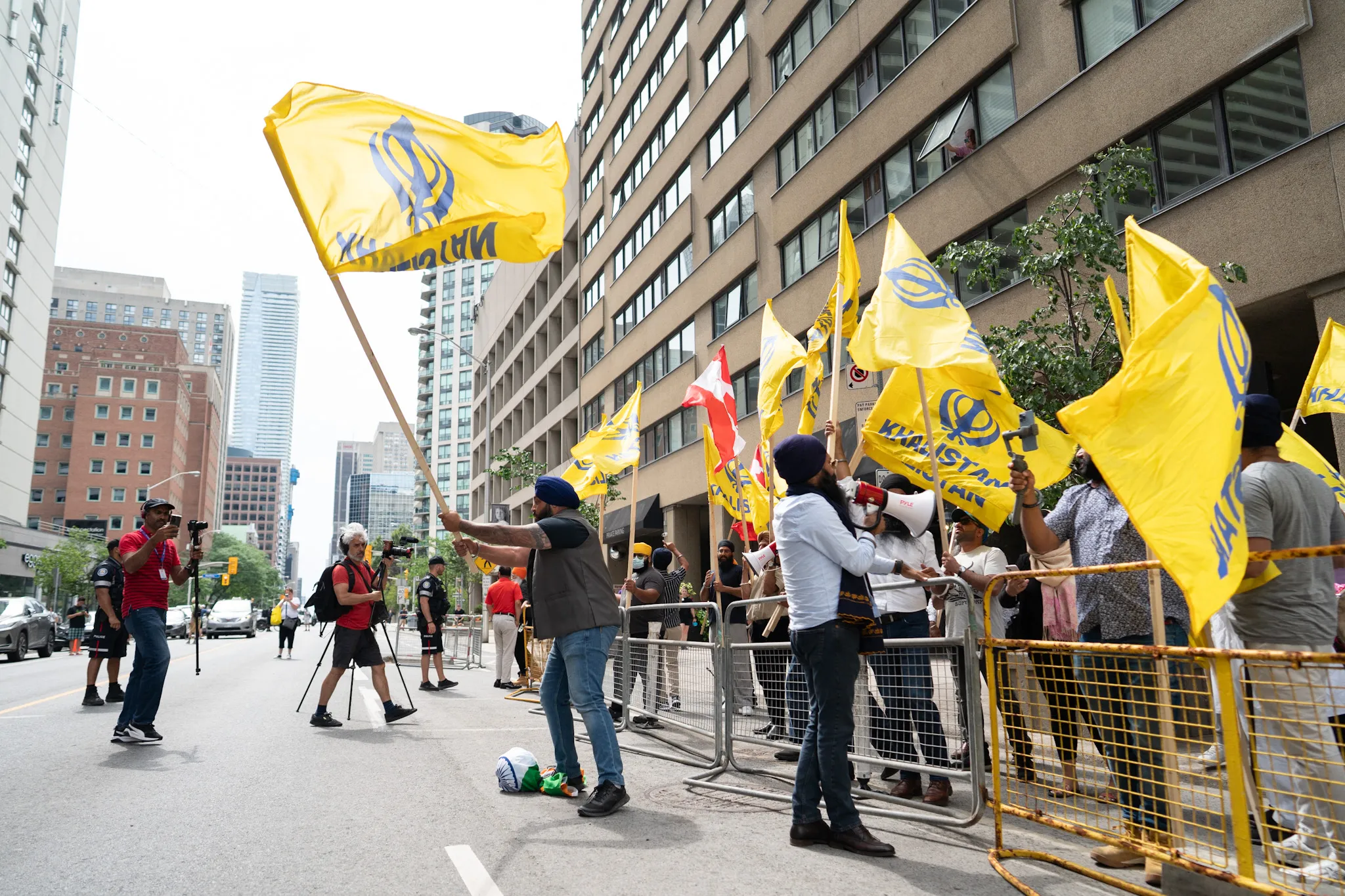
- A small but determined group of Canada-based Khalistani extremists (CBKEs) continues to use the country as a base for the promotion, fundraising, and planning of violence.
- While no such attacks occurred on Canadian soil last year, the report warns that their ongoing involvement in politically motivated violent extremism poses a direct national security threat to Canada and Canadian interests.
- In one documented case last year, an Iranian-linked “hacktivist” group doxed a Canadian resident journalist, releasing personal documents and triggering hundreds of violent threats against the individual and their family.
The latest public report from the Canadian Security Intelligence Service (CSIS) delivers a sobering assessment of the threats facing Canadian democracy. For the first time, CSIS has explicitly identified Khalistani elements as a violent extremist threat. A small but determined group of Canada-based Khalistani extremists (CBKEs) continues to use the country as a base for the promotion, fundraising, and planning of violence. These individuals, often well-connected to Canadian citizens, exploit community institutions to raise funds that are diverted toward violent activities. While no such attacks occurred on Canadian soil last year, the report warns that their ongoing involvement in politically motivated violent extremism poses a direct national security threat to Canada and Canadian interests. This is not abstract ideology; it is active subversion happening on Canadian soil.
At the same time, CSIS confirms that foreign interference in Canadian politics remains aggressive and sophisticated. The main perpetrators—China, Russia, Iran, and Pakistan—deploy a range of tactics designed to undermine the institutions, sway public discourse, and erode trust in democratic processes. Beijing’s intelligence services have evolved their methods, posting job advertisements through cover companies on major online platforms to recruit Canadians with access to proprietary or classified information. They specifically target individuals facing financial difficulties or career ambitions, building long-term networks for espionage and coercion. Russian actors, meanwhile, exploit social divisions through disinformation campaigns amplified by proxies, artificial intelligence, and social media, aiming to weaken Canada’s international alliances and domestic cohesion. Iran engages in brazen transnational repression, including plots to harass, kidnap, or even kill perceived opponents on Canadian territory. In one documented case last year, an Iranian-linked “hacktivist” group doxed a Canadian resident journalist, releasing personal documents and triggering hundreds of violent threats against the individual and their family. Pakistan similarly cultivates covert relationships with politicians, journalists, academics, and community leaders, using proxies to manipulate media narratives and silence dissent within diaspora groups.
These are not isolated incidents or theoretical risks. They represent a coordinated assault on Canadian sovereignty. Foreign powers treat the open society as a vulnerability to be exploited rather than a strength to be defended. Khalistani extremism thrives in the gaps of the multiculturalism policies, where legitimate advocacy sometimes blurs into support for violence. Foreign interference corrodes the very heart of the Canadian electoral system and public debate. The CSIS report makes clear that half-measures are no longer sufficient.
The time for complacency has ended. Parliament must empower CSIS and security agencies with the tools and resources they need to disrupt these networks decisively. This includes stronger screening of foreign funding to community organizations, aggressive prosecution of transnational repression, and public transparency about interference attempts. Political leaders across party lines should reject any tolerance of violent extremism disguised as cultural expression. The intelligence community has sounded the alarm. Ignoring it would betray the safety of Canadian citizens and the integrity of democracy. Canada must choose: defend its values with resolve, or watch them be dismantled from within. The choice is clear, but the window to act is narrowing.