


AI Generated Summary
- Their achievements include a gold medal at the Para Masters National Games in 2022 and a bronze at the 5th National Para Badminton Championship in 2023.
- “People see the final result, but they do not see the early morning practice sessions, the problems with equipment or the continuous struggle to arrange money for competitions.
- Shabana made her mark internationally by winning silver medals in both singles and doubles at the Uganda Wheelchair Para Badminton International in 2022.
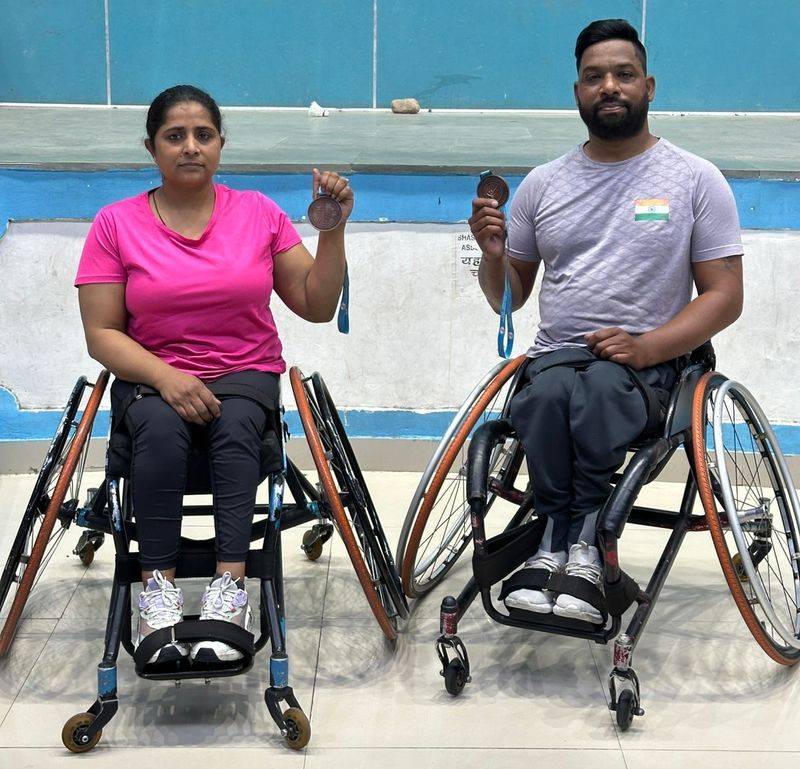
For wheelchair para badminton players Ashwani Sahota and Shabana, every medal carries a story of hardship, sacrifice and shared resolve. The Ludhiana-based couple have spent years competing at national and international events while struggling to arrange suitable equipment, training facilities and funds.
Both are established names in Punjab’s para sports circuit, but their rise has been far from easy. For several years, they played badminton using ordinary basketball wheelchairs because specialised sports wheelchairs, costing nearly Rs 75,000 each, were beyond their means.
The unsuitable equipment placed them at a disadvantage on the court, affecting speed, balance and movement. Yet, they continued to train and compete, gradually building a strong record in wheelchair para badminton.
Their achievements include a gold medal at the Para Masters National Games in 2022 and a bronze at the 5th National Para Badminton Championship in 2023. They also won several medals at the National Wheelchair Para Badminton Championships between 2019 and 2021.
Shabana made her mark internationally by winning silver medals in both singles and doubles at the Uganda Wheelchair Para Badminton International in 2022.
The couple now have their sights set on the Paralympics. However, they say reaching that level requires far more than talent and determination. Specialised wheelchairs, professional coaching, regular international participation and sustained financial backing are essential for athletes seeking qualification.
Their difficulties received wider attention through the City Needs campaign, which highlighted the challenges faced by the couple while competing without proper sporting equipment. The initiative helped draw support from residents and organisations in Ludhiana.
Financial assistance from the district administration also played a crucial role in Shabana’s recent progress. Ludhiana Deputy Commissioner Himanshu Jain sponsored her participation in the Egypt Para Badminton International earlier this year.
Her performance at the tournament enabled her to qualify for the Para Badminton World Championship in Bahrain.
“Without the Deputy Commissioner’s support, it would not have been possible for me to participate and qualify for the world championship. I give him full credit for helping me reach this stage,” Shabana said.
Following her qualification, the Shiromani Gurdwara Parbandhak Committee announced that it would bear the expenses related to her championship fee, visa and travel. United Sikhs and the district administration also provided sports equipment and other assistance.
Such support, however, remains dependent on individual sponsors and short-term interventions. The couple continue to seek help to meet the recurring costs of training, equipment and international tournaments.
For Ashwani and Shabana, their partnership has become their greatest source of strength.
“We are partners in life and in sport. There are times when one of us feels exhausted or discouraged, but the other steps in with motivation. We have faced every difficulty together,” Ashwani said.
Shabana said spectators often noticed the medals but rarely saw the effort required to earn them.
“People see the final result, but they do not see the early morning practice sessions, the problems with equipment or the continuous struggle to arrange money for competitions. Having Ashwani with me makes all of it easier,” she said.
Their contribution extends beyond the badminton court. In March 2024, then Ludhiana District Election Officer Sakshi Sawhney appointed the couple, along with para table tennis player Shubham Wadhwa, as district icons for voters with disabilities.
The initiative was aimed at encouraging electoral participation among persons with disabilities and spreading awareness about accessibility.
The couple have appealed to corporate organisations, non-governmental organisations, philanthropists and sports supporters to provide long-term assistance. They said help with sports wheelchairs, coaching, overseas exposure and tournament expenses could significantly improve their chances of representing India at the Paralympics.
“We have the ability and determination to compete against the best players in the world. What we lack is consistent financial support. With the right backing, we can keep our Paralympic dream alive,” the couple said.
Damaged court raises injury concerns
Alongside their financial challenges, Ashwani and Shabana have also raised concerns about the condition of the wooden badminton court at Shastri Hall, where they have trained for the past few years.
The couple were permitted to use the facility for practice during Sakshi Sawhney’s tenure as Deputy Commissioner. They said access to the hall had played an important role in helping them prepare for major competitions.
During the recent renovation of the hall, three badminton courts were fitted with synthetic surfaces. However, the fourth court, which has a wooden surface and is regularly used by the couple, was not repaired.
According to the players, parts of the wooden flooring are badly worn and damaged, increasing the risk of falls and injuries during wheelchair movement.
They have requested the authorities to either repair or replace the damaged surface at the earliest.
The couple have also sought the construction of an accessible washroom on the ground floor. The existing washroom can only be reached after climbing three to four steps, making it difficult for wheelchair users to access without assistance.
They have further urged the Sports Department to appoint a qualified para badminton coach. They believe that proper coaching and accessible infrastructure would not only support their own preparations but also encourage more persons with disabilities to take up competitive sport.
Officials said the department was aware of the condition of the wooden court. Repair or replacement work would be considered once the required funds were allocated.