


AI Generated Summary
- He is now preparing for the Brazil Para Badminton International 2026, an event that could help him secure crucial ranking points and move closer to qualification for major competitions, including the BWF Para Badminton World Championships and future Paralympic qualification tournaments.
- Ranjit currently trains on a wheelchair priced at around Rs 77,000, while travel, accommodation, nutrition and other tournament-related expenses can add another Rs 50,000 to Rs 1 lakh.
- Two years later, Ranjit made his international debut at the Abia Para Badminton International Championship in Nigeria and won bronze medals in three events.
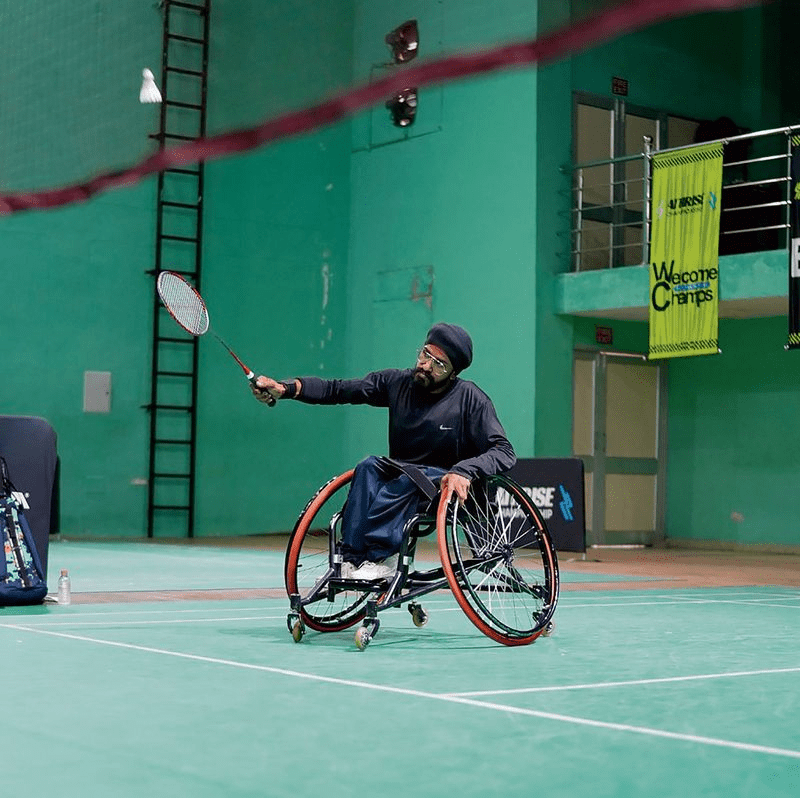
When Ranjit Singh returned from Nigeria with three bronze medals in October 2025, the victory carried a significance far beyond the badminton court. For the 27-year-old para athlete from Amritsar, his first international tournament represented the culmination of a journey shaped by abandonment, disability, limited resources and years of perseverance.
Ranjit, whose lower limbs were affected by polio, was abandoned at the Golden Temple when he was four years old. He was subsequently brought up at Pingalwara’s Manawala campus, where he found care, education and, eventually, the confidence to pursue a sporting career.
Although he had always been drawn to badminton, Ranjit initially believed that his physical condition would prevent him from playing the sport competitively.
“I loved badminton, but I never thought I could play it because of my disability,” he said.
His outlook changed in 2022 after he met Neerja Goyal, a prominent para-badminton player from Uttarakhand, at an event. Hearing about her sporting journey showed him that badminton could also be played professionally from a wheelchair.
Ranjit remained in contact with Goyal, who helped him identify training opportunities and facilities available to para athletes. Encouraged by her support, he began preparing for competitive badminton.
In 2023, he participated in his first national para-badminton tournament. Without the means to purchase a specialised sports wheelchair, he competed using one borrowed from another player.
Two years later, Ranjit made his international debut at the Abia Para Badminton International Championship in Nigeria and won bronze medals in three events. The performance announced his arrival on the international circuit and strengthened his ambition of representing India at the highest level.
He is now preparing for the Brazil Para Badminton International 2026, an event that could help him secure crucial ranking points and move closer to qualification for major competitions, including the BWF Para Badminton World Championships and future Paralympic qualification tournaments.
“My goal is to represent India at the Paralympics,” Ranjit said.
However, his progress has been accompanied by significant financial and logistical challenges. According to Ranjit, Punjab does not have adequate advanced coaching centres or specialised academies for para-badminton players. To access professional training, he has travelled to cities such as Bengaluru, Lucknow and Chandigarh.
The expenses involved in competing internationally are equally demanding. A high-quality customised sports wheelchair can cost between Rs 2 lakh and Rs 3 lakh. Ranjit currently trains on a wheelchair priced at around Rs 77,000, while travel, accommodation, nutrition and other tournament-related expenses can add another Rs 50,000 to Rs 1 lakh.
“Without sponsorship, it becomes extremely difficult for an athlete to participate in international tournaments,” he said.
Support for his Brazil campaign arrived after he approached officiating Akal Takht Jathedar Giani Kuldeep Singh Gargaj and sought financial assistance. After learning about Ranjit’s achievements and requirements, Gargaj referred him to Ludhiana-based Manukhta Di Sewa Society.
The organisation has agreed to cover his expenses for the tournament in Brazil.
Amritsar-based non-profit organisation Voice of Amritsar has also supported the para shuttler by providing specialised sporting equipment valued at approximately Rs 50,000.
Despite the assistance, Ranjit believes para athletes in Punjab continue to receive inadequate institutional recognition and support.
“There are few facilities for para athletes, and awareness about the difficulties we face is also limited,” he said.
As he prepares for his next international challenge, Ranjit continues to train while searching for long-term sponsors. His journey from the Manawala campus to an international podium has already challenged assumptions about disability. His next ambition is greater still: to wear India’s colours at the Paralympic Games.