


AI Generated Summary
- Local tradition holds that the tree witnessed events separated by nearly nine decades — the visit of the sixth Sikh Guru in the early 17th century and the passage of the tenth Guru during the turbulent winter of 1705.
- It is this convergence of memories — of the sixth Guru and the tenth Guru — that gives Gurusar Sahib its distinctive place in the religious heritage of the region.
- The pond subsequently came to be regarded as a sacred sarovar, and generations of devotees have continued to bathe in its waters in the belief that they carry blessings for those suffering from skin ailments.
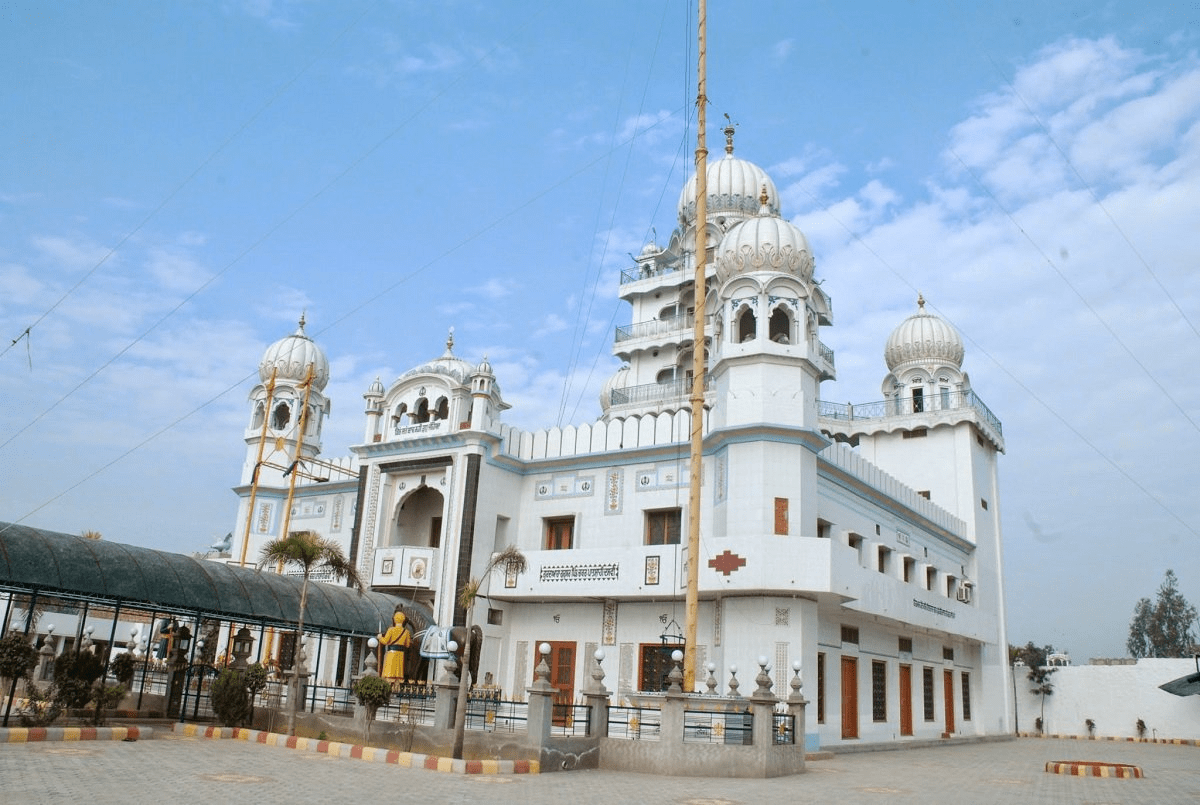
Tucked away in Lal Kalan village near Samrala, Gurdwara Gurusar Sahib may appear modest beside Punjab’s better-known religious landmarks. Yet within its precincts survives a remarkable legacy associated with two Sikh Gurus — Guru Hargobind Sahib and Guru Gobind Singh.
At the heart of the shrine stands an old beri tree. For the residents of Lal Kalan, it is far more than part of the landscape. Local tradition holds that the tree witnessed events separated by nearly nine decades — the visit of the sixth Sikh Guru in the early 17th century and the passage of the tenth Guru during the turbulent winter of 1705.
According to accounts preserved in the village, Guru Hargobind Sahib reached Lal Kalan in 1618 after his release from Gwalior Fort, accompanied by the 52 kings whose freedom is commemorated in Sikh tradition. During his stay, the Guru is believed to have tethered his horse to the beri tree and spent the night among the local sangat.
Oral tradition also associates the visit with the anand karaj of a king’s daughter with a local Sikh.
Among the most enduring stories connected with Guru Hargobind Sahib’s stay is that of a man suffering from leprosy who lived in a hut nearby. On learning that the Guru had arrived in the village, the man approached him seeking relief from his illness.
The Guru, according to local belief, instructed him to apply foam from the mouth of his horse to his body and then bathe in a nearby pond. The man is believed to have been cured. The pond subsequently came to be regarded as a sacred sarovar, and generations of devotees have continued to bathe in its waters in the belief that they carry blessings for those suffering from skin ailments.
Another unusual piece of local lore surrounds a barota tree in the village. It is said that Guru Hargobind Sahib referred to it as an amb, or mango, tree. When devotees pointed out that it was a barota, the Guru repeated his words. According to the tradition handed down in Lal Kalan, its leaves then took on the appearance of mango leaves — a feature residents say can still be seen.
A second chapter in 1705
Nearly nine decades later, Lal Kalan became associated with another defining period in Sikh history.
In December 1705, following the Battle of Chamkaur, Guru Gobind Singh was making the perilous journey from Machhiwara while disguised as Uch Da Peer. He was accompanied by Ghani Khan and Nabi Khan, the two Muslim brothers remembered for helping the Guru despite the grave danger involved, along with three Sikhs.
Local tradition holds that during this journey Guru Gobind Singh stopped at Lal Kalan and rested beneath the same beri tree associated with Guru Hargobind Sahib.
It is this convergence of memories — of the sixth Guru and the tenth Guru — that gives Gurusar Sahib its distinctive place in the religious heritage of the region.
A shrine gradually came up around the historic site. Today, the gurdwara is under the management of the Shiromani Gurdwara Parbandhak Committee (SGPC), with kar sewa entrusted to Kaar Sewa Delhi Wale. Under the stewardship of its chief, Bachan Singh, extensive work has been undertaken to develop the complex, including the darbar and langar hall.
For Lal Kalan’s residents, however, the significance of Gurusar Sahib cannot be measured simply in terms of its buildings. The village remains closely involved with the shrine, with residents contributing to its upkeep, langar, religious programmes and other forms of sewa.
The newly constructed darbar is scheduled to be inaugurated on Sunday, marking another chapter in the development of the historic shrine.
Despite its centuries-old associations, villagers believe Gurusar Sahib remains relatively unknown outside the area.
Jagdeep Singh, a resident of Lal Kalan, said more needs to be done to bring the shrine’s history to the attention of pilgrims and visitors. He suggested that the SGPC install prominent signboards along major roads and highways, strengthen the shrine’s presence on social media and work towards including it on Punjab’s religious and heritage tourism circuit.
Places such as Gurusar Sahib, he said, represent an important part of Punjab’s historical and religious inheritance but can remain overlooked if their stories are not adequately documented and publicised.
For those who visit, however, the old beri tree continues to tell that story quietly. Beneath its branches, local memory brings together two distant moments in Sikh history — one associated with Guru Hargobind Sahib’s arrival and traditions of healing, and the other with Guru Gobind Singh’s journey through a period of extraordinary adversity.
More than three centuries later, the tree, the sarovar and the shrine remain at the centre of Lal Kalan’s collective memory — keeping alive a heritage that villagers now hope will become known far beyond the boundaries of their village.