


AI Generated Summary
- By collecting and compressing the residue for use in punching bags, HarvestHit attempts to turn a widely available agricultural by-product into a useful and marketable resource.
- The initiative received appreciation during the interaction, and Veer was encouraged to explore a collaboration with the Indian Army Taekwondo Services Team in Bengaluru.
- Veer is now seeking to expand the initiative through partnerships with institutions working in the fields of environmental protection, sports development and social impact.
Seventeen-year-old Veer Pratap Sardana’s HarvestHit initiative offers a practical use for crop residue while promoting sustainable sports equipment
At an age when most students are still exploring career options, 17-year-old Veer Pratap Sardana has developed an innovative response to one of northern India’s most persistent environmental problems.
Through his initiative, HarvestHit, the Phagwara-based teenager is converting paddy straw into durable, eco-friendly punching bags for boxing and fitness training. The project seeks to provide farmers’ crop residue with a productive commercial use while reducing dependence on conventional filling materials used in sports equipment.
Paddy straw is frequently burned after harvesting to clear agricultural fields quickly, contributing to severe seasonal air pollution across Punjab and neighbouring states. By collecting and compressing the residue for use in punching bags, HarvestHit attempts to turn a widely available agricultural by-product into a useful and marketable resource.
The motivation behind the project emerged from a personal experience. Veer was deeply attached to his grandfather, the late Inder Krishna Sardana, who suffered from asthma. According to Veer’s parents, Nidhi and Dheeraj Sardana, witnessing his grandfather’s struggle with respiratory illness prompted the teenager to examine the connection between deteriorating air quality and crop-residue burning.
After his grandfather’s death, Veer began researching possible ways of putting paddy straw to constructive use. He spent considerable time experimenting with the material, studying its properties and refining the design of the punching bag.
Several rounds of trials eventually resulted in a product filled with processed and compressed paddy straw. The bags were designed to withstand repeated use while offering a more environmentally responsible alternative to conventional sports-training equipment.
The initiative has gradually gained recognition among government bodies, defence establishments, medical professionals, industrial associations and educational institutions.
More than 2,000 HarvestHit punching bags have reportedly been supplied to organisations including the Punjab Armed Police, Kapurthala Cantonment and Jaipur Cantonment. The products have also reached government schools and colleges in Jalandhar and Kapurthala districts, as well as gyms at Lovely Professional University, GNA University and Kamla Nehru College for Women.
Veer is now seeking to expand the initiative through partnerships with institutions working in the fields of environmental protection, sports development and social impact.
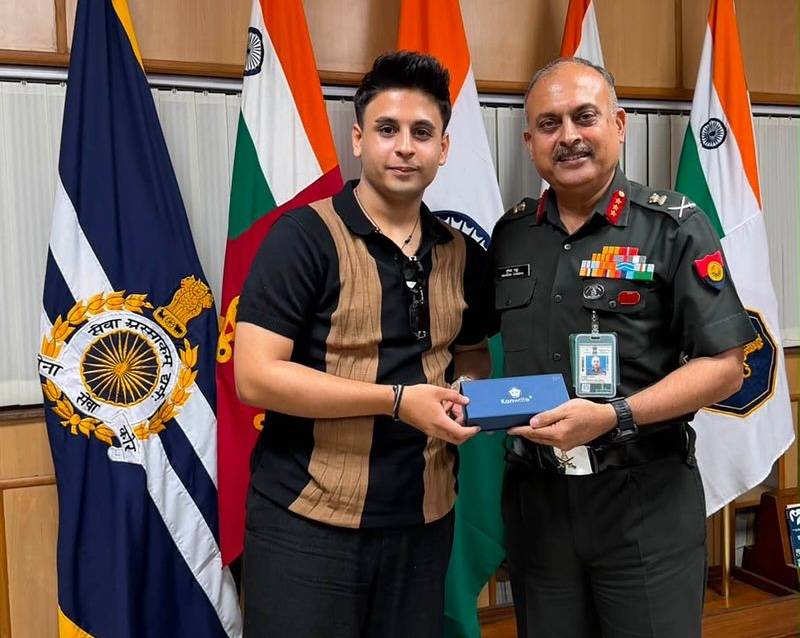
During an interaction with Lt Gen Mukesh Chadha and other senior Indian Army officers, Veer presented the idea and explained how agricultural residue could be incorporated into sustainable sporting equipment.
The initiative received appreciation during the interaction, and Veer was encouraged to explore a collaboration with the Indian Army Taekwondo Services Team in Bengaluru. Such an association could help introduce environmentally responsible training equipment within defence sporting facilities while also spreading awareness about crop-residue management.
Veer has also discussed the health consequences of air pollution with pulmonologist Dr Vivek Nangia, Vice-President of Max Super Speciality Hospital. The interaction focused on the growing incidence of respiratory ailments associated with poor air quality and seasonal stubble burning in northern India.
HarvestHit has also received encouragement from Delhi Chief Minister Rekha Gupta. Veer has presented the initiative before industrial organisations, educational institutions and entrepreneurship forums as part of his effort to build wider support for the project.
Although centred on a punching bag, HarvestHit represents a broader approach to environmental innovation—creating economic value from material otherwise treated as waste.
By linking agriculture, manufacturing, public health and sport, Veer’s initiative demonstrates how young innovators can develop practical solutions rooted in local challenges. His work also highlights the potential of sustainable product design to complement larger efforts aimed at reducing stubble burning and improving air quality.