


AI Generated Summary
- The allocation of Rs 26 billion for youth skills and entrepreneurship in 2025-26 further positions Punjab as a national leader in skills development.
- Punjab has ranked as a Top Performer under the Startup India State Ranking Framework, reflecting its commitment to building a robust startup ecosystem.
- Since its 2016 launch, the scheme has facilitated Rs 62,791 crore in loans to 275,291 beneficiaries, with over 80% of loans directed to women entrepreneurs.
India’s demographic dividend is no longer just a statistic—it is becoming a transformative force. The nation’s youth are increasingly transitioning from being job seekers to job creators, fueled by a powerful ecosystem of government initiatives that prioritize entrepreneurship, skill development, and accessible education. Punjab, in particular, has emerged as a trailblazer in this movement, demonstrating how targeted policies can reverse talent migration and unlock youthful potential.
India’s startup ecosystem has grown exponentially over the past decade. As of December 2025, over 2.07 lakh startups have been recognized under the Startup India initiative, generating more than 21.9 lakh direct jobs. The country now hosts 118 unicorns—startups with valuations exceeding $1 billion—making India the world’s third-largest startup hub. Approximately 50% of these registered startups emerge from tier-2 and tier-3 cities, democratizing entrepreneurship beyond metropolitan centers.
The Stand-Up India Scheme has been instrumental in supporting grassroots entrepreneurship. Since its 2016 launch, the scheme has facilitated Rs 62,791 crore in loans to 275,291 beneficiaries, with over 80% of loans directed to women entrepreneurs. This focus on inclusive entrepreneurship is reshaping who gets to create jobs in India.
Punjab’s Entrepreneurship Edge
Punjab has ranked as a Top Performer under the Startup India State Ranking Framework, reflecting its commitment to building a robust startup ecosystem. The Punjab Startup Policy 2025 offers tangible support: ₹3 lakh seed grants, 8% loan subsidies up to ₹5 lakh annually for five years, and 25% reimbursement on lease rentals for office spaces in government-approved incubators.
The state has taken a unique step by integrating student entrepreneurship directly into its policy framework. Through the Punjab Student Entrepreneurship Scheme, students receive 20% attendance relaxation and 4% grace marks for startup involvement, allowing young minds to innovate without academic risk. Over 50% of registered startups in Punjab are led by women, setting benchmarks for inclusive entrepreneurship.
The Skill India Mission has equipped millions with skills for employment and entrepreneurship. Employment rose from 47.5 crore in 2017-18 to 64.33 crore in 2023-24—a net addition of 16.83 crore jobs. Unemployment rates dropped from 6% to 3.2%, while youth unemployment fell from 17.8% to 10.2%.
More than 1.56 crore women have joined the formal workforce through Skill India programs. Over 2.27 crore youth have been trained under skill programs as of 2025, compared to 51.5 lakh in 2014. The gig economy is projected to grow from 1 crore in 2024-25 to 2.35 crore by 2029-30, creating new avenues for self-reliant work.
Education Without Borders: Digital Initiatives
Digital India has dismantled geographical barriers to quality education. The SWAYAM MOOCs platform has witnessed cumulative enrollments of approximately 5.80 crore learners with 52.88 lakh certifications. The July 2025 semester alone recorded over 49 lakh enrollments, marking the platform’s highest growth.
PM e-Vidya and the National Digital Library have further expanded access, while PM Vidya Lakshmi—launched in November 2024—has sanctioned over 3.31 lakh education loans worth Rs 7,229.4 crore in its first year. The scheme provides collateral-free, guarantor-free loans to students in quality higher education institutions, with 3% interest subvention for families earning up to Rs 8 lakh annually.
The Atal Innovation Mission has established 10,000 Atal Tinkering Labs across 722 districts, mentoring more than 1.1 crore students in hands-on innovation. Additionally, 72 Atal Incubation Centres operate across India, incubating over 3,500 startups that have created 32,000 jobs. More than 1,000 of these incubated startups have women leaders or founders.
Looking Home Instead of Abroad
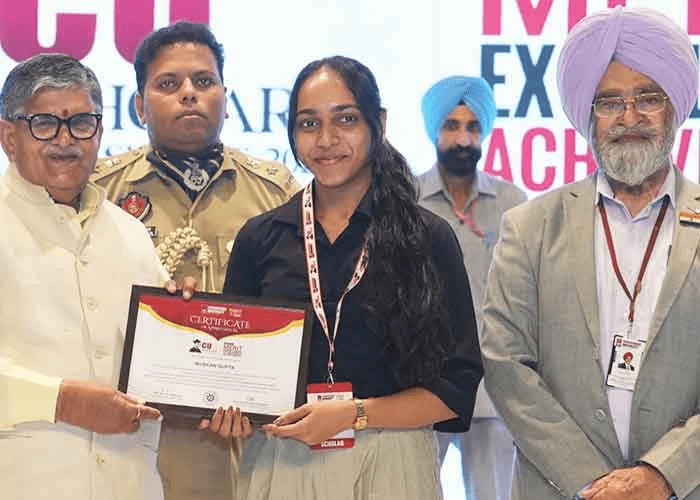
The narrative is shifting. Rather than migrating abroad for opportunities, India’s youth are increasingly building careers within the country. Chandigarh University’s commitment to merit-based scholarships—awarding approximately Rs 200 crore annually with 40% going to daughters—exemplifies how institutions are translating national visions like “Beti Bachao, Beti Padhao” into tangible reality [article].
Punjab’s recent achievement of nearly one million jobs created since February 2024 demonstrates the state’s capacity to reverse talent migration. The allocation of Rs 26 billion for youth skills and entrepreneurship in 2025-26 further positions Punjab as a national leader in skills development.
India’s youth inherit the intellectual legacy of Aryabhatta, Charaka, Sushruta, Panini, and Chanakya. The schemes and initiatives discussed here are not merely policy instruments—they are invocations of that ancient spirit of inquiry and innovation. When 1.76 lakh startups fuel entrepreneurship, when 64.33 crore people have employment, and when 5.80 crore learners access education digitally, the transformation is undeniable.
The journey from job seekers to job creators is underway. Punjab and India are proving that with the right ecosystem, young minds can build not just careers, but nations.
