

AI Generated Summary
- A small, highly motivated network treats public space in the United States and Canada as a stage for a conflict that the vast majority of Sikhs in Punjab and in the diaspora have long rejected.
- It was the latest installment in a strategy that treats democratic openness in the West as a license to export a rejected political project.
- to keep the flame of grievance alive among a diaspora minority and to force every Sikh in North America to answer, implicitly or explicitly, for the actions of those who claim to speak in their name.
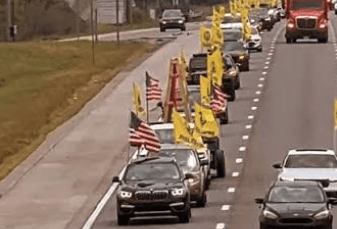
On the first of August, drivers on Indianapolis’s I-465 West found themselves trapped behind a five-mile procession of cars flying yellow Khalistan flags. What local residents experienced as an unexpected traffic snarl was, according to organizers, a deliberate “convoy of American Sikhs” mobilizing support for a non-binding referendum on carving a separate Sikh state out of India’s Punjab. The vote is scheduled for August 16 at Richard G. Lugar Plaza. The group behind it is Sikhs for Justice, an organization long regarded as a vehicle for separatist extremism.
The spectacle was textbook diaspora activism: free speech exercised in the open, protected by the First Amendment, and staged for maximum visibility. Yet the cost was paid not by the organizers alone. Ordinary motorists lost time. Local authorities had to manage a rolling disruption. And, more damaging still, the images of flag-waving processions and secessionist slogans once again projected a radical fringe onto a community that has, by every measurable standard, integrated successfully into American and Canadian life.
"5 Miles-long Khalistan Car Rally in Indianapolis, promoting an upcoming Khalistan Referendum vote on 8/16; participants cast ballots in reference to seceding from the Indian Union." INDIAN as in INDIA. Why the heck is this happening on US soil. pic.twitter.com/6ardTlRveD
— Dennis Michael Lynch (@TrustDML) August 2, 2026
This is the recurring problem with Khalistani extremism in North America. A small, highly motivated network treats public space in the United States and Canada as a stage for a conflict that the vast majority of Sikhs in Punjab and in the diaspora have long rejected. Convoys that clog highways, rallies that feature inflammatory rhetoric, and campaigns that equate legitimate grievance with the demand for territorial secession do not advance justice. They cheapen it. They invite the public to associate turbans and kirpans with separatism rather than with the quiet success of Sikh entrepreneurs, professionals, soldiers, and neighbors.
The pattern is familiar in Canada, where the same networks have repeatedly tested the limits of tolerance—protests outside temples, desecration of symbols, and the residual shadow of past violence that still shapes institutional memory. Each incident forces mainstream Sikh organizations into a defensive crouch: they must repeatedly affirm that they do not support terrorism or secession while the cameras linger on the loudest voices. The result is reputational damage that no amount of community service or economic contribution fully erases in the public mind.
Indianapolis was not an isolated outburst. It was the latest installment in a strategy that treats democratic openness in the West as a license to export a rejected political project. The referendum itself carries no legal weight. It will not alter borders, rewrite constitutions, or compel any government to negotiate. Its real function is symbolic and polarizing: to keep the flame of grievance alive among a diaspora minority and to force every Sikh in North America to answer, implicitly or explicitly, for the actions of those who claim to speak in their name.
Free societies rightly protect unpopular speech. They are under no obligation to celebrate the deliberate injection of foreign separatism into their highways and public squares. The people who drove that convoy in Indianapolis exercised a right. They also imposed a cost—on traffic, on civic patience, and on the reputation of millions of Sikhs who want nothing to do with their cause. That cost is real, and it is avoidable.