


AI Generated Summary
- The town witnesses large congregations during major Sikh religious occasions, including the birth anniversaries of Guru Nanak Dev, Guru Tegh Bahadur and Guru Gobind Singh, as well as Guru Tegh Bahadur’s Guruship Day and Martyrdom Day, reaffirming its enduring place as one of Sikhism’s most sacred centres.
- The formal ceremony of recognition was performed by Baba Gurditta, a descendant of Baba Buddha, who applied the ceremonial tilak and affirmed Guru Tegh Bahadur as the Ninth Guru of the Sikhs.
- Revered across the Sikh world, the town is most widely recognised as the site where Guru Tegh Bahadur was acknowledged as the Ninth Sikh Guru.
Nestled about 43 kilometres from Amritsar, Baba Bakala Sahib occupies a unique place in Punjab’s religious and historical landscape. Revered across the Sikh world, the town is most widely recognised as the site where Guru Tegh Bahadur was acknowledged as the Ninth Sikh Guru. Yet, its significance extends far beyond that defining moment, with deep associations spanning multiple generations of Sikh history.
The roots of Baba Bakala’s importance can be traced back to the time of Guru Hargobind Sahib. Historical accounts state that the Sixth Sikh Guru was married to Bibi Nanaki, daughter of Bhai Hari Chand Laddha, in the village of Bakala. The Guru also spent considerable time in the town alongside his mother, Mata Ganga, who breathed her last here. In her memory, Gurdwara Seesh Mahal was later established, marking the place with enduring spiritual reverence. During his stay, Guru Hargobind devoted himself to meditation and prayer, further enhancing the sanctity of the town.
Baba Bakala’s most profound chapter, however, is linked with Guru Tegh Bahadur Sahib. Before ascending to the Guruship, he resided in the town with his mother, Mata Nanaki, and his wife, Mata Gujri. Sikh tradition holds that he spent 26 years, nine months and 13 days immersed in meditation and spiritual contemplation at the site now known as Gurdwara Bhora Sahib.
The town itself was once known simply as Bakala. Its present name is rooted in a significant event following the passing of Guru Har Krishan Sahib in 1664. Before leaving for Delhi, the Eighth Guru is believed to have uttered the words “Baba Bakale,” directing the Sikh community towards the place where the next Guru would be found. Over time, the village came to be known as Baba Bakala in remembrance of that historic indication.
The period following Guru Har Krishan’s passing was marked by uncertainty, with several individuals laying claim to the Guruship. The confusion was finally resolved when the noted Sikh trader Makhan Shah Lubana identified Guru Tegh Bahadur as the rightful successor. The formal ceremony of recognition was performed by Baba Gurditta, a descendant of Baba Buddha, who applied the ceremonial tilak and affirmed Guru Tegh Bahadur as the Ninth Guru of the Sikhs.
Historical narratives also recount repeated attempts by followers of Dhir Mal to challenge Guru Tegh Bahadur’s position, including attacks on his residence. Despite these confrontations, Guru Tegh Bahadur’s spiritual authority ultimately prevailed and was accepted by the Sikh Panth.
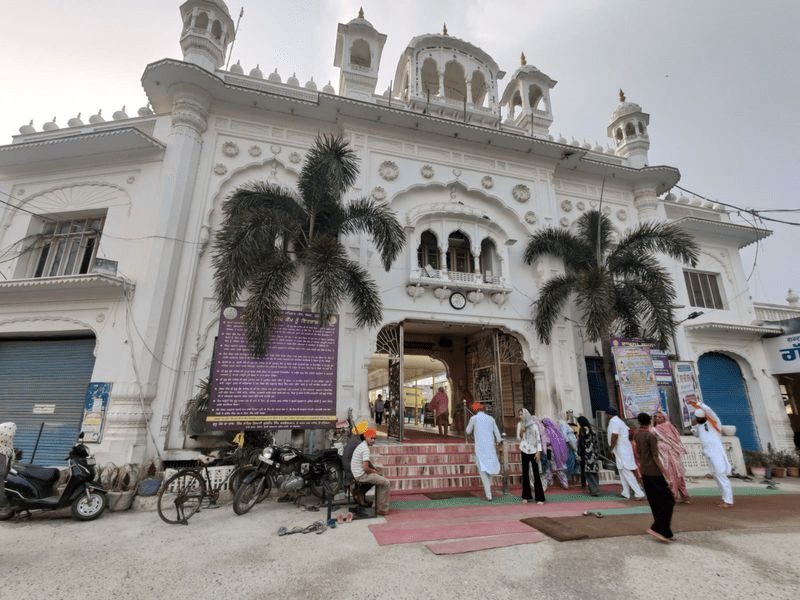
Today, Gurdwara Darbar Sahib stands at the heart of Baba Bakala as a lasting symbol of these historic events. Initially administered by a local committee, the shrine is now managed by the Shiromani Gurdwara Parbandhak Committee (SGPC).
The town is home to several other revered Sikh shrines that preserve its rich legacy. Among them are Gurdwara Bhora Sahib, commemorating Guru Tegh Bahadur’s years of meditation; Gurdwara Seesh Mahal, dedicated to the memory of Mata Ganga; and Gurdwara Manji Sahib, another prominent site of historical and religious importance.
Throughout the year, Baba Bakala Sahib attracts thousands of devotees from across the country and abroad. The town witnesses large congregations during major Sikh religious occasions, including the birth anniversaries of Guru Nanak Dev, Guru Tegh Bahadur and Guru Gobind Singh, as well as Guru Tegh Bahadur’s Guruship Day and Martyrdom Day, reaffirming its enduring place as one of Sikhism’s most sacred centres.