


AI Generated Summary
- A senior Royal Canadian Mounted Police (RCMP) official has publicly stated there is no evidence linking Indian government officials to the murder, a position that aligns squarely with the latest US federal indictment charging Indian gangster Lawrence Bishnoi and his associate Satinderjeet Singh (Goldy Brar) with orchestrating the assassination.
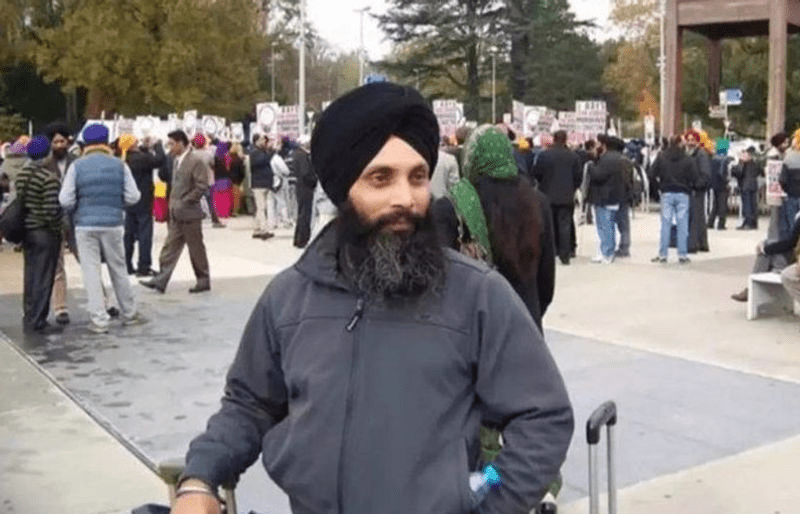
- Nijjar, a prominent Khalistani separatist and president of a Surrey gurdwara, was gunned down in his vehicle outside the Guru Nanak Sikh Gurdwara in British Columbia on June 18, 2023.
- The indictment unsealed in Los Angeles explicitly accuses Bishnoi — operating from an Indian prison — and Brar of directing the hit on Nijjar (referred to as “HSN”).
The recent statements by Canadian authorities regarding the 2023 killing of Hardeep Singh Nijjar mark a quiet but significant recalibration in one of the most contentious diplomatic spats between Ottawa and New Delhi. A senior Royal Canadian Mounted Police (RCMP) official has publicly stated there is no evidence linking Indian government officials to the murder, a position that aligns squarely with the latest US federal indictment charging Indian gangster Lawrence Bishnoi and his associate Satinderjeet Singh (Goldy Brar) with orchestrating the assassination.
Nijjar, a prominent Khalistani separatist and president of a Surrey gurdwara, was gunned down in his vehicle outside the Guru Nanak Sikh Gurdwara in British Columbia on June 18, 2023. The killing, captured in broad daylight, quickly became more than a criminal probe. Then-Prime Minister Justin Trudeau told Parliament that Canada was pursuing “credible allegations” of a potential link to Indian government agents, igniting a full-blown diplomatic crisis. Diplomats were expelled, visas suspended, trade talks frozen, and relations plunged to a historic low. India rejected the claims as “absurd” and politically motivated, insisting Nijjar was a terrorist wanted for violence in India.
Fast forward to July 2026. A sweeping US operation targeting India-based organized crime networks resulted in dozens of arrests across continents. The indictment unsealed in Los Angeles explicitly accuses Bishnoi — operating from an Indian prison — and Brar of directing the hit on Nijjar (referred to as “HSN”). Prosecutors detailed how Bishnoi provided a photograph and addresses to facilitate the assassination, executed by masked gunmen. Crucially, the document makes no mention of Indian state involvement.
Canada’s latest remarks echo this. RCMP Deputy Commissioner Lisa Moreland clarified that their investigation into the organized crime elements found “no evidence” tying Indian officials to the US probe or the killing itself. This isn’t a reversal born of pressure but the natural outcome of evidence-based policing separating intelligence whispers from prosecutable facts. Earlier arrests in Canada of alleged hitmen further ground the case in criminal networks rather than geopolitical conspiracy.
The consistency between Canadian statements and the US indictment should prompt reflection, not recrimination. For too long, the Nijjar narrative served as fodder for domestic politics in Canada, where the large Sikh diaspora and electoral considerations amplified separatist grievances. Trudeau’s dramatic parliamentary disclosure, made without public evidence, strained a vital relationship with the world’s largest democracy at a time when countering China and securing Indo-Pacific supply chains demand cooperation. The fallout included tit-for-tat diplomat expulsions and a freeze in high-level engagement that benefited no one.
India, for its part, has long highlighted the dangers of Khalistani extremism finding safe haven abroad, often intertwined with organized crime, extortion, and drug trafficking. Bishnoi’s gang exemplifies this blurred line: a criminal enterprise boasting of high-profile violence to project power. The US action, alongside Canada’s clarification, validates India’s position that the killing was the work of criminals, not state agents. It also underscores the importance of robust law enforcement cooperation over politicized accusations.
This alignment offers a path forward. Both nations have signaled interest in resetting ties, as seen in tentative steps toward normalization. Canada under new leadership and India, focused on economic growth and global influence, share interests in trade, technology, and countering transnational threats. Mending fences requires Ottawa to prioritize evidence over optics and New Delhi to continue engaging transparently on extraditions and intelligence sharing.
The Nijjar case, once a symbol of distrust, now illustrates a more prosaic truth: complex crimes demand patience and facts, not headlines. By affirming consistency with the US findings, Canada has taken a pragmatic step. It is time to close this chapter and rebuild a partnership grounded in mutual respect and shared security realities. The world is too interconnected — and threats too real — for lingering shadows from a gangster’s hit to define bilateral ties.