


AI Generated Summary
- ” The extremists’ greatest success is not advancing Khalistan—an idea rejected everywhere, even in Punjab—but poisoning the reputation of a community renowned for its enterprise, courage, and service.
- They certainly do not speak for the farmers, teachers, and soldiers in Punjab who want better governance, not a return to the blood-soaked 1980s.
- In early 2026, the Hindu Canadian Foundation documented planned protests outside temples in Brampton and Surrey on 5 April—explicitly called by SFJ in retaliation for criticism.
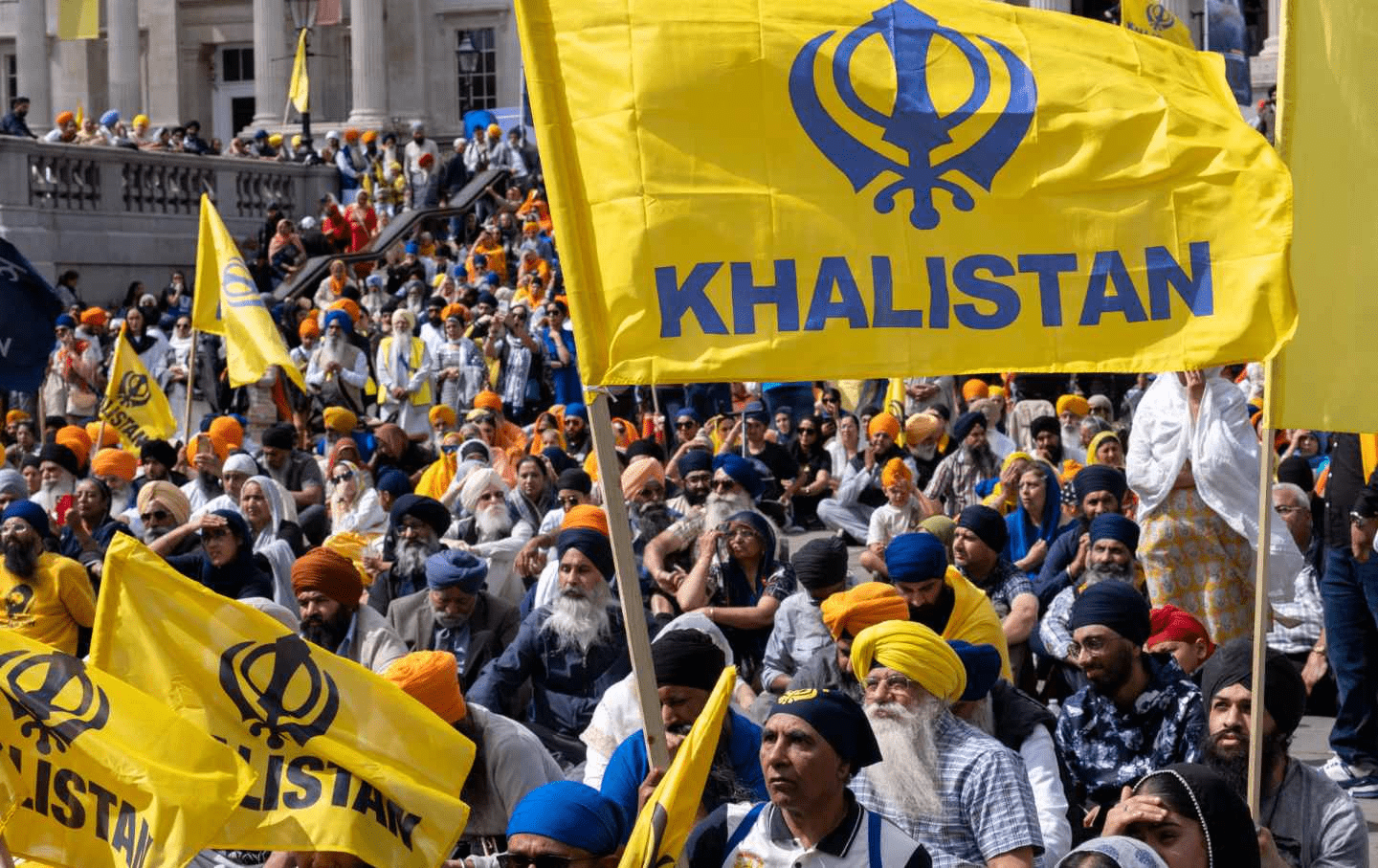
Recently, Sikhs for Justice (SFJ) staged yet another so-called Khalistan referendum in Seattle. Organisers claimed over 27,000 votes. Gurpatwant Singh Pannun, SFJ’s general counsel, used the occasion to announce an Alberta referendum for 18 October with a loaded question: “Is defensive armed resistance justified?” He declared SFJ would petition the UN Security Council to authorise armed struggle in Punjab, invoking child “martyrs” from 1984 who allegedly tied grenades to their bodies. The event was framed as a democratic exercise. It was not. It was theatre—expensive, provocative, and dangerous theatre that provides a fig leaf for violence while dragging the entire Sikh community through the mud.
A North American Sikh separatist group, Sikhs for Justice, is promoting a radical "Khalistan" referendum in Alberta by shockingly glorifying the use of child suicide bombers, including an eight-year-old and a six-year-old.
— Juno News (@junonewscom) March 30, 2026
Read more: https://t.co/eaz5rpN1yZ pic.twitter.com/vyawMlZZmI
These referendums are a farce by design. They are conducted exclusively in the diaspora—Canada, the United States, Britain, Australia, New Zealand—never in Punjab itself, where the overwhelming majority of Sikhs actually live. No independent electoral commission supervises them. Balloting is open only to those who self-identify as Sikh. Turnout claims, however inflated, represent a minuscule fraction of the global Sikh population and an even tinier sliver of Punjab’s 16 million Sikhs. Repeated polls in Punjab—Lokniti-CSDS in 2017, Pew Research in 2021—show over 90 percent of respondents identifying strongly as Indian. No major political party in the state has campaigned on Khalistan for three decades. Yet SFJ treats these overseas postal votes as a mandate for secession. International law is unambiguous: remedial secession requires massive, ongoing human-rights denial that denies internal self-determination. Punjab’s Sikhs enjoy constitutional protections, linguistic rights, and full political participation. The “referendum” satisfies none of the legal tests.
What it does satisfy is the extremists’ need for perpetual grievance. Each new ballot becomes an excuse to escalate. Pannun’s latest rhetoric—shifting from “ballot over bullet” to openly floating “defensive armed resistance”—is the logical endpoint of a movement that has never accepted the 1990s defeat of the insurgency. The same playbook repeats: glorify 1984 militants, accuse India of extraterritorial assassinations (while ignoring the criminal records of many “activists”), and then demand the right to respond with force. In practice, this translates into real-world disruption far from Punjab.
Canada has become the unhappy epicentre, especially with the support given by previous administrations. With one of the largest Sikh diasporas, the country has watched Khalistani extremists turn peaceful neighbourhoods into battlegrounds. In November 2024, attackers stormed a Temple in Brampton, assaulting women, children, and elders in broad daylight. In early 2026, the Hindu Canadian Foundation documented planned protests outside temples in Brampton and Surrey on 5 April—explicitly called by SFJ in retaliation for criticism. Canada’s own 2025 terror assessment flagged Khalistani networks as a serious domestic threat, citing fundraising for secessionist violence and intimidation campaigns. Temples are vandalised, Indian diplomats harassed, and moderate Sikhs who dare criticise the circus are branded traitors. Relations with India have cratered precisely because Ottawa has tolerated this fringe for too long, mistaking vote-bank politics for multiculturalism.
The human cost falls heaviest on ordinary Sikhs. A handful of extremists—often dual citizens with comfortable lives in the West—monopolise the narrative. They do not speak for the taxi drivers, truckers, doctors, and entrepreneurs who built thriving lives in Canada, Britain, and the United States. They certainly do not speak for the farmers, teachers, and soldiers in Punjab who want better governance, not a return to the blood-soaked 1980s. Yet every temple attack, every inflammatory parade with portraits of militants, every YouTube rant is reported as “Sikh activism.” The result is collective guilt by association. Moderate Sikh organisations issue statements condemning violence, only to be drowned out by the louder megaphones of SFJ. Young Sikhs growing up in the West face awkward questions at school: “Are your people terrorists?” The extremists’ greatest success is not advancing Khalistan—an idea rejected everywhere, even in Punjab—but poisoning the reputation of a community renowned for its enterprise, courage, and service.
This damage is self-inflicted and strategic. The referendums generate headlines, donations, and a perpetual sense of siege that justifies the next rally, the next confrontation. They also serve as cover for criminal enterprises—extortion rackets, drug networks, and immigration fraud—that have long plagued some Khalistani circles. Canada’s intelligence agencies have warned of exactly this convergence: ideology weaponised to mask organised crime. When critics point it out, the response is predictable: accusations of “Hindutva” conspiracy or “Indian agents.” The circular logic is impenetrable.
Canada and other countries in the West must stop indulging this theatre under the guise of free speech. Designating the most violent networks as terrorist entities does not criminalise political opinion. It draws a bright line between free speech and incitement, between protest and pogrom. The primary responsibility lies with host nations to protect their own social fabric.
Condemn the extremists not as “anti-Sikh” but as anti-Sikhism: men who twist the faith of our Gurus into a cult of victimhood and vengeance. The Gurus taught us service, justice, and fearlessness—not ballots that summon bullets.
Until that happens, the “referendums” will continue: sterile rituals that achieve nothing for Punjab and everything for the handful who profit from chaos. They are not a democracy in exile. They are exile from democracy—performed for cameras, funded by the opportunists, and paid for in the blood and reputation of innocents. The Sikh community deserves better than to be held hostage by its loudest and least representative voices.
