
AI Generated Summary
- opium moved out toward Canada, proceeds allegedly cycled back into Punjab as pistols and grenades dropped by drone, and the operation linked to Arshdeep Singh Gill — “Arsh Dalla” — a Canada-based figure Indian agencies have long tied to the Khalistan Tiger Force and, in earlier reporting, described as a close associate of Hardeep Singh Nijjar, the Sikh separatist leader shot dead in Surrey in 2023.
- In 1994, Jimmy and Ron Dosanjh — brothers tied to the International Sikh Youth Federation in Vancouver — were killed amid a heroin turf war, one of the earliest documented instances of separatist-linked figures embedded in narcotics violence rather than separate from it.
- the state accounted for 2,086 of the country’s 3,567 kilograms of seized heroin — 58 percent of the national total from a state that holds barely 2 percent of India’s population.
Punjab’s heroin numbers, released by India’s Narcotics Control Bureau for 2025, are stark: the state accounted for 2,086 of the country’s 3,567 kilograms of seized heroin — 58 percent of the national total from a state that holds barely 2 percent of India’s population. It also absorbed 298 of the country’s 305 recorded drone-drop incidents, and cough-syrup seizures topped 895,000 bottles, a pattern investigators are calling a “second wave” of pharmaceutical opioid abuse layered atop the older Golden Crescent heroin trade. Punjab Police’s ongoing “Yudh Nashian Virudh” campaign has logged tens of thousands of arrests and multi-ton seizures since March 2025 — evidence of enforcement intensity, though not, by itself, proof that supply is shrinking.
None of this is new to Punjab. What has changed is how tightly some of these seizures now trace back through the diaspora, and specifically through networks that also carry political branding.
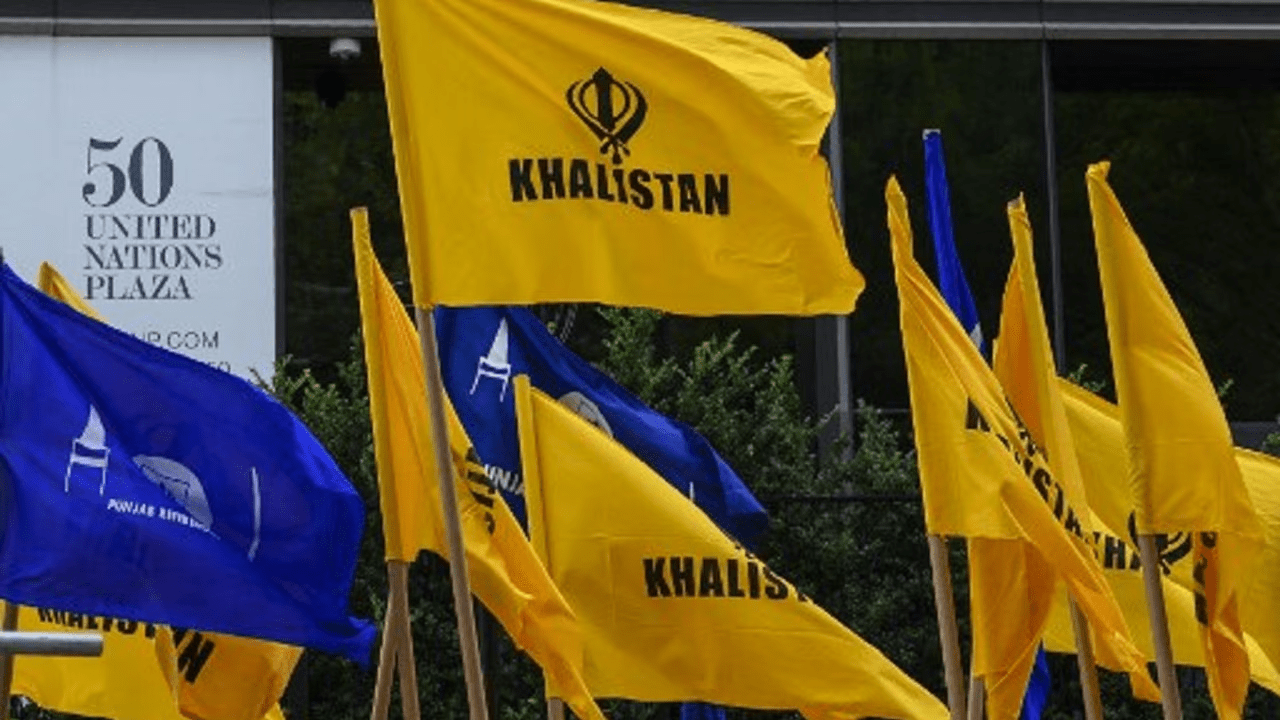
Start with the clearest case. In August 2026, Delhi Police arrested four men in what they described as a drugs-for-weapons circuit: opium moved out toward Canada, proceeds allegedly cycled back into Punjab as pistols and grenades dropped by drone, and the operation linked to Arshdeep Singh Gill — “Arsh Dalla” — a Canada-based figure Indian agencies have long tied to the Khalistan Tiger Force and, in earlier reporting, described as a close associate of Hardeep Singh Nijjar, the Sikh separatist leader shot dead in Surrey in 2023. Dalla was arrested in Ontario in November 2024 and India is seeking his extradition. Punjab Police have documented this pattern repeatedly over the past two years: small arms shipments from Pakistan-linked handlers, funded in part by narcotics money moved through Canadian contacts.
That overlap has a precedent. In 1994, Jimmy and Ron Dosanjh — brothers tied to the International Sikh Youth Federation in Vancouver — were killed amid a heroin turf war, one of the earliest documented instances of separatist-linked figures embedded in narcotics violence rather than separate from it. Analysts have never treated that as proof the wider movement was a cartel, and they shouldn’t now either. But British Columbia’s gang-homicide statistics have long shown Punjabi-origin networks represented far out of proportion to a diaspora that makes up roughly 2 percent of Canada’s population — a pattern that predates and outlasts any one organization.
The more recent cases complicate a simple story rather than confirming it. Jagdish Singh Bhola, a former Punjab police officer, was convicted under India’s anti-money-laundering law over a heroin-and-meth pipeline investigators traced toward North America via Canadian contacts — a straightforward narcotics case with no coherent political ideology attached. In New Zealand, Baltej Singh — nephew of one of Indira Gandhi’s assassins — was arrested in a methamphetamine-in-beer-cans case; Indian reporting alleged the proceeds funded pro-Khalistan organizing in Auckland, a claim that remains a media characterization layered onto a court-documented drug case, not something a court itself has found. DEA affidavits describe Opinder Singh “Thanos” Sian’s alleged network spanning fentanyl and meth routes from Vancouver to Los Angeles, Mexico, Hong Kong, Turkey, and Australia; additional claims connecting it to Pakistani intelligence or Hezbollah need primary-source verification before they’re treated as established fact.
And then there is the case that cuts hardest against a tidy “Khalistan-as-cartel” narrative: the DOJ’s July 2026 “Operation Hard Ball” indictments accuse the Bishnoi crime syndicate — not a separatist outfit but a rival transnational gang — of running cocaine through California toward Canada and of orchestrating Nijjar’s assassination. If accurate, that means one of the most sophisticated narco-networks in this corridor was allegedly hunting Khalistani figures, not bankrolling them. The through-line in these files isn’t ideology; it’s Punjabi diaspora criminal infrastructure — smuggling routes, encrypted-app logistics, hawala financing — that different actors, separatist and anti-separatist alike, have learned to rent.
The honest question is the one we need to ask: when drone-dropped guns and heroin money move under a flag invoking the Guru’s name, is that Sikhi? Did Guru Nanak’s langar, Guru Gobind Singh’s Khalsa, ever point toward turf wars and meth labs? A faith built on seva and shared bread does not need borrowed slogans from men moving kilograms through Surrey and Amritsar. Most of the diaspora already knows this. The networks exploiting its politics are counting on the rest of us not saying it out loud.