


AI Generated Summary
- Pakistan’s renewed outreach to the Sikh diaspora in the United States has exposed a glaring contradiction between its claims of safeguarding Sikh heritage and its longstanding failure to protect the community and its historic places of worship.
- According to reports circulating on social media, Ramesh Singh Arora, Punjab’s Minister for Minority Affairs and President of the Pakistan Sikh Gurdwara Parbandhak Committee, toured Gurdwaras across the United States during the final week of September 2026.
- If Pakistan genuinely wishes to be recognised as a custodian of Sikh heritage, it must first demonstrate accountability at home.
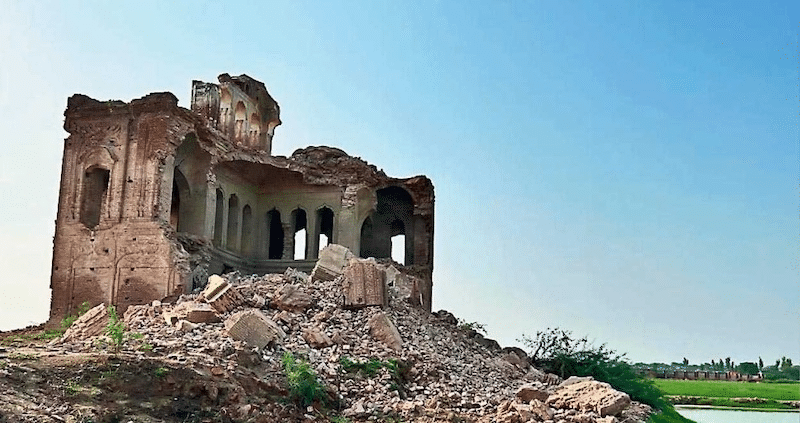
Pakistan’s renewed outreach to the Sikh diaspora in the United States has exposed a glaring contradiction between its claims of safeguarding Sikh heritage and its longstanding failure to protect the community and its historic places of worship. While Pakistani representatives promote ambitious restoration projects and religious tourism initiatives overseas, numerous Gurdwaras within Pakistan continue to suffer from neglect, deterioration and encroachment.
According to reports circulating on social media, Ramesh Singh Arora, Punjab’s Minister for Minority Affairs and President of the Pakistan Sikh Gurdwara Parbandhak Committee, toured Gurdwaras across the United States during the final week of September 2026. Promoting the “Adopt a Gurdwara” initiative, Arora sought diaspora participation in heritage restoration while inviting Sikh pilgrims to the November Gurpurab celebrations with promises of simplified visa procedures.
The outreach reportedly extended beyond religious engagement. Social media accounts allege that substantial cash contributions and cashier’s cheques were collected from American Gurdwara committees. Although these claims remain independently unverified, they raise questions about financial transparency, oversight and the accountability of funds solicited in the name of religious preservation.
The campaign gained another dimension on October 10, when Anjum Javaid, reportedly associated with Punjab’s Directorate General of Archaeology, addressed a programme titled “The Sikh Kingdom” in Lathrop, California. According to online accounts, he proposed an economic corridor connecting Nankana Sahib with the Khyber Pass, including the redevelopment of Jamrud Fort and Baba Phoola Singh Chhauni. He reportedly claimed that approximately $700 million had been secured, including $94 million from the World Bank, to support heritage development and attract thousands of Sikh tourists annually. These funding claims await independent confirmation.
Yet such extravagant promises stand in sharp contrast to Pakistan’s troubled record of preserving Sikh heritage.
Before Partition, the territories constituting present-day Pakistan supported flourishing Sikh communities and hundreds of Gurdwaras. The violence and mass displacement of 1947 dramatically transformed this landscape. Pakistan’s 2023 census recorded fewer than 16,000 Sikhs, reflecting the community’s drastically diminished presence, although historical population comparisons require demographic context.
Meanwhile, numerous historic Gurdwaras have reportedly fallen into disrepair, faced encroachment or been converted to other uses. Despite the responsibility of Pakistani authorities, including the Evacuee Trust Property Board, questions persist over the protection, maintenance and restoration of these properties.
Pakistan’s broader minority-rights record further undermines its carefully cultivated image. Attacks against Sikhs, religious discrimination and concerns over minority security have repeatedly exposed the vulnerability of communities whose heritage Islamabad now seeks to celebrate internationally.
The contradiction is unmistakable. Pakistan is seeking financial contributions and international recognition for preserving Sikh heritage while significant parts of that very heritage remain inadequately protected.
Restoring prominent shrines for international pilgrims cannot compensate for decades of institutional neglect. Nor can ambitious tourism corridors substitute for safeguarding existing Gurdwaras and ensuring the security of Pakistan’s remaining Sikh population.
If Pakistan genuinely wishes to be recognised as a custodian of Sikh heritage, it must first demonstrate accountability at home. Until then, its overseas outreach risks appearing less like a commitment to preservation and more like a carefully orchestrated public-relations exercise.