


AI Generated Summary
- Retirement marked the end of Sukhwinder Singh’s career in the Punjab Police, but it also opened the door to an entirely different chapter—one centred on ponds, fish farming and rural enterprise.
- It was also a way of ensuring that her father continued to experience the sense of responsibility and purpose that had shaped his years in uniform.
- For the family, the project demonstrates how traditional farming activities can be combined with modern enterprise to create not only a source of livelihood, but also a distinctive countryside experience.
Supported by his daughter, Sukhwinder Singh has transformed a post-retirement idea into a sustainable fish farm and countryside retreat in Jalandhar
Retirement marked the end of Sukhwinder Singh’s career in the Punjab Police, but it also opened the door to an entirely different chapter—one centred on ponds, fish farming and rural enterprise.
After retiring in 2023, Singh was certain that he did not want to lead an inactive life. During his years in service, his office was located close to the Fisheries Department in Kapurthala, and frequent visits there gradually sparked his interest in pisciculture.
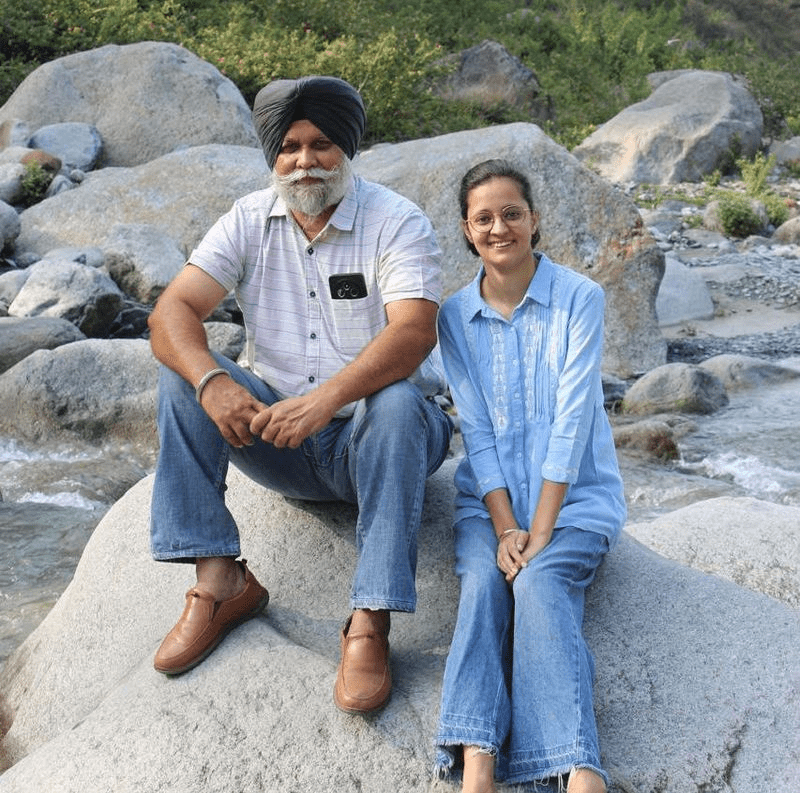
Once he retired, he discussed the idea with his daughter, Ahneer, who decided to help turn his long-held aspiration into a viable venture.
In 2024, Ahneer enrolled under the Pradhan Mantri Matsya Sampada Yojana and began working alongside her father. The two received technical training and guidance from the Fisheries Department as well as Guru Angad Dev Veterinary and Animal Sciences University in Ludhiana.
Fish seed was procured from the Kapurthala hatchery, and the family subsequently developed two freshwater ponds at Jaitowali village in Jalandhar district.
The ponds are now stocked with several varieties of fish, including rohu, catla, mrigal, grass carp and common carp.
For Ahneer, the initiative was not merely a commercial project. It was also a way of ensuring that her father continued to experience the sense of responsibility and purpose that had shaped his years in uniform.
She says his discipline and commitment have found a new expression through the farm, where daily operations require careful planning, observation and sustained effort.
Sustainability has also been incorporated into the functioning of the farm. Geese move freely around the property, and their droppings serve as a natural source of nutrients for the ponds. Vegetables are cultivated along the pond boundaries, allowing different elements of the farm to support one another.
Marketing, however, remains a crucial factor in determining profitability. According to Ahneer, sales through intermediaries generally fetch between Rs 120 and Rs 160 per kilogram, while direct sales in local markets can bring returns of around Rs 209 to Rs 220 per kilogram.
The family is now exploring the possibility of producing value-added fish products, which could help improve earnings and expand the customer base.
The venture has also grown beyond conventional aquaculture. Taking advantage of the peaceful rural surroundings, the father-daughter team has introduced an aqua-tourism component under the name “Bask”.
The property has been developed as a country retreat with gazebos, outdoor seating areas, fishing activities and guided farm walks. Visitors can also stay overnight, with basic accommodation facilities available at the site.
Ahneer says the idea is to offer urban visitors an opportunity to slow down, experience village life and spend time close to nature.
The name “Bask”, she explains, represents the sense of warmth, tranquillity and sustainable living that the family hopes to create through the venture.
What began as a retired officer’s desire to remain productively engaged has therefore evolved into a combination of fish farming, ecological practices and rural tourism.
For the family, the project demonstrates how traditional farming activities can be combined with modern enterprise to create not only a source of livelihood, but also a distinctive countryside experience.