


AI Generated Summary
- His humanitarian commitment became particularly evident during the Covid-19 pandemic, when he fitted a loudspeaker to his vehicle and announced his willingness to transport infected patients to hospitals.
- In an unusual initiative aimed at protecting public health and maintaining civic hygiene, Chinna voluntarily collects and disposes of animal and bird carcasses found along roads.
- At a time when many people feared exposure to the virus, his initiative demonstrated a readiness to support those facing medical emergencies.
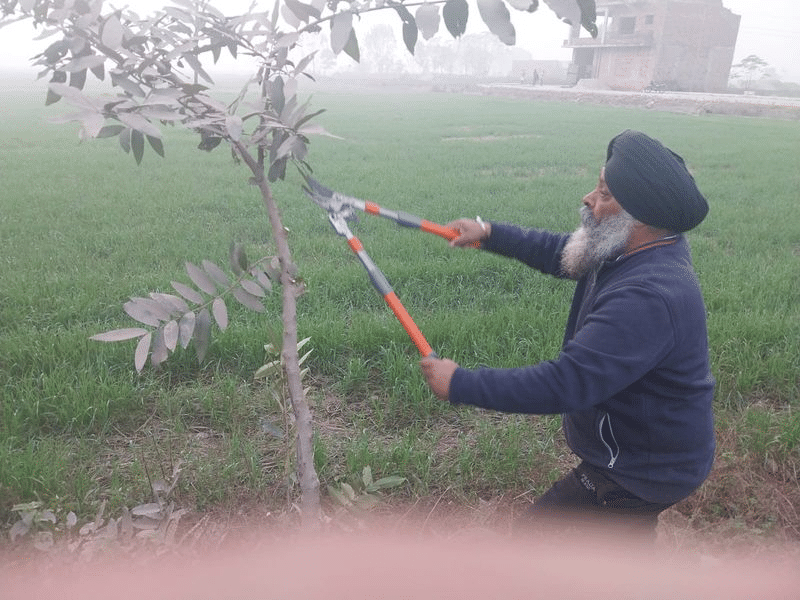
For nearly two decades, government schoolteacher Ranjit Singh Chinna has dedicated himself to making Punjab’s Gurdaspur district greener while undertaking humanitarian activities that have earned him widespread admiration.
Popularly known as the “Tree Man of Gurdaspur”, Chinna has spent the past 18 years planting and nurturing hundreds of trees along highways, village roads and other public spaces.
His plantation efforts include fruit-bearing and medicinal trees, reflecting his commitment to improving the district’s environment through sustained individual action.
Beginning with national highways, Chinna gradually expanded his campaign to smaller roads connecting villages across the border district.
However, his contribution extends far beyond environmental conservation.
In an unusual initiative aimed at protecting public health and maintaining civic hygiene, Chinna voluntarily collects and disposes of animal and bird carcasses found along roads.
He believes that abandoned carcasses create health hazards and increase the risk of road accidents when motorists suddenly manoeuvre to avoid them.
The schoolteacher also considers the respectful disposal of dead animals a matter of compassion and dignity.
His humanitarian commitment became particularly evident during the Covid-19 pandemic, when he fitted a loudspeaker to his vehicle and announced his willingness to transport infected patients to hospitals.
At a time when many people feared exposure to the virus, his initiative demonstrated a readiness to support those facing medical emergencies.
Chinna’s history of public service also includes an extraordinary seven-year effort at Chhina railway station near his native village.
Between 2005 and 2012, he reportedly visited the station every day to provide drinking water to passengers travelling along the Amritsar-Pathankot railway route.
His contributions have earned him the Bhai Kanhaiya Award for excellence in social service, alongside recognition from several voluntary and social organisations.
Despite these honours, Chinna continues to prioritise public service over personal recognition.
His environmental campaign carries particular significance because Gurdaspur has limited forest cover.
According to the India State of Forest Report cited in the original report, the district has just 23.91 square kilometres of forest cover, comprising 5.55 square kilometres of moderately dense forest and 18.36 square kilometres of open forest.
Chinna believes greater participation by non-governmental organisations and community groups could significantly strengthen local plantation efforts.
Until broader support emerges, he continues planting trees and serving communities, demonstrating how consistent individual action can contribute to environmental protection and social welfare.