


AI Generated Summary
- Punjab has taken a significant stride toward integrating artificial intelligence (AI) into its education system, as a two-day national conference organised by the Punjab School Education Board (PSEB) concluded on Saturday with a series of practical workshops and policy discussions.
- The conference concluded on a positive note, with organisers expressing confidence that such collaborative initiatives will help shape a forward-looking and responsible AI roadmap for education in Punjab.
- He highlighted that while AI offers immense potential to boost creativity and problem-solving abilities among students, its application must remain within a well-defined legal and ethical framework.
Punjab has taken a significant stride toward integrating artificial intelligence (AI) into its education system, as a two-day national conference organised by the Punjab School Education Board (PSEB) concluded on Saturday with a series of practical workshops and policy discussions.
The conference brought together policymakers, educators, and technology experts to deliberate on how AI can be responsibly incorporated into classrooms. The central focus remained on improving the quality of education, widening access, and equipping students to become not just users but creators of technology.
PSEB Chairman Dr. Amarpal Singh underscored the importance of ethical AI usage in education. He highlighted that while AI offers immense potential to boost creativity and problem-solving abilities among students, its application must remain within a well-defined legal and ethical framework. According to him, technology should serve as a tool to enhance learning without undermining fundamental academic values.
One of the key sessions, led by Google, explored the transformative role of AI in modern education. The discussion emphasised awareness and preparedness across the academic ecosystem, noting that teachers, administrators, and institutions are already beginning to adopt AI-driven approaches. This growing engagement, participants observed, reflects a readiness to embrace technological change in education.
A major highlight of the event was Intel’s hands-on workshop titled “AI in the Workplace,” which attracted over a hundred participants. The session focused on practical applications of AI within government systems, while also stressing data privacy and responsible usage. Experts guided attendees on safeguarding sensitive information and avoiding unintended data exposure when using AI tools.
Another workshop, “AI in Schools for School Leaders,” conducted by IKG Punjab Technical University, was designed for principals and administrators. It addressed the integration of AI into school leadership and academic management, while also raising awareness about detecting AI-generated content to maintain academic integrity.
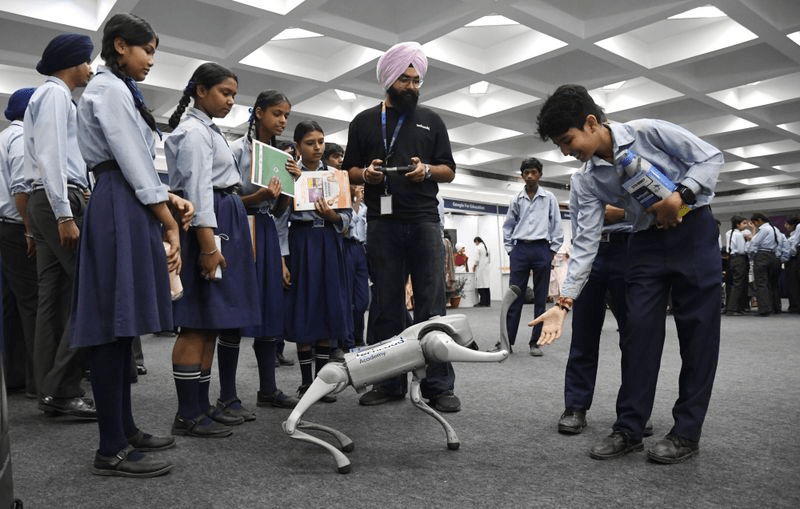
Students, too, played a central role in the conference. A workshop conducted by Neeev AI introduced them to real-world applications of AI and provided hands-on experience with emerging tools. The session aimed to build foundational knowledge and encourage responsible experimentation with technology.
Dr. Singh noted that students were also educated about how AI systems are developed, offering insights into the processes and skills required to build such technologies. This exposure, he said, not only deepened understanding but also inspired many to consider careers in AI and related fields.
Participants observed particularly high enthusiasm among Punjab’s students, whose curiosity and adaptability stood out. Their engagement reflected strong potential for AI-driven learning in the state’s education landscape.
The conference concluded on a positive note, with organisers expressing confidence that such collaborative initiatives will help shape a forward-looking and responsible AI roadmap for education in Punjab.