


AI Generated Summary
- Punjab’s security agencies are on heightened alert following the recovery of Pakistan-smuggled pistols bearing distinctive engravings, a development that officials say reflects a worrying evolution in cross-border arms trafficking.
- The combination of aerial delivery and identifiable engravings suggests an effort to maintain control over distribution while expanding influence on the ground.
- Security agencies are also concerned that such tactics may be designed to attract vulnerable youth, particularly in rural areas and prisons, by projecting a sense of organised backing.
Punjab’s security agencies are on heightened alert following the recovery of Pakistan-smuggled pistols bearing distinctive engravings, a development that officials say reflects a worrying evolution in cross-border arms trafficking.
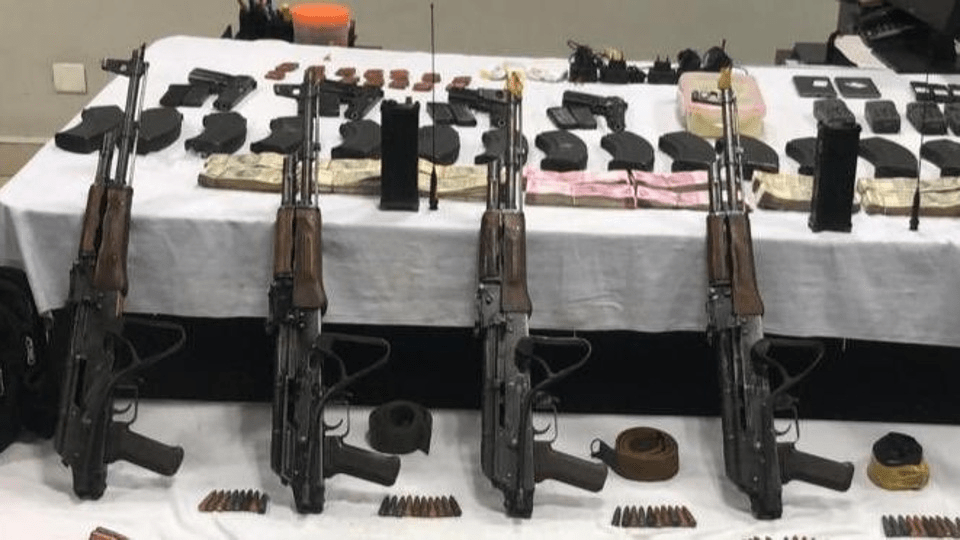
In recent operations, Amritsar Rural Police seized two sophisticated firearms marked with inscriptions such as “Awan Badshah-222” and “Bhatt-007.” The weapons were recovered from six individuals arrested in connection with a grenade attack linked to Bhindi Saidan police station. In a separate case, Amritsar City Police also confiscated a similarly engraved pistol.
Investigators believe these markings are not random but part of a calculated strategy. According to senior officials, such engravings may act as identifiers for suppliers, helping establish credibility within illegal networks while signalling their operational reach.
Amritsar Rural Senior Superintendent of Police Sohail Qasim Mir described the trend as a serious concern, noting that it resembles “branding” practices typically associated with organised crime syndicates. The markings, he said, could serve multiple purposes — from confirming delivery chains to exerting psychological influence on recruits by showcasing a structured and reliable supply network.
Sources within the police indicate that many of these weapons are being transported across the border using drones, highlighting a coordinated and technologically enabled smuggling operation. The combination of aerial delivery and identifiable engravings suggests an effort to maintain control over distribution while expanding influence on the ground.
Interrogations of suspects have further revealed alleged links to Pakistan-based handlers connected with the ISI. Authorities say these weapons were intended for circulation among local criminal modules and for use in targeted attacks.
Security agencies are also concerned that such tactics may be designed to attract vulnerable youth, particularly in rural areas and prisons, by projecting a sense of organised backing.
Officials say investigations are ongoing to trace supply chains and dismantle the networks behind this emerging threat.