


AI Generated Summary
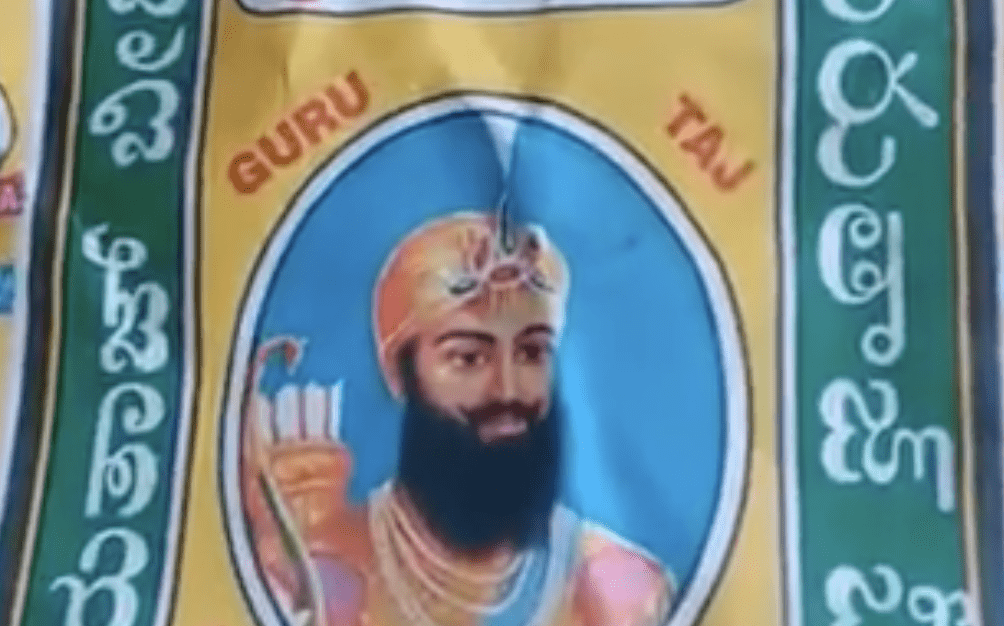
- In the heart of Quetta, Balochistan, a Pakistani rice company—Faizullah Ahmed Shahi Ahmed and Company—has been peddling packets of rice emblazoned with the sacred image of Guru Gobind Singh Ji, the tenth Sikh Guru, the founder of the Khalsa, the eternal warrior-saint who embodied courage, justice, and unyielding faith.
- It is a profound act of disrespect that strikes at the soul of Sikhism, where the Guru’s image is not a decoration but an embodiment of spiritual sovereignty and sacrifice.
- It exposes the PSGPC not as fearless defenders of the Panth but as a body constrained by fear, political patronage, or the grim reality that minority institutions in Pakistan operate at the sufferance of the majority.
In the heart of Quetta, Balochistan, a Pakistani rice company—Faizullah Ahmed Shahi Ahmed and Company—has been peddling packets of rice emblazoned with the sacred image of Guru Gobind Singh Ji, the tenth Sikh Guru, the founder of the Khalsa, the eternal warrior-saint who embodied courage, justice, and unyielding faith. According to widespread social media reports, these packets are not relics of some forgotten error but actively sold commodities, turning a symbol of divine reverence into disposable packaging for everyday grain. This is not mere commercial negligence. It is a profound act of disrespect that strikes at the soul of Sikhism, where the Guru’s image is not a decoration but an embodiment of spiritual sovereignty and sacrifice.
Pakistan’s blasphemy laws, among the world’s harshest, prescribe death or life imprisonment for insulting religious sentiments—yet they remain selectively enforced. When the target is the Prophet of Islam, mobs riot and courts deliver swift, often extrajudicial, justice. But when the victim is a Sikh Guru whose photograph is printed on rice that will be handled, spilled, trampled, or discarded without ceremony, the state shrugs. No raids, no seizures, no arrests. The silence from Islamabad is deafening. This selective blindness lays bare the government’s hypocrisy. Pakistan repeatedly postures as a “safe haven” for minorities and a sensitive guardian of Sikh heritage—citing the Kartarpur Corridor, restored gurdwaras, and token invitations to Sikh pilgrims. Yet the same state permits the commodification of Guru Gobind Singh Ji’s likeness in Balochistan’s markets. The message is unmistakable: Sikh reverence is welcome only when it serves Pakistan’s diplomatic image; when it demands actual protection, it is expendable.
Equally damning is the complicity of silence from within. The Pakistan Sikh Gurdwara Prabandhak Committee (PSGPC), which loudly claims to champion Sikh rights on Pakistani soil, has issued no protest, no complaint, no demand for immediate confiscation or apology. Where is the outrage that would erupt if a similar desecration targeted Islamic symbols? This institutional muteness is not oversight—it is surrender. It exposes the PSGPC not as fearless defenders of the Panth but as a body constrained by fear, political patronage, or the grim reality that minority institutions in Pakistan operate at the sufferance of the majority. When even the self-appointed guardians of Sikh interests in Pakistan refuse to roar, the community is left orphaned in its own homeland.
The deeper tragedy is what this reveals about Pakistan’s treatment of its minorities. Sikhs, Hindus, Christians, and Ahmadis live under a constant shadow—temples vandalized, forced conversions rampant, blasphemy accusations weaponized against the vulnerable. Guru Gobind Singh Ji taught Sikhs to stand against tyranny, to wield the sword only when all else fails, but never to bow to injustice. Today, his image on rice packets mocks that legacy while Pakistan’s establishment watches. The government’s inaction is not cultural ignorance; it is calculated indifference born of majoritarian supremacy.
This incident is no isolated lapse. It is a symptom of a state where religious tolerance is performative theater for international consumption, not a lived constitutional reality. If Pakistan truly values its Sikh citizens—and the global Sikh diaspora it courts for remittances and goodwill—it must act decisively: ban the packets, punish the company, and issue a national apology. The PSGPC must break its silence or forfeit its moral authority. And the international community, particularly Sikh organizations worldwide, must amplify this outrage until accountability is delivered.
Guru Gobind Singh Ji declared: “Chiriyon se main baaz turaun, savaa lakh se ek ladavaun” — I will make sparrows fight hawks and one warrior face 125,000. The Sikh spirit remains unbroken. But in Pakistan today, that spirit is tested not by battlefield tyrants but by the quiet desecration of commerce and the cowardice of those sworn to protect it. Until this hypocrisy ends, Pakistan’s claims of being a sanctuary for minorities will remain what they are: a dangerous lie, wrapped in the image of a Guru it refuses to honor. The world is watching. The Panth is waiting. History will judge.