


AI Generated Summary
- As drums echoed across the stadium and carts lined up once again on the track, the return of the bullock cart races transformed the opening day into a powerful blend of nostalgia and renewal — reaffirming Kila Raipur’s identity as one of Punjab’s most cherished rural sporting traditions.
- After the ban on the sport in 2014, his family continued to keep the tradition alive at home, eventually preparing new bullocks for the day the races would return.
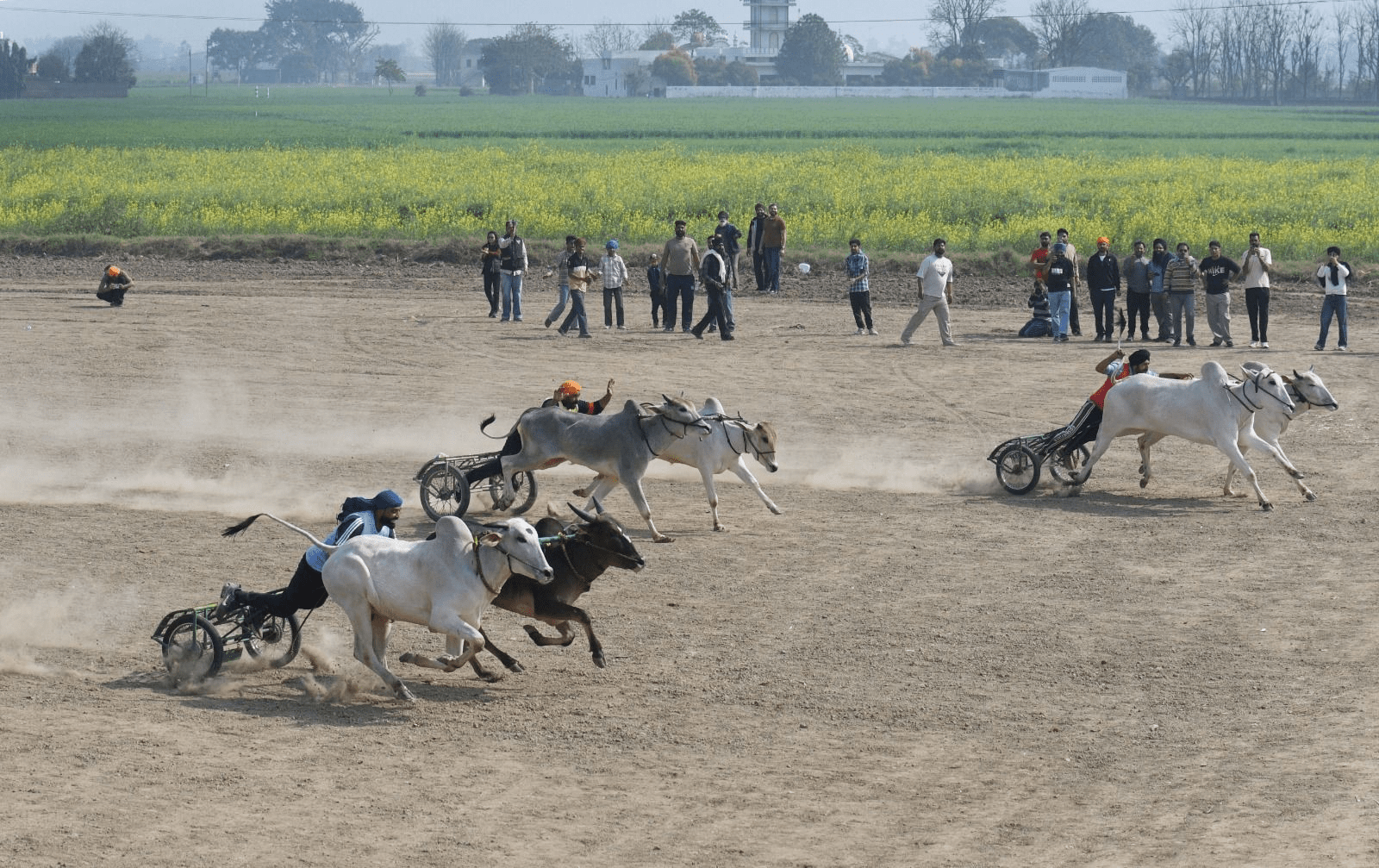
- The Kila Raipur Rural Olympics 2026 began on February 17th with renewed energy and emotion as the iconic bullock cart races returned after a gap of more than a decade, drawing massive crowds to the historic village stadium.
The Kila Raipur Rural Olympics 2026 began on February 17th with renewed energy and emotion as the iconic bullock cart races returned after a gap of more than a decade, drawing massive crowds to the historic village stadium. Spectators of all ages, from elderly residents to young children, gathered to witness the much-awaited revival of a tradition deeply rooted in Punjab’s rural culture.
The festival was inaugurated by Punjab Cabinet Minister Gurmeet Singh Khuddian, who described the resumption of the races as a significant step toward preserving the state’s heritage. He credited Chief Minister Bhagwant Singh Mann for facilitating the comeback through the Punjab Prevention of Cruelty to Animals (Punjab Amendment) Act, 2025, which introduced animal safety standards and addressed the legal challenges that had halted the sport since 2014.
Participants and bullock cart owners arrived from across Punjab, transforming the opening day into a vibrant celebration of rural life. Alongside the return of the races, the multi-day event — running until February 19 — features traditional competitions such as kabaddi, hockey, athletics, cycling and tug-of-war.
The revival also highlighted a generational shift, with many young participants stepping into arenas once dominated by their fathers and grandfathers. Several youths described the sport as more than a competition, viewing their involvement as a way to preserve family traditions and maintain a connection to rural values. For many, working with bullocks was seen as a healthy alternative to excessive mobile phone use and a positive influence amid concerns about substance abuse among youth.
One participant from Samrala, representing the third generation of his family in the races, reflected on memories of accompanying his elders to the Kila Raipur ground as a child. After the ban on the sport in 2014, his family continued to keep the tradition alive at home, eventually preparing new bullocks for the day the races would return. Another young racer from Jassowal spoke of carrying forward a legacy built over decades, emphasising that participation was about honouring family history rather than seeking victory.
Similarly, a participant from Dehlon described fulfilling a promise made to his late grandfather, who had encouraged him to stay connected to traditional sports despite the long hiatus. For many competitors, the reopening of the races symbolised not only the revival of a sport but also the continuation of ancestral pride.
During the inauguration, the minister also highlighted the state government’s broader efforts to support athletes. He noted that cash rewards for international medal winners have been increased and that Olympic medallists have been offered positions in the Punjab Civil Services and Punjab Police Services. In addition, an allocation of ₹30 lakh was announced for the local veterinary hospital to strengthen medical care for livestock involved in rural activities.
As drums echoed across the stadium and carts lined up once again on the track, the return of the bullock cart races transformed the opening day into a powerful blend of nostalgia and renewal — reaffirming Kila Raipur’s identity as one of Punjab’s most cherished rural sporting traditions.