


AI Generated Summary
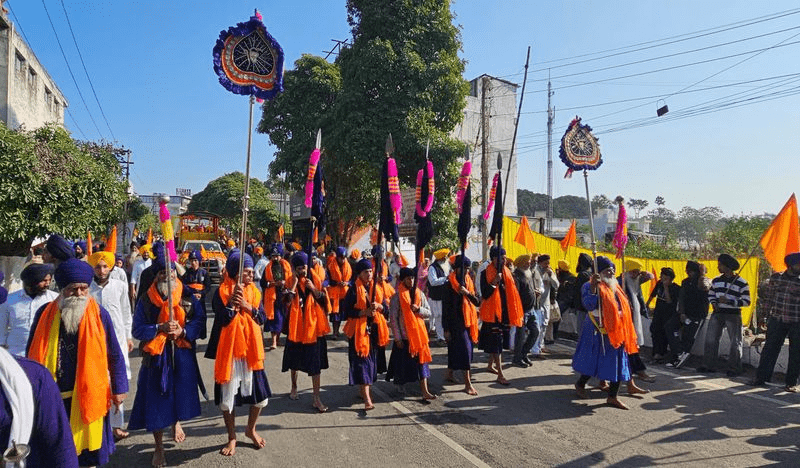
- The concluding day saw a Nagar Kirtan procession from Gurdwara Sis Bhent in Kiratpur Sahib to Gurdwara Sis Ganj Sahib, drawing large numbers of devotees who walked in reverence, singing hymns and recalling the Guru’s unparalleled sacrifice for the protection of religious freedom.
- Many pilgrims arrived in special buses arranged for the commemoration, though large segments chose to spend their time in prayer at Takht Sri Keshgarh Sahib and Gurdwara Sis Ganj Sahib, the two principal sites associated with the Guru in Anandpur Sahib.
- As the final prayers echoed across Anandpur Sahib, the anniversary reaffirmed the profound place Guru Tegh Bahadur holds in Sikh consciousness—as a defender of faith, dignity, and universal freedom.
The nine-day observance marking the 350th martyrdom anniversary of Guru Tegh Bahadur concluded on Friday with the solemn commemoration of Sis Sanskar Divas. Devotees gathered at Gurdwara Sis Ganj Sahib, the sacred site where the Guru’s severed head was cremated 350 years ago after being brought from Delhi by Bhai Jaita.
Throughout the commemorative period, the holy city witnessed an extraordinary outpouring of devotion. Pilgrims participated in Nagar Kirtans, paid obeisance at historic gurdwaras, and attended an array of spiritual and cultural programmes, including devotional congregations, a drone show, and light-and-sound presentations that illuminated episodes from Sikh history.
Honouring a Defining Moment
November 29 holds profound meaning for the Sikh community. It marks the day in 1675 when Bhai Jaita—later revered as Bhai Jiwan Singh—completed his perilous journey from Delhi to Anandpur Sahib, carrying the martyred head of Guru Tegh Bahadur. The site where it was cremated now stands as Gurdwara Sis Ganj Sahib, a focal point of remembrance during the anniversary events.
Community Participation Marks Sis Sanskar Divas
The concluding day saw a Nagar Kirtan procession from Gurdwara Sis Bhent in Kiratpur Sahib to Gurdwara Sis Ganj Sahib, drawing large numbers of devotees who walked in reverence, singing hymns and recalling the Guru’s unparalleled sacrifice for the protection of religious freedom.
At Anandpur Sahib, community members and religious organisations joined together for prayers, kirtan, and ardas, reflecting on the values of courage, steadfastness, and universal human rights embodied by Guru Tegh Bahadur.
Cultural and Spiritual Programmes Inspire Pilgrims
While formal programmes wrapped up earlier in the week, spiritual and cultural attractions continued through November 29. Exhibitions, recitations, historical displays, and multimedia shows explored the Guru’s life and legacy, drawing visitors from across Punjab and beyond.
Many pilgrims arrived in special buses arranged for the commemoration, though large segments chose to spend their time in prayer at Takht Sri Keshgarh Sahib and Gurdwara Sis Ganj Sahib, the two principal sites associated with the Guru in Anandpur Sahib.
Announcements for the Holy City
The commemorative period also included symbolic steps to honour the Guru’s legacy. Anandpur Sahib was formally designated a Holy City, and plans were announced for a world-class university to be established in memory of Guru Tegh Bahadur. Community members welcomed these gestures as a means of preserving and promoting the region’s spiritual heritage.
Religious Institutions Reaffirm Sikh Values
Sikh organisations used the occasion to reiterate commitments to Panthic causes and to call for deeper engagement with Sikh history, tradition, and collective responsibilities. Emphasis was placed on unity, spiritual renewal, and the enduring message of Guru Tegh Bahadur’s sacrifice.
A Reverent Conclusion
The nine-day tribute blended spiritual devotion with large-scale community participation. As the final prayers echoed across Anandpur Sahib, the anniversary reaffirmed the profound place Guru Tegh Bahadur holds in Sikh consciousness—as a defender of faith, dignity, and universal freedom.