


AI Generated Summary
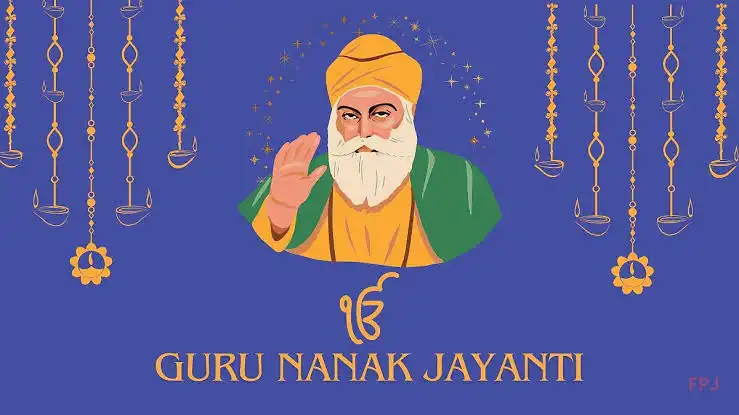
- As the first light of dawn breaks on November 24, hymns resonate through gurdwaras across India and around the world, marking the 557th birth anniversary of Guru Nanak Dev Ji, the founder of Sikhism and one of the Indian subcontinent’s most transformative spiritual figures.
- Born in 1469 in Talwandi, now known as Nankana Sahib in Pakistan, Guru Nanak emerged at a time when society was deeply fractured by caste hierarchies, religious orthodoxies and social inequalities.
- While November 24 corresponds to 9 Maghar in the solar calendar, it coincides with Kattak Purnima in the lunar calendar, the traditional occasion for celebrating Guru Nanak’s birth anniversary.
More than five centuries after his birth, Guru Nanak Dev Ji’s message of universal brotherhood, equality and selfless service remains profoundly relevant to a world grappling with growing divisions.
As the first light of dawn breaks on November 24, hymns resonate through gurdwaras across India and around the world, marking the 557th birth anniversary of Guru Nanak Dev Ji, the founder of Sikhism and one of the Indian subcontinent’s most transformative spiritual figures.
Born in 1469 in Talwandi, now known as Nankana Sahib in Pakistan, Guru Nanak emerged at a time when society was deeply fractured by caste hierarchies, religious orthodoxies and social inequalities. His teachings challenged these divisions, offering a spiritual philosophy rooted in the fundamental oneness of existence.
At the heart of his philosophy lies Ik Onkar — the affirmation of one universal divine reality. For Guru Nanak, spirituality was not about withdrawing from worldly life but about transforming it through righteous conduct, compassion and honest living.
His extensive journeys, traditionally known as the Udasis, took him across diverse geographical and cultural landscapes, where he engaged with religious scholars, mystics and ordinary people. Through dialogue, music and poetry, he questioned ritualism and encouraged individuals to seek truth beyond outward religious identities.
Understanding the significance of Kattak Purnima
This year’s Prakash Purab has also generated discussions surrounding the traditional Sikh calendar. While November 24 corresponds to 9 Maghar in the solar calendar, it coincides with Kattak Purnima in the lunar calendar, the traditional occasion for celebrating Guru Nanak’s birth anniversary.
Interestingly, a similar alignment occurred during his 500th birth anniversary celebrations on November 23, 1969. The apparent discrepancy arises from the distinct methods of calculating solar and lunar months.
A philosophy beyond centuries
Guru Nanak’s teachings are commonly encapsulated in three principles: Naam Japna (remembrance of the Divine), Kirat Karni (earning through honest labour) and Vand Chhakna (sharing with others).
The institution of langar embodies this philosophy. By bringing people from different social, economic and religious backgrounds together to share a meal as equals, it translates spiritual conviction into everyday social practice.
In an increasingly polarised world, where technological advancement often coexists with widening inequalities and social alienation, these teachings acquire renewed significance. They remind humanity that progress cannot be measured through material achievements alone, but also through dignity, compassion and collective well-being.
Prakash Purab, literally a celebration of illumination, is therefore more than a commemoration of a birth. It is an invitation to dispel the darkness of prejudice, ignorance and hatred.
Five centuries on, the light kindled by Guru Nanak continues to transcend geographical borders, religious identities and generations, illuminating a collective path towards a more humane world.