


AI Generated Summary
- Today the memory of Saka Bhuler is kept alive by the marble memorial stone at the Golden Temple and another in Batala — quiet reminders of a tragedy that still receives little public attention despite its place in the violent history of Partition.
- Historian Kulwinder Singh Bajwa, a native of the village who now lives in Batala, notes that many residents decided to stay even after the area became part of Pakistan on 14 August, hoping the violence would eventually subside.
- The remaining families were taken to a refugee camp in Amritsar and later settled in Batala and nearby villages on land left behind by Muslims who had migrated to Pakistan.
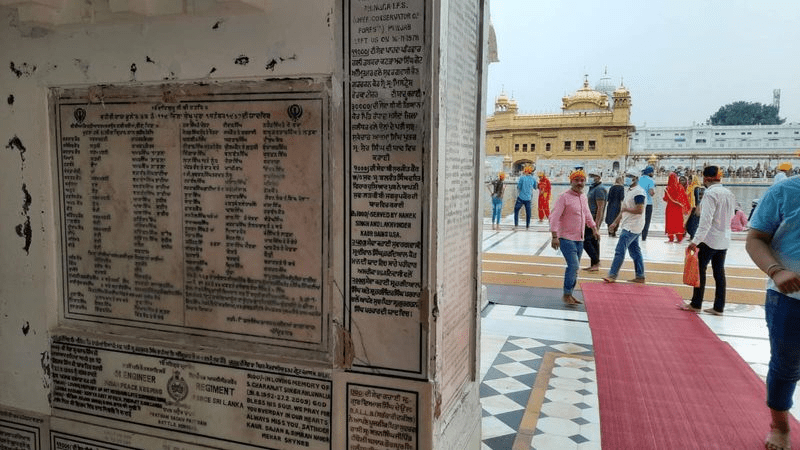
As devotees stream through the historic Ghanta Ghar entrance of the Golden Temple each day, a large stone slab set into the passage after the stairs often goes unnoticed. Engraved on it are the names of those killed in Saka Bhuler, one of the lesser-known yet deeply tragic episodes of the Partition of Punjab.
The massacre occurred on 31 August 1947, barely two weeks after Pakistan came into existence, at Chak No. 119, known as Bhuler village, in Sheikhupura district of undivided Punjab. According to accounts preserved by survivors and their descendants, more than 300 Sikhs lost their lives when a large armed mob from neighbouring villages attacked the predominantly Sikh settlement.
The violence was not limited to those who died in combat. Sikh women and young girls, fearing abduction and sexual assault, chose death. Several jumped into wells. When the wells could hold no more, some asked their fathers and brothers to kill them rather than allow them to be captured.
Bhuler, situated near Sangla Hill, had a Sikh majority that owned substantial agricultural land. Historian Kulwinder Singh Bajwa, a native of the village who now lives in Batala, notes that many residents decided to stay even after the area became part of Pakistan on 14 August, hoping the violence would eventually subside.
Surrounded by Muslim-majority villages, Bhuler remained isolated. Early attempts at looting were resisted, but tension rose steadily as reports of widespread bloodshed across Punjab filtered in.
The events are detailed in Dr Virsa Singh Bajwa’s book Shaheedi Saka Bhuler. According to his account, thousands of armed men advanced on the village, beating drums. Sensing the danger, Sikh residents gathered the women, girls and children inside a house while the men took up defensive positions. They had only a limited number of firearms and rounds.
When the attackers came within range, the defenders opened fire and then carefully conserved their ammunition, hoping for reinforcements that never arrived. Roughly a hundred Sikh men eventually faced thousands of assailants. The fighting turned into hand-to-hand combat as the defence collapsed.
Inside the house where the women and children had been sheltered, many chose death rather than the fate they feared awaited them. The attackers then took control of the village and began looting.
A Sikh jatha reached Bhuler the next day. Their arrival, accompanied by war cries, forced the attackers to flee. The rescuers found only a small number of survivors. The remaining families were taken to a refugee camp in Amritsar and later settled in Batala and nearby villages on land left behind by Muslims who had migrated to Pakistan.
Today the memory of Saka Bhuler is kept alive by the marble memorial stone at the Golden Temple and another in Batala — quiet reminders of a tragedy that still receives little public attention despite its place in the violent history of Partition.