


AI Generated Summary
- The sacred parisar of the Golden Temple witnessed an extraordinary surge of devotion and celebration as Sikhs from across India and around the globe gathered to mark Khalsa Sajna Diwas and Baisakhi, two of the most significant occasions in the Sikh calendar.
- Situated at the heart of the holy Amrit Sarovar and connected by a narrow causeway, the shrine became the focal point of continuous shraddha and spiritual fervour throughout the day.
- As prayers, service, and community dining continued seamlessly through the day, the Golden Temple once again stood as a symbol of unity, devotion, and the enduring spirit of Sikhism.
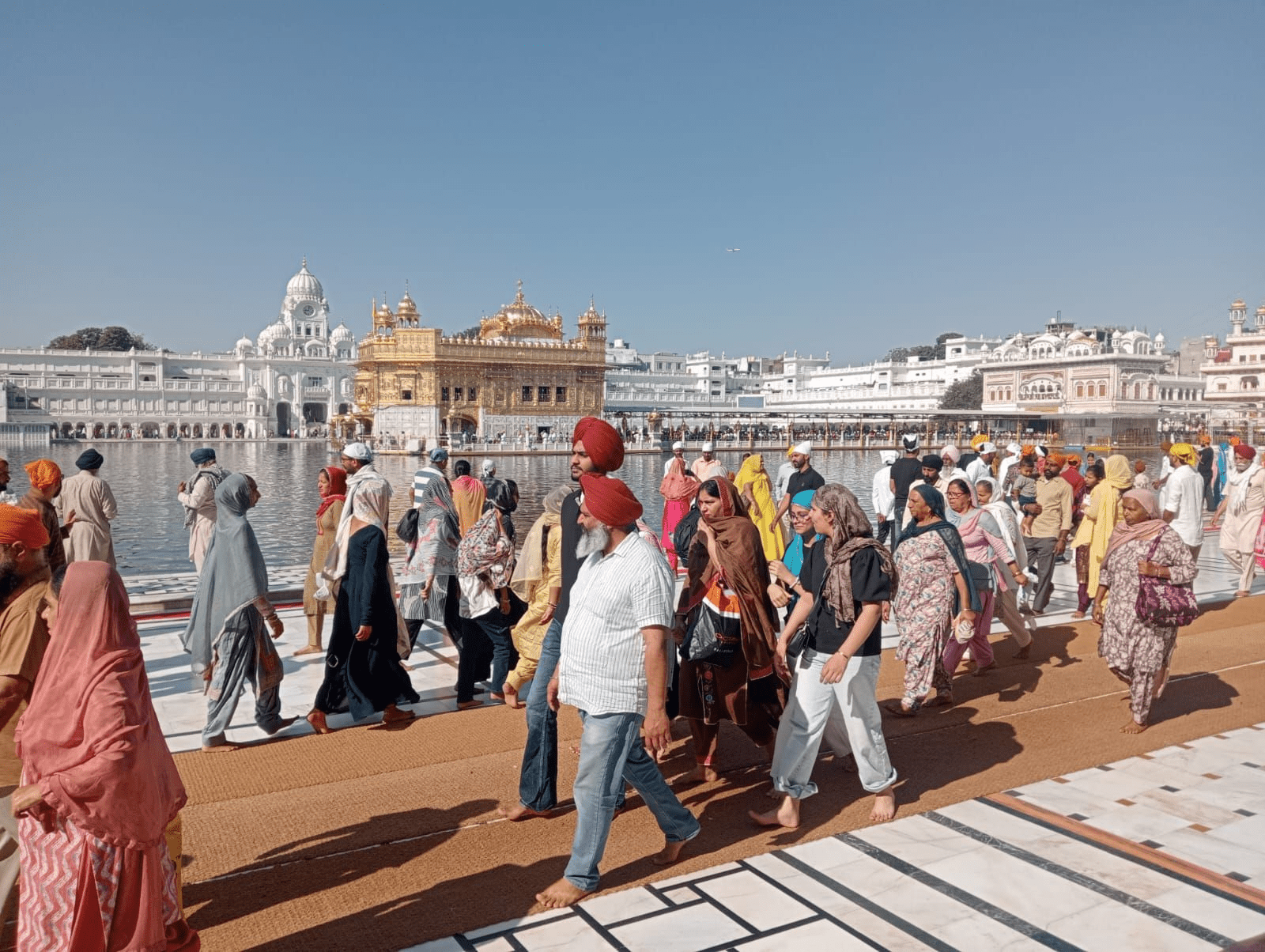
The sacred parisar of the Golden Temple witnessed an extraordinary surge of devotion and celebration as Sikhs from across India and around the globe gathered to mark Khalsa Sajna Diwas and Baisakhi, two of the most significant occasions in the Sikh calendar.
From the early hours of dawn, thousands of devotees—many dressed in vibrant traditional attire—formed long, winding queues leading toward the sanctum sanctorum, known as Sach Khand. Situated at the heart of the holy Amrit Sarovar and connected by a narrow causeway, the shrine became the focal point of continuous shraddha and spiritual fervour throughout the day.
The atmosphere was filled with the resonant recitation of Gurbani, which devotees listened to with deep reverence while patiently waiting their turn for darshan. Despite the heavy influx, the arrangements ensured a smooth and orderly flow. The Shiromani Gurdwara Parbandhak Committee (SGPC), which manages the shrine, had put in place extensive facilities to accommodate the massive gathering.
Acts of sewa (selfless service) were visible at every step. Volunteers, or sewadars, along with members of the sangat, continuously cleaned the marble parikrama, maintaining the sanctity and hygiene of the complex. Free water kiosks, known as chabeels, were set up across the compound to offer relief to visitors amid the bustling crowds.
The day also highlighted the Golden Temple’s universal spirit, drawing people of diverse backgrounds and nationalities to participate in community service. Nowhere was this more evident than in the bustling langar hall, where the tradition of free community meals continued uninterrupted.
At the renowned Sri Guru Ramdas Ji Langar, special arrangements were made to commemorate the auspicious occasion. Alongside the regular meals served круглосуточно throughout the year, devotees were treated to a variety of festive dishes. Sweet offerings such as jalebi, boondi laddu, besan laddu, kheer, kadah prashad, and sweetened rice added to the celebratory mood.
The main meal included staples like salted rice, lentils, vegetable curry, karhi, along with fresh salad and pickles—served with humility and equality to all, regardless of background.
As prayers, service, and community dining continued seamlessly through the day, the Golden Temple once again stood as a symbol of unity, devotion, and the enduring spirit of Sikhism.