


AI Generated Summary
- Pakistan’s continued neglect of its shared cultural and religious heritage has once again come under scrutiny, as two iconic ancestral homes linked to legendary Indian cinema figures — Dilip Kumar and Raj Kapoor — stand on the verge of collapse in Peshawar.
- Heritage experts and local residents have warned that the century-old structures, already weakened by years of official apathy, have suffered further damage due to recent heavy rains and earthquake tremors, exposing the deepening crisis surrounding preservation of historical landmarks in the country.
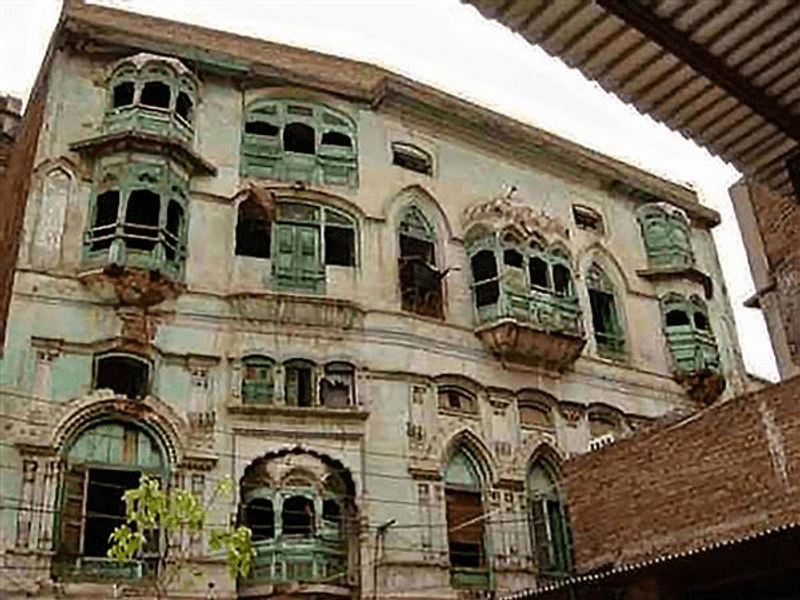
- The ancestral Kapoor Haveli, located in the historic Dhaki Nalbandi area of Peshawar’s Qissa Khwani Bazaar, once stood as a symbol of the city’s architectural grandeur and cosmopolitan legacy.
Pakistan’s continued neglect of its shared cultural and religious heritage has once again come under scrutiny, as two iconic ancestral homes linked to legendary Indian cinema figures — Dilip Kumar and Raj Kapoor — stand on the verge of collapse in Peshawar. Heritage experts and local residents have warned that the century-old structures, already weakened by years of official apathy, have suffered further damage due to recent heavy rains and earthquake tremors, exposing the deepening crisis surrounding preservation of historical landmarks in the country.
The deteriorating condition of these nationally declared heritage sites reflects a larger pattern of negligence toward cultural and minority heritage structures across Pakistan. Several historically significant gurdwaras, temples, and Sikh religious sites in the country also remain abandoned, encroached upon, or reduced to ruins despite repeated assurances of restoration.
The ancestral Kapoor Haveli, located in the historic Dhaki Nalbandi area of Peshawar’s Qissa Khwani Bazaar, once stood as a symbol of the city’s architectural grandeur and cosmopolitan legacy. Built between 1918 and 1922 by Dewan Basheswarnath Kapoor, the haveli was home to Prithviraj Kapoor, the pioneer of the Kapoor film dynasty, and birthplace of legendary actor Raj Kapoor and his uncle Trilok Kapoor. Today, however, the structure bears deep cracks across its walls and foundations after prolonged rainfall and seismic activity further destabilised the already fragile building.
Nearby, the ancestral residence of cinema icon Dilip Kumar in Mohalla Khudadad presents an equally grim picture. Once a vibrant Peshawari household, the structure has now fallen into severe disrepair, with roofs collapsing and walls crumbling after every spell of rain. Residents fear that without immediate intervention, the building could soon disappear entirely.
Ironically, both properties were declared national heritage sites by the Pakistani government in 2016. In subsequent years, authorities announced multiple plans and financial allocations for their restoration. The Khyber Pakhtunkhwa government approved funds to acquire the properties and convert them into museums dedicated to the two film legends. Another restoration package was sanctioned in 2025. Yet, despite these announcements, little meaningful work has materialised on the ground.
Heritage activists say the repeated promises have remained confined to paperwork while the buildings continue to decay. According to members of the Cultural Heritage Council in Khyber Pakhtunkhwa, the government has failed to prioritise preservation efforts, citing lack of funds and administrative inertia.
Local residents living around the structures have voiced frustration over the authorities’ inaction. Shopkeepers and neighbours warn that the weakened buildings now pose serious safety risks, particularly with the monsoon season approaching.
The neglect of these iconic homes is not an isolated case. Across Pakistan, many historically significant Sikh gurdwaras and Hindu temples continue to suffer from abandonment and encroachment. Numerous shrines tied to the region’s pre-Partition history remain inaccessible, damaged, or structurally unsafe. Despite international attention and repeated calls from heritage conservation groups, restoration efforts have often been sporadic and inadequate.
Observers argue that the condition of these sites highlights a broader failure to protect the subcontinent’s shared civilisational legacy. Peshawar itself was once known for its rich multicultural heritage, where communities of Hindus, Sikhs, and Muslims contributed to the city’s social and architectural fabric. Today, many remnants of that past are vanishing under neglect.
For many in India and among the global South Asian diaspora, the fading legacy of Dilip Kumar and Raj Kapoor’s ancestral homes represents more than the loss of buildings. It symbolises the erosion of a shared cultural memory that transcended borders, languages, and faiths.
Unless urgent conservation efforts are undertaken, heritage experts warn that Pakistan risks losing not only two priceless landmarks associated with cinematic history, but also another chapter of the region’s collective heritage.