


AI Generated Summary
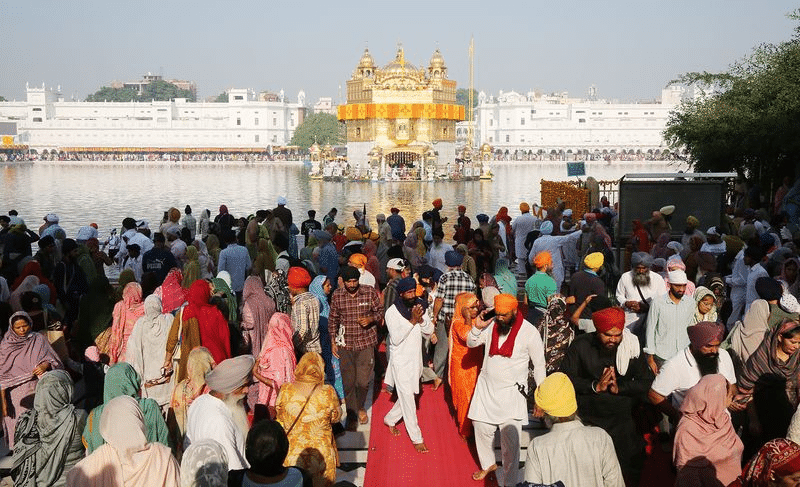
- The sacred precincts of the Golden Temple reverberated with Gurbani kirtan and prayers as lakhs of devotees from India and abroad gathered to celebrate the Parkash Purb of Sri Guru Ram Das Ji, the fourth Sikh Guru and founder of Amritsar.
- The significance of the occasion extended beyond religious ceremonies, recalling the historic role of Guru Ram Das Ji in establishing the settlement that eventually developed into the present-day city of Amritsar.
- As hymns continued to resonate through the shrine complex, the celebrations stood as a reminder of Guru Ram Das Ji’s enduring message of compassion, harmony and spiritual unity, drawing people together across geographical and social boundaries.
The sacred precincts of the Golden Temple reverberated with Gurbani kirtan and prayers as lakhs of devotees from India and abroad gathered to celebrate the Parkash Purb of Sri Guru Ram Das Ji, the fourth Sikh Guru and founder of Amritsar.
The occasion brought together devotees from different walks of life, transforming the holy city into a centre of religious devotion and spiritual celebration. From the early hours, pilgrims thronged Sri Harmandir Sahib to seek blessings, participate in religious programmes and pay homage to the Guru whose vision laid the foundation of Amritsar.
A major attraction of the celebrations was the special display of sacred relics and historic artefacts associated with Sikh heritage. These traditional jalaus were organised at Sri Harmandir Sahib, Sri Akal Takht Sahib and Gurdwara Baba Atal Rai Sahib, offering devotees an opportunity to witness treasured symbols of the Sikh faith.
The central religious congregation took place at Gurdwara Manji Sahib Diwan Hall under the arrangements of the Shiromani Gurdwara Parbandhak Committee (SGPC). The programme commenced with the bhog of Sri Akhand Path Sahib, followed by devotional performances by prominent ragi, dhadi and kavishri jathas. Through soul-stirring kirtan and historical narratives, the performers reflected upon the life, teachings and enduring spiritual legacy of Guru Ram Das Ji.
Addressing the gathering, SGPC president Harjinder Singh Dhami highlighted the Guru’s immense contribution to Sikhism and humanity. He described Sri Harmandir Sahib as a universal spiritual sanctuary that continues to welcome people irrespective of their religion, caste or social background.
Dhami encouraged the Sikh community, particularly the younger generation, to draw inspiration from the Guru’s teachings and strengthen their connection with Gurbani, Sikh values and religious traditions.
Renowned Sikh preacher Bhai Pinderpal Singh also addressed the congregation, elaborating on the Guru’s life, spiritual philosophy and contributions to the development of the Sikh faith.
Literary and musical traditions formed an important part of the commemorations. A special kavi darbar brought together poets who paid tribute to Guru Ram Das Ji through verses celebrating his teachings and contributions. The celebrations also featured a raag darbar and partaal kirtan programme on Sunday night, with accomplished ragis presenting Gurbani compositions of the fourth Sikh Guru in traditional classical styles.
The significance of the occasion extended beyond religious ceremonies, recalling the historic role of Guru Ram Das Ji in establishing the settlement that eventually developed into the present-day city of Amritsar. His legacy of humility, selfless service, equality and devotion remains deeply embedded in the city’s religious and cultural identity.
In keeping with the Sikh tradition of sewa, the SGPC and several religious organisations arranged extensive langar services for the visiting congregation. Volunteers worked throughout the celebrations to serve meals and assist pilgrims, reflecting the principles of community service and collective responsibility.
As hymns continued to resonate through the shrine complex, the celebrations stood as a reminder of Guru Ram Das Ji’s enduring message of compassion, harmony and spiritual unity, drawing people together across geographical and social boundaries.