


AI Generated Summary
- The result is expanded opportunity that strengthens economic ecosystems in India and in the countries where large Indian-origin communities have built lasting commercial and professional stakes.
- The combination of an operating UK agreement with documented early shipments, a substantial package of new deals, and Canada’s largest commercial engagement in decades alongside accelerated partnership talks represents concrete progress.
- The UK gains export openings in a large and growing market, inward investment and measurable activity in regions such as northern England.
The simultaneous high-level trade missions from the United Kingdom and Canada to India this week illustrate something diaspora communities have long understood in practice: economic ties between India and its largest Western partners are most durable when they rest on networks of people, skills and capital that already span borders.
The UK’s mission, one of the largest regional delegations it has sent, arrived with three Cabinet ministers, seven northern mayors and well over a hundred businesses. It follows the entry into force of the UK-India Comprehensive Economic and Trade Agreement on 15 July 2026. Officials announced more than £1 billion in new commercial deals linked to the visit, building on nearly £12 billion in deals struck since the agreement was signed. Bilateral trade stood at £48 billion in the twelve months to March 2026, an increase of £3 billion year-on-year. Early usage of the deal is already documented: Indian exporters dispatched more than fifty consignments on the first day, covering electronics, machinery, jewellery, garments and agricultural products. Tariff-free Scottish salmon reached India within a fortnight, and Scotch whisky is entering under reduced tariffs. Long-term projections point to an additional £25.5 billion in annual bilateral trade.
Specific outcomes show reciprocal gains. A £50 million investment by Meta for Data Technologies is expected to create five hundred skilled jobs in London and Manchester. Menzies Aviation anticipates more than £600 million in revenue from expanded operations in India, including over a thousand jobs at Bengaluru’s cargo facilities. Other agreements cover AI applications in healthcare, advanced communications, construction and food and drink. For communities with deep roots in both countries, these flows matter because they expand the commercial pathways that already exist through family businesses, professional networks and regional investment.
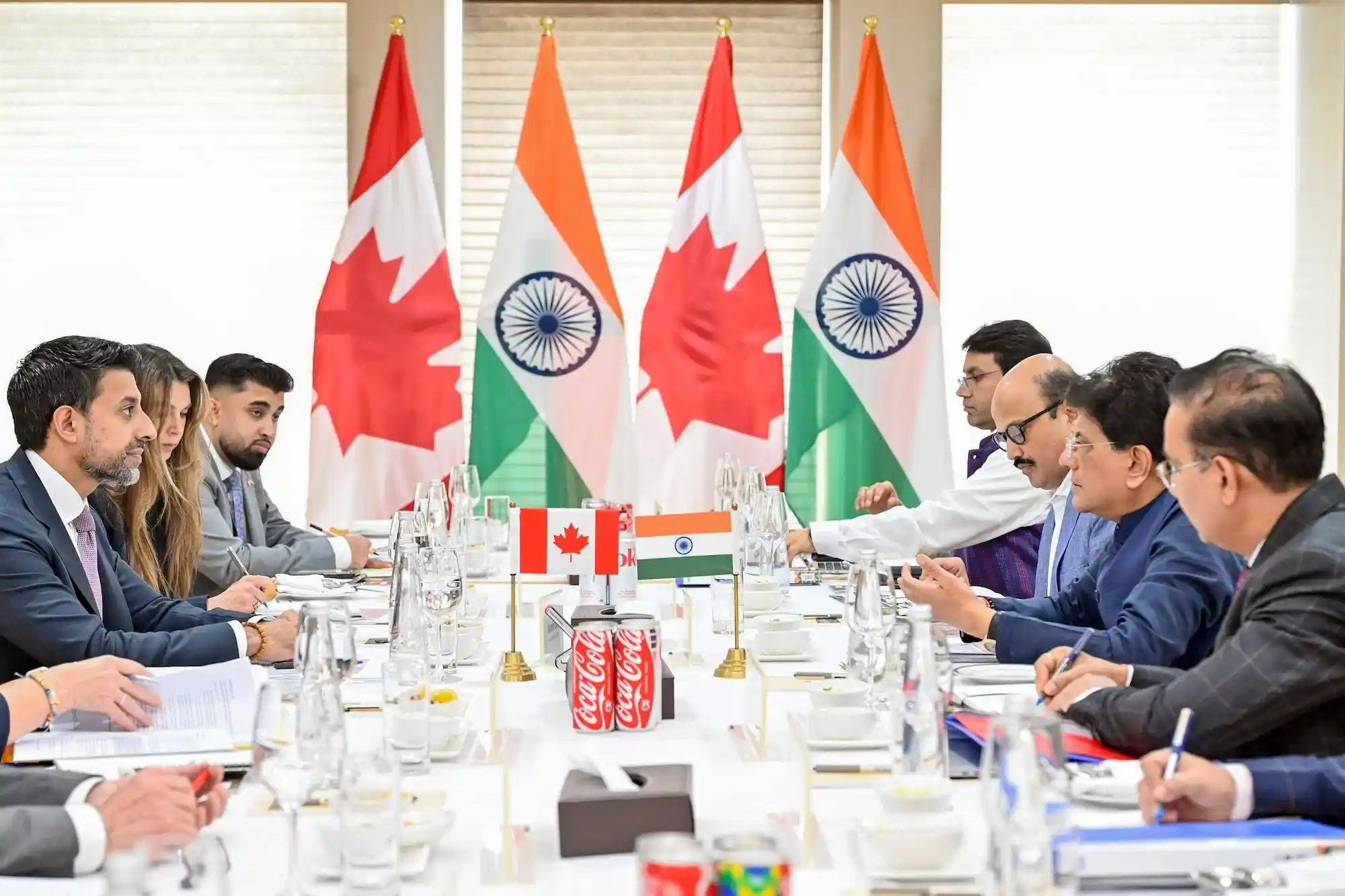
Canada’s mission is larger still by headcount. Nearly three hundred business delegates, described as the biggest Canadian trade delegation to India in more than thirty years, are in Mumbai and Bengaluru under International Trade Minister Maninder Sidhu. Priority sectors include aerospace, clean technology, information and communications technology, life sciences and agri-food. Two-way goods and services trade reached $30.4 billion in 2025; Ottawa’s stated target is to more than double that figure to $70 billion by 2030 as part of a broader effort to diversify beyond the United States. Canadian direct investment in India stands at $11.4 billion and Indian investment in Canada at $9.7 billion. Canadian multinationals employ nearly 69,000 people in India; Indian firms employ about 38,000 in Canada. Negotiations on a Comprehensive Economic Partnership Agreement are advancing, with both sides expressing commitment to an early conclusion after the fifth round of talks earlier this month.
These missions are net positive because the benefits are shared and already visible in commercial activity rather than solely in announcements. India secures improved market access for the bulk of its exports to the UK, technology partnerships and job-creating investment. The UK gains export openings in a large and growing market, inward investment and measurable activity in regions such as northern England. Canada expands options for its firms in high-growth sectors while deepening existing investment and employment links. For people whose working lives and family connections already operate across these geographies, stronger formal trade frameworks reduce friction in the informal networks that have long moved goods, services, skills and capital.
The combination of an operating UK agreement with documented early shipments, a substantial package of new deals, and Canada’s largest commercial engagement in decades alongside accelerated partnership talks represents concrete progress. The result is expanded opportunity that strengthens economic ecosystems in India and in the countries where large Indian-origin communities have built lasting commercial and professional stakes.