


AI Generated Summary
- In the days leading up to Independence Day, Indian security forces executed a sweeping, coordinated operation that dismantled a dangerous ISI-backed terror network operating under the banner of the Shahzad Bhatti Network.
- Third, it reinforces that zero tolerance is not a slogan but an operational doctrine that demands constant vigilance, legal tools such as the Unlawful Activities (Prevention) Act, and the willingness to act preemptively.
- The successful disruption of a terror plot timed for that occasion is itself a quiet assertion of sovereignty.
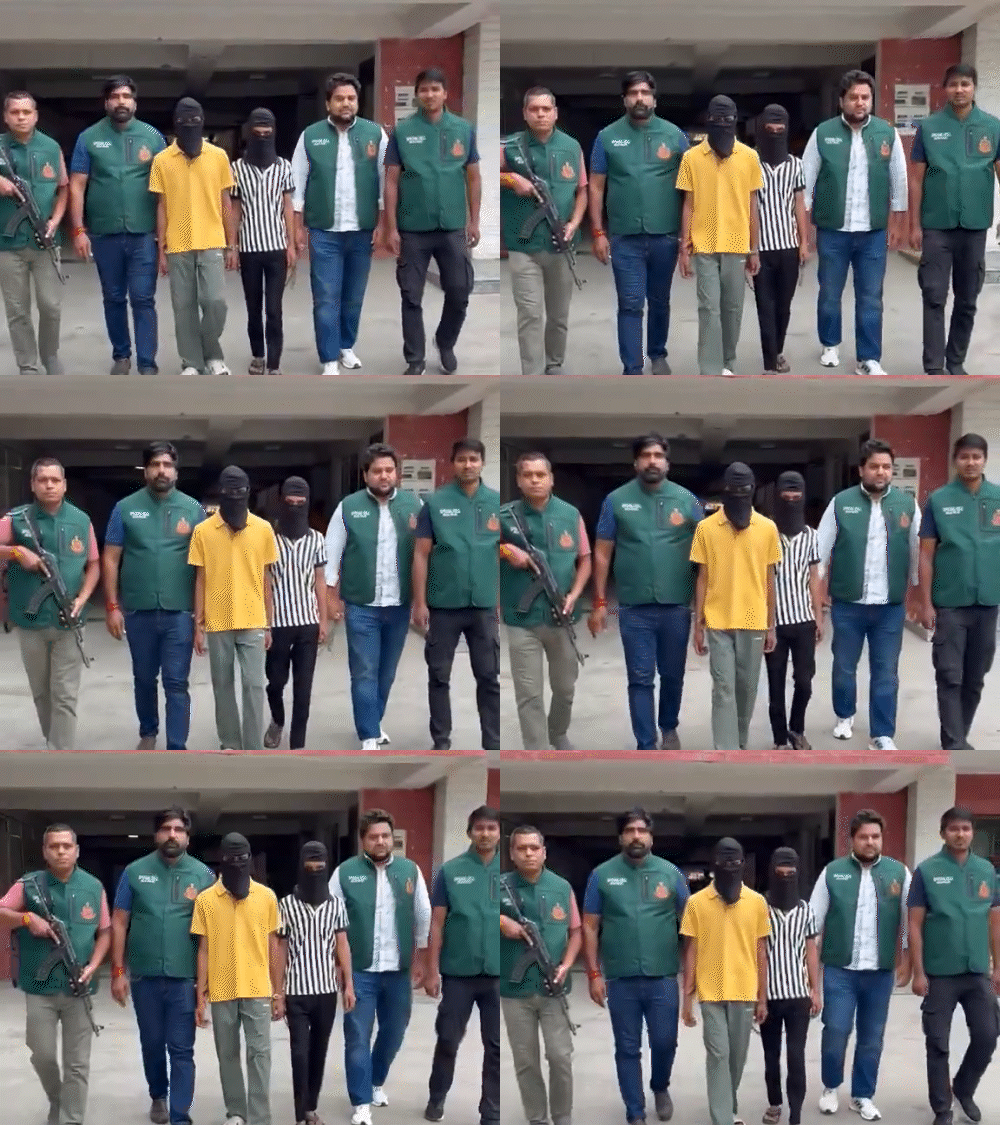
In the days leading up to Independence Day, Indian security forces executed a sweeping, coordinated operation that dismantled a dangerous ISI-backed terror network operating under the banner of the Shahzad Bhatti Network. By arresting more than 200 operatives across 14 states, the agencies thwarted carefully laid plans for subversive attacks designed to disrupt national celebrations and sow fear. This action stands as a clear demonstration of India’s uncompromising zero-tolerance policy toward terrorism.
The network, funded and directed from across the border, had embedded itself in multiple regions through a web of local recruits. Its activities extended beyond mere propaganda or low-level crime. Investigators linked it to a pattern of grenade attacks, improvised explosive devices, petrol bomb incidents, and targeted killings. The group’s ambition to strike around Independence Day revealed a calculated intent to exploit a moment of national unity for maximum psychological impact.
What makes this operation particularly significant is its scale and precision. Security forces moved simultaneously across widely dispersed locations, relying on real-time intelligence sharing that cut through bureaucratic silos. The result was the near-total disruption of the network’s operational capacity on Indian soil. Recoveries from the raids paint a stark picture of the threat: IEDs ready for use, grenades carrying markings from Pakistan’s Ordnance Factory, pistols, live cartridges, and CCTV cameras installed specifically for espionage and reconnaissance of sensitive sites including police stations, defence installations, and places of worship.
These material finds leave little room for doubt about the external sponsorship. The presence of factory-marked grenades and surveillance equipment points directly to organised cross-border support rather than isolated local radicalisation. The Shahzad Bhatti Network functioned as a hybrid entity—part organised crime syndicate, part terror module—leveraging social media for recruitment, encrypted channels for direction, and local conduits for logistics. Its ability to draw in ordinary individuals through financial inducements and ideological packaging underscores how modern terrorism adapts to digital tools while retaining its destructive core.
The success of this multi-state crackdown carries broader lessons. First, it affirms that sustained intelligence work combined with inter-agency coordination can neutralise threats before they mature into mass-casualty events. Second, it highlights the evolving nature of the challenge: networks that blur the lines between gangsterism and terrorism, operate through proxies, and exploit social media to radicalise and task young recruits. Third, it reinforces that zero tolerance is not a slogan but an operational doctrine that demands constant vigilance, legal tools such as the Unlawful Activities (Prevention) Act, and the willingness to act preemptively.
India has faced successive waves of cross-border terrorism for decades. Each time a module is dismantled, new ones attempt to fill the vacuum. The Shahzad Bhatti Network’s defeat does not eliminate the threat, but it significantly raises the cost of operating on Indian territory. Potential recruits now see that association with such groups carries swift and certain consequences. Handlers across the border receive a clear signal that their investments in local modules will be systematically identified and destroyed.
Yet celebration must be tempered with realism. The recovery of espionage equipment shows that the network was not only planning kinetic attacks but also gathering intelligence for future operations. Residual cells may still exist. Financing channels, including those linked to narcotics, require continued disruption. Social media platforms that serve as recruitment grounds need sharper monitoring without compromising legitimate expression. And the international community must recognise that state-sponsored or state-tolerated terrorism remains a shared threat that demands consistent pressure rather than selective outrage.
Independence Day is a moment to reflect on hard-won freedom. The successful disruption of a terror plot timed for that occasion is itself a quiet assertion of sovereignty. It demonstrates that India’s security architecture has matured into a force capable of detecting, disrupting, and dismantling sophisticated networks before they can strike. The men and women in the field who executed these operations across 14 states deserve recognition for their professionalism and resolve.
Terrorism thrives on surprise, fragmentation of response, and the hope that societies will grow weary of the fight. This operation denied the Shahzad Bhatti Network all three advantages. It is a reminder that security is not achieved through a single dramatic success but through relentless, coordinated, and intelligence-driven effort. As long as external actors continue to export violence, India must continue to respond with the same clarity of purpose shown in the days before Independence Day. The message is unambiguous: plots will be uncovered, networks will be broken, and those who seek to undermine the nation’s peace will find no safe harbour.