


AI Generated Summary
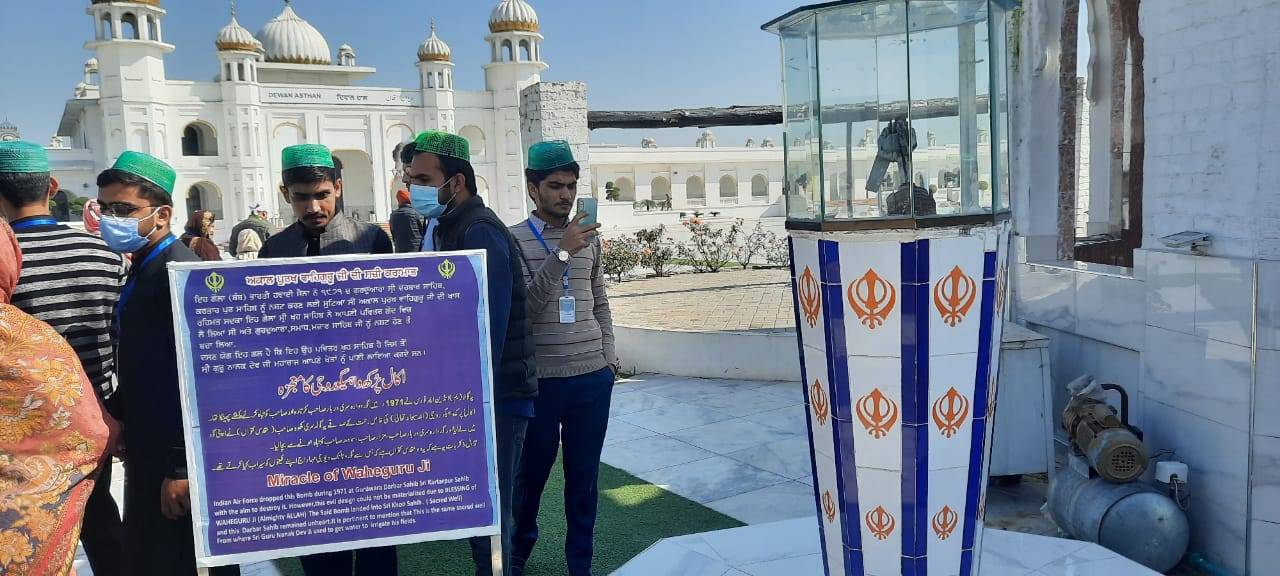
- The author points to a display outside the Gurdwara Sri Kartarpur Sahib complex, where the casing of a bomb shell is exhibited in a glass showcase alongside the claim that the Indian Army targeted the Gurdwara during the 1971 Indo-Pak war.
- Over the past few days, several Sikh leaders in India have issued statements urging the Government of India to fully restore the smooth functioning of the Sri Kartarpur Corridor at the earliest.
- According to the author, Kartarpur Sahib is perhaps the only Gurdwara in the world where devotees are required to pay a fee solely for darshan.
Over the past few days, several Sikh leaders in India have issued statements urging the Government of India to fully restore the smooth functioning of the Sri Kartarpur Corridor at the earliest. The sentiments of the Sikh community are entirely understandable, as Gurdwara Sri Kartarpur Sahib is one of the holiest places in Sikhism. However, there is another aspect of this issue that many leaders and devotees may not be fully aware of.
The author argues that the principal obstacle to the uninterrupted operation of the Kartarpur Corridor is not India, but rather Pakistan’s policies and approach. According to this view, Pakistan has been unwilling to change its stance while simultaneously attempting to portray the Indian government as responsible for the situation.
The Government of India, under Prime Minister Narendra Modi, has consistently stated that it respects the religious sentiments of the Sikh community. Since the Kartarpur Corridor was inaugurated in 2019, India has not conveyed that pilgrims should be prevented from visiting Gurdwara Sri Kartarpur Sahib. Even during the COVID-19 pandemic, India’s intention was not to keep the corridor permanently closed. In contrast, Pakistan cited the pandemic as the reason for keeping the corridor closed for an extended period, leaving thousands of devotees unable to visit the sacred shrine. Therefore, the perception that India has been the primary obstacle to the corridor’s operation does not, according to this perspective, reflect the complete picture.
If Pakistan genuinely considers Gurdwara Sri Kartarpur Sahib a sacred destination for Sikhs around the world, it should first make its intentions clear. Religious sites should not become platforms for political or ideological messaging.
The author points to a display outside the Gurdwara Sri Kartarpur Sahib complex, where the casing of a bomb shell is exhibited in a glass showcase alongside the claim that the Indian Army targeted the Gurdwara during the 1971 Indo-Pak war. According to the author, this is not merely a disputed historical claim but also appears intended to create negative perceptions about India among visiting pilgrims.
It is also worth recalling that during the wars of 1965 and 1971, artillery shelling occurred on both sides of the border. Pakistani shells also landed in Dera Baba Nanak and surrounding areas within Indian territory. However, India has never used those incidents to claim that Pakistan deliberately targeted historic Gurdwaras. Using wartime events decades later as part of religious messaging, the author argues, is neither appropriate nor consistent with the sanctity of a place of worship.
The article raises a broader question: Should a Gurdwara inspire spiritual peace among devotees, or should it become a place where political narratives influence visitors’ perceptions of their own country? The dignity and sanctity of a Guru’s house, the author argues, should always remain above politics and propaganda.
If Pakistan truly wishes to present the Kartarpur Corridor as a symbol of peace and brotherhood, it should remove the controversial display. Pilgrims visit Kartarpur to pay their respects to Guru Nanak Dev Ji, not to become part of a political narrative.
Another important issue highlighted in the article concerns the fee charged to pilgrims. According to the author, Kartarpur Sahib is perhaps the only Gurdwara in the world where devotees are required to pay a fee solely for darshan. Pakistan reportedly charges its own citizens a nominal amount of around ₹125, while foreign pilgrims, particularly Indians, pay approximately ₹1,800. The author contends that such a system is inconsistent with the Sikh principle of equality and with Guru Nanak Dev Ji’s teachings, which reject discrimination of any kind.
Faith, the article argues, should never depend on one’s ability to pay. If Kartarpur is truly a pilgrimage site for all humanity, the fee for darshan should be abolished. If revenue collection is considered necessary, the author suggests it should be levied as a visa-related charge rather than as a fee for visiting the Gurdwara.
In conclusion, the author argues that the Kartarpur Corridor should remain free from political messaging and anti-India propaganda. If Pakistan genuinely wishes to respect the religious sentiments of Sikh devotees, it should remove the controversial bomb-shell display from the Gurdwara complex, abolish the darshan fee, and reassure the global Sikh community that Kartarpur will remain solely a place of faith, spirituality, and peace.