


AI Generated Summary
- First elected as a Labour councillor in 2015, he has served his ward continuously since, remaining rooted in the same streets where he went to school, played football and raised his family.
- For many in the community the image of a turbaned Sikh wearing the Lord Mayor’s chain is more than a local success story.
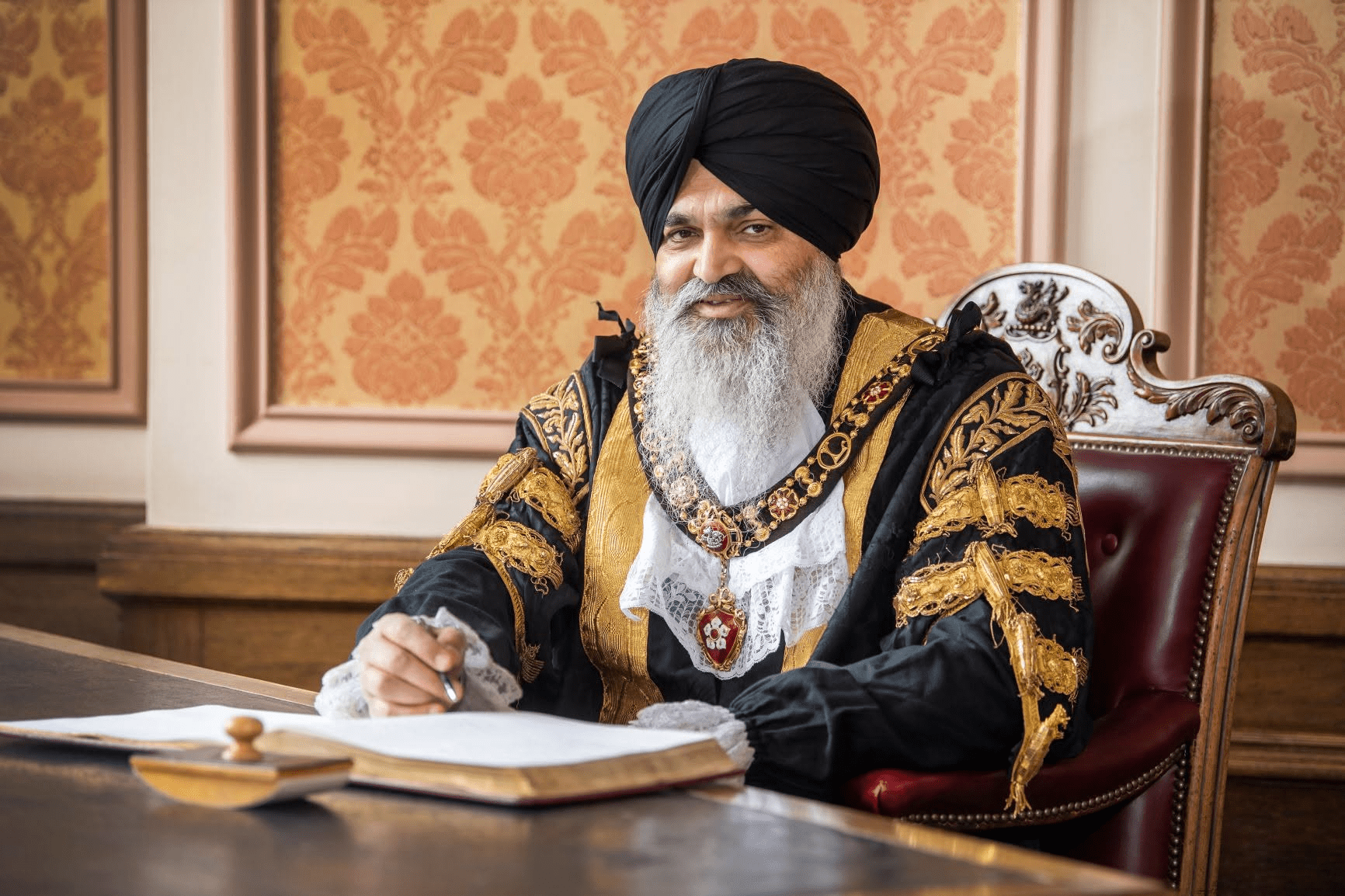
- In a ceremony steeped in civic tradition at Leicester Town Hall on 14 May 2026, Councillor Kulwinder Singh Johal was sworn in as Lord Mayor of Leicester.
In a ceremony steeped in civic tradition at Leicester Town Hall on 14 May 2026, Councillor Kulwinder Singh Johal was sworn in as Lord Mayor of Leicester. The moment carried quiet power. For the global Sikh community, and for Sikhs watching from Punjab to the diaspora, it marked a historic milestone: the elevation of a turbaned, Amritdhari Sikh to the city’s highest ceremonial office.
Johal, who represents the Braunstone Park and Rowley Fields ward, becomes Leicester’s first fully observant Amritdhari Sikh Lord Mayor and the fifth of Indian Punjabi heritage. His journey from a village near Phillaur in Jalandhar district to the chain of office tells a story familiar to many British Sikhs—one of migration, hard work, faith and service.
Born in Tehang village in the early 1970s, Johal arrived in Britain at the age of six with his parents. He grew up in Leicester, completed his education there, and spent 25 years working at Russell Castings, a local foundry, until it closed in 2016. That experience of industrial change deepened his commitment to trade union values and community solidarity. First elected as a Labour councillor in 2015, he has served his ward continuously since, remaining rooted in the same streets where he went to school, played football and raised his family.
His public life has long been shaped by Sikh principles, particularly seva—selfless service. For years he served as general secretary of Guru Nanak Gurdwara in Leicester. In 2002 he helped host Queen Elizabeth II during her Golden Jubilee visit, a moment of pride he still recalls. He has also played a leading role in developing GNG Football Club into one of the city’s largest and most inclusive grassroots sports organisations, opening doors for young people across communities.
As Lord Mayor for 2026–27, Johal has chosen two charities that reflect both his faith and his practical concern for the vulnerable: the Midland Langar Seva Society, which tackles food insecurity and homelessness, and Leicester Hospitals Charity, focused on early diagnosis of diabetes and kidney care. He has pledged to serve every resident of Leicester “with openness, respect and humility.” His wife, Manjit Kaur Johal, serves as Lady Mayoress; their daughter Gursimran acts as consort, with their son Ashvir also supporting the mayoral year.
The appointment carries symbolic weight. Leicester has long been home to a substantial Sikh and Punjabi population whose contributions to industry, commerce, faith institutions and public life are woven into the city’s fabric. Previous Punjabi-heritage Lord Mayors have paved the way. Johal’s visible Sikh identity—turban, beard and commitment to Amrit—makes this particular elevation resonate more deeply. It signals that British public life continues to make room for citizens who bring their full cultural and religious selves into civic roles.
For many in the community the image of a turbaned Sikh wearing the Lord Mayor’s chain is more than a local success story. It is evidence of integration without erasure, of contribution recognised, and of the quiet power of consistent local service. Johal himself has spoken of the milestone as something that arrives when the Almighty wills it, and of gratitude to fellow councillors for their confidence.
In an era when questions of belonging and representation remain live, moments like this matter. They remind younger British Sikhs that pathways into public life exist, and they affirm to the wider city that diversity of background and faith can sit comfortably at the ceremonial heart of local democracy. Kulwinder Singh Johal’s year as first citizen of Leicester is, above all, a proud chapter for the British-Sikh community—and a quiet statement of what steady, values-driven service can achieve.