


AI Generated Summary
- Baba Major Singh pointed out that while groundwater in the surrounding region is generally found at depths of 60 to 65 feet and is often saline, the water table at Somasar Sahib is just around 15 feet deep, with the spring continuing to yield sweet water throughout the year—a phenomenon regarded by devotees as nothing short of miraculous.
- What began as a modest observance by residents of Tibba village has evolved into a major religious gathering, with devotees from across Punjab and neighbouring states visiting the historic gurdwara to pay obeisance, take a holy dip in the sarovar and seek blessings at the sacred site.
- When the request was refused, the Guru is said to have touched the ground with the tip of an arrow, causing a spring of sweet water to emerge instantly.
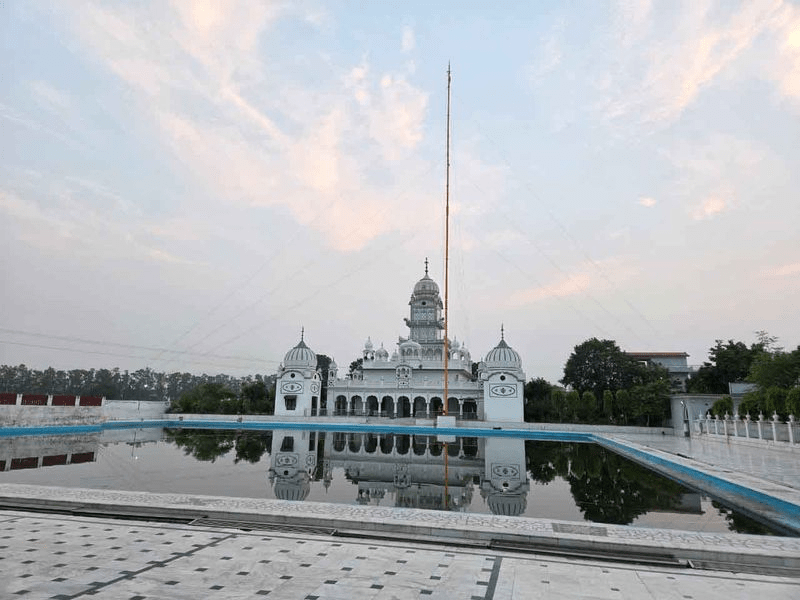
Located in Tibba village, about 4 km from Sahnewal, Gurdwara Somasar Sahib stands as one of the lesser-known yet historically significant Sikh shrines associated with the journey of the tenth Sikh Guru, Guru Gobind Singh. Revered by devotees, the shrine is believed to have been sanctified by the Guru’s visit during one of the most challenging phases of his life following his departure from the forests of Machhiwara.
According to Sikh tradition, Guru Gobind Singh, disguised as ‘Ucch Da Peer’, travelled with Bhai Daya Singh, Bhai Dharam Singh, Bhai Maan Singh, Bhai Gani Khan and Bhai Nabi Khan after leaving Machhiwara. Traversing through Katana Sahib, Rampur, Kanech, Sahnewal, Damdama Sahib and Nandpur, the Guru is believed to have reached Tibba on December 28, 1704 (14 Poh), before proceeding to Gurdwara Alamgir Sahib, where he halted for a night.
Local lore recounts that while resting atop a sandy mound, or tibba, the Guru asked a nearby cowherd for drinking water. When the request was refused, the Guru is said to have touched the ground with the tip of an arrow, causing a spring of sweet water to emerge instantly. The miraculous spring, known as the ‘Soma’, continues to flow even today and remains the spiritual focal point of the shrine. Devotees believe that those who bathe in its waters or partake of it with sincere faith are blessed with the fulfilment of their wishes.
Over the past few years, Gurdwara Somasar Sahib has undergone extensive development. While the shrine was earlier managed by a local committee, its administration was taken over in 2020 by the chief caretakers of Samprada Hazoor Sahib Gurdwara Langar Sahib—Baba Nidhan Singh, Baba Narinder Singh and Baba Balwinder Singh—along with Jathedar Baba Major Singh.
Since then, the historic gurdwara has witnessed a comprehensive transformation. A new diwan hall and darshani deori have been constructed, the Parkash of Guru Granth Sahib has been established near the sacred spring, and the once earthen sarovar has been rebuilt with a cemented structure to facilitate devotees.
Despite these developments, concerns over environmental degradation continue to cast a shadow over the shrine. Jathedar Baba Major Singh has alleged that untreated chemical effluents released by nearby industrial units are contaminating the groundwater in the surrounding area, rendering it unsafe for consumption.
He said the gurdwara management was compelled to install a new tubewell at a depth of nearly 300 feet to ensure a supply of potable water for pilgrims. Although repeated complaints have been submitted to the Punjab Pollution Control Board, he claimed that inspections by officials have not translated into meaningful action.
Interestingly, the sacred spring itself remains unaffected. Baba Major Singh pointed out that while groundwater in the surrounding region is generally found at depths of 60 to 65 feet and is often saline, the water table at Somasar Sahib is just around 15 feet deep, with the spring continuing to yield sweet water throughout the year—a phenomenon regarded by devotees as nothing short of miraculous.
The shrine draws large congregations during Puranmashi and the birth anniversary of Guru Gobind Singh. What began as a modest observance by residents of Tibba village has evolved into a major religious gathering, with devotees from across Punjab and neighbouring states visiting the historic gurdwara to pay obeisance, take a holy dip in the sarovar and seek blessings at the sacred site.