


AI Generated Summary
- It highlights an integrated model that begins with the cultivation of PGS-India certified organic Non-BT desi cotton and extends through hand spinning, natural dyeing and hand weaving, creating a complete value chain rooted in sustainability and rural livelihoods.
- Each piece represents the collective contribution of the farmer who grows the cotton, the spinner who prepares the yarn, the dyer who colours it using natural processes, and the weaver who transforms it into fabric.
- In an effort to promote sustainable textiles and revive Punjab’s traditional weaving heritage, Kheti Virasat Mission (KVM) has organised a nine-day Nav-Trinjan Organic Cotton and Handloom Khadi Exhibition and Sale at Jaito.
In an effort to promote sustainable textiles and revive Punjab’s traditional weaving heritage, Kheti Virasat Mission (KVM) has organised a nine-day Nav-Trinjan Organic Cotton and Handloom Khadi Exhibition and Sale at Jaito. The event, being held from June 20 to 28 to mark Kabir Jayanti, brings together farmers, artisans, spinners and weavers to showcase an environmentally responsible alternative to mass-produced synthetic clothing.
The exhibition goes beyond displaying handloom products. It highlights an integrated model that begins with the cultivation of PGS-India certified organic Non-BT desi cotton and extends through hand spinning, natural dyeing and hand weaving, creating a complete value chain rooted in sustainability and rural livelihoods.
Drawing inspiration from Punjab’s historic Trinjan tradition—community gatherings where women spun cotton while sharing stories, songs and knowledge—the Nav-Trinjan initiative seeks to restore this cultural practice with women playing a central role in textile production and village-based economic development.
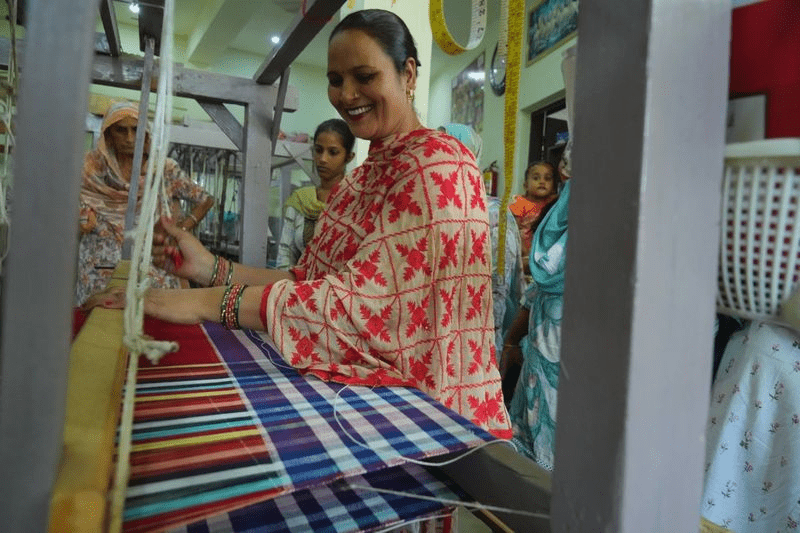
A major attraction at the exhibition is the Nav-Trinjan Bunkar Pathshala (Weaving School), where veteran artisans Shinder Kaur and Gurmeet Kaur are mentoring young boys and girls from traditional weaving families. The training programme is helping preserve Punjab’s diminishing handloom skills while enabling the next generation to earn sustainable livelihoods. Several trainees have already become skilled weavers and are now independently engaged in the craft.
The initiative is spearheaded by Rupsi Garg, Director of KVM’s Rural Development and Heritage Conservation Division. Its handmade textile products have also received CRAFTMARK certification, recognising their authenticity and adherence to traditional handcrafted production methods.
Visitors to the exhibition can explore a wide range of products, including organic cotton fabrics, handspun yarn, handwoven khadi, traditional khes, dupattas, stoles and naturally dyed textiles. Each piece represents the collective contribution of the farmer who grows the cotton, the spinner who prepares the yarn, the dyer who colours it using natural processes, and the weaver who transforms it into fabric.
At a time when concerns over the environmental impact of fast fashion continue to grow, KVM’s initiative demonstrates how traditional knowledge and sustainable agriculture can come together to support both ecological conservation and rural livelihoods.