


AI Generated Summary
- Once renowned as a thriving hub of traditional potters, the locality today stands as a reminder of a craft that has gradually faded from everyday economic life.
- Though transformed by economic realities, the market continues to preserve a link with a craft that once shaped its identity and remains an enduring symbol of Punjab’s cultural heritage.
- As refrigerators dominate modern kitchens and traditional potters become increasingly rare, the rows of earthen vessels in Ghumar Mandi tell a story of resilience.
As temperatures climb across Punjab, a familiar summer tradition is making a comeback in households throughout Ludhiana. Earthen water pots, known for naturally cooling drinking water, are once again finding a place in homes, keeping alive a centuries-old practice that has survived the march of modern appliances.
At the centre of this seasonal revival is Ghumar Mandi, a market whose very identity is rooted in pottery. Once renowned as a thriving hub of traditional potters, the locality today stands as a reminder of a craft that has gradually faded from everyday economic life.
Long before Independence, Ghumar Mandi was home to artisans who shaped clay into household essentials ranging from water vessels and cooking utensils to lamps and decorative items. The market derived its name from these potter communities, whose presence defined the area for generations. Over time, however, changing consumer habits and dwindling returns forced many families to abandon the profession.
Today, only a few pottery traders remain in the market, and most no longer manufacture their products locally. Instead, earthenware sold in the area is sourced from pottery centres in other states.
“Pottery is no longer financially sustainable for most families. Almost everyone who once worked in this trade has moved on to other occupations. Those of us still associated with it largely depend on products made elsewhere,” said Rahim, a longtime shopkeeper in Ghumar Mandi.
The market itself carries historical significance beyond its commercial role. During the British era, the locality served as a residential and administrative zone for colonial officials before evolving into a major trading centre. Local residents also recount stories of freedom fighters, including Bhagat Singh, receiving assistance from people in the area while evading British authorities.
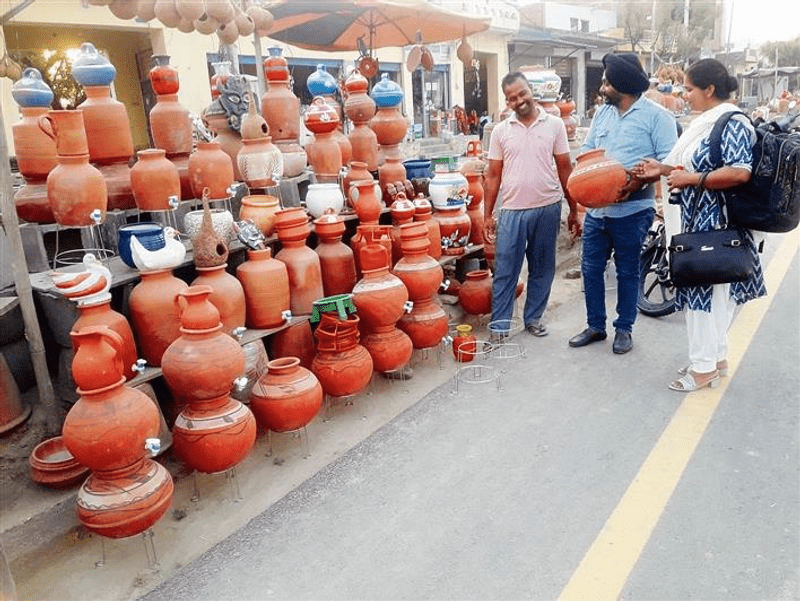
Despite the decline of local production, demand for earthen pots remains strong during the summer months. Shopfronts display rows of matkas and surahis decorated with floral patterns, leafy motifs and scenes inspired by village life. What were once simple utility items have become artistic pieces that connect urban consumers with rural traditions.
For many residents, the appeal goes beyond aesthetics. They believe water stored in clay vessels offers a taste and freshness unmatched by refrigerated water.
“Water from an earthen pot has a distinct flavour that reminds me of my childhood and my grandmother’s home. Every summer, I buy a new one because it brings back cherished memories,” said Arvinder Kaur, a teacher residing in Model Town.
Senior citizen Santosh Kumar echoed a similar sentiment. “Until the monsoon arrives, I prefer drinking water stored in earthen pots. It tastes fresher and more natural. Since the variety available in Ghumar Mandi is limited now, I often purchase them from Civil Lines,” he said.
For others, buying from Ghumar Mandi is also about supporting a cultural tradition. “I purchase earthen pots and diyas from the market regularly. Even though many products are sourced from outside, Ghumar Mandi still represents Ludhiana’s connection with pottery and clay craftsmanship,” said Keerat Kaur of Sarabha Nagar.
As refrigerators dominate modern kitchens and traditional potters become increasingly rare, the rows of earthen vessels in Ghumar Mandi tell a story of resilience. Though transformed by economic realities, the market continues to preserve a link with a craft that once shaped its identity and remains an enduring symbol of Punjab’s cultural heritage.