


AI Generated Summary
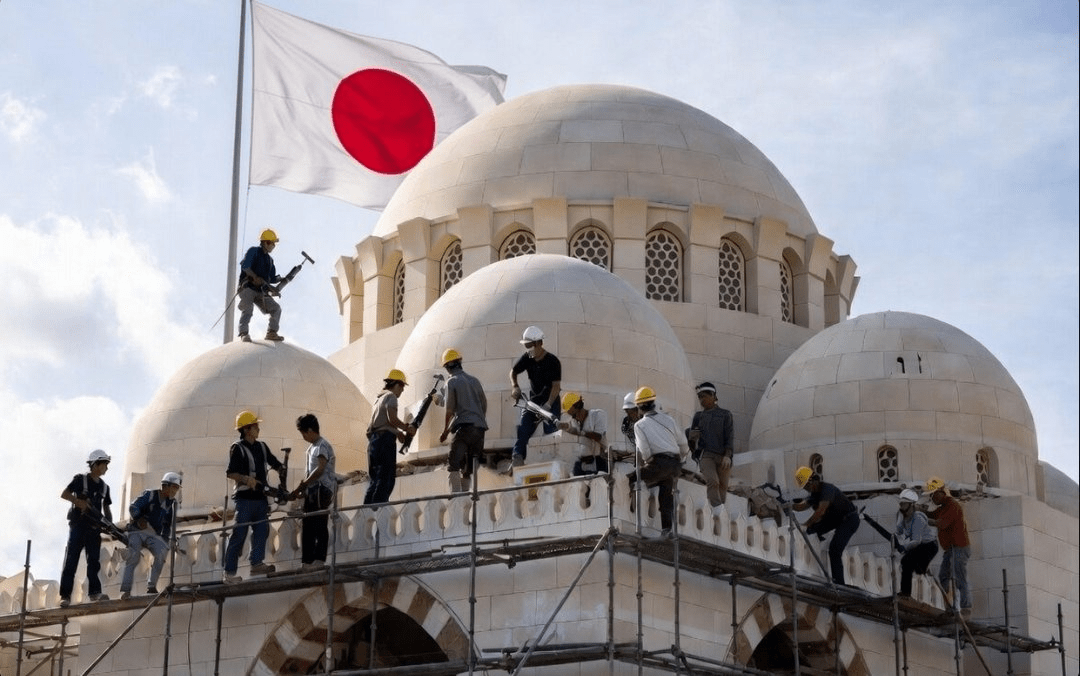
- In late May 2026, Kawagoe City in Saitama Prefecture ordered the demolition of the Japan Jame Masjid Ramzan, a mosque constructed without required permits in a restricted urbanization adjustment zone.
- Shortly afterward, Pakistan’s embassy in Tokyo felt compelled to issue a public statement urging its nationals to “comply with Japanese laws in all matters, including the construction of mosques” and obtain necessary permits.
- Ignoring stop-work orders and presenting a fait accompli is not a cultural misunderstanding—it’s defiance of the host nation’s framework.
In late May 2026, Kawagoe City in Saitama Prefecture ordered the demolition of the Japan Jame Masjid Ramzan, a mosque constructed without required permits in a restricted urbanization adjustment zone. Multiple stop-work orders were reportedly ignored after residents flagged the nearly completed structure in late 2024. The owner, a Pakistan-affiliated company, eventually submitted a corrective plan agreeing to removal. The Pakistani Ambassador to Japan attended the mosque’s opening ceremony on April 3, having been assured the project complied with local regulations. Shortly afterward, Pakistan’s embassy in Tokyo felt compelled to issue a public statement urging its nationals to “comply with Japanese laws in all matters, including the construction of mosques” and obtain necessary permits.
This episode is not primarily about religion. It is about sovereignty and reciprocity. Japan maintains some of the world’s strictest zoning and building regulations, applied uniformly to preserve its densely populated, orderly society. A controlled urbanization zone exists for a reason: to prevent sprawl, protect rural character, and enforce planning. Ignoring stop-work orders and presenting a fait accompli is not a cultural misunderstanding—it’s defiance of the host nation’s framework.
Patterns and integration challenges
Japan has kept its Muslim population relatively small—estimated around 450,000 in a nation of 122 million—largely through limited immigration and high expectations of assimilation. Most Muslims in Japan come from Indonesia, Bangladesh, Pakistan, and elsewhere. Many contribute through work and business. Yet incidents like the Kawagoe mosque, reports of illegal structures in Hokkaido associated with Pakistani communities, and protests in Fujisawa over proposed mosques near Shinto sites reveal recurring friction over zoning, noise from calls to prayer, traffic, and cultural practices.
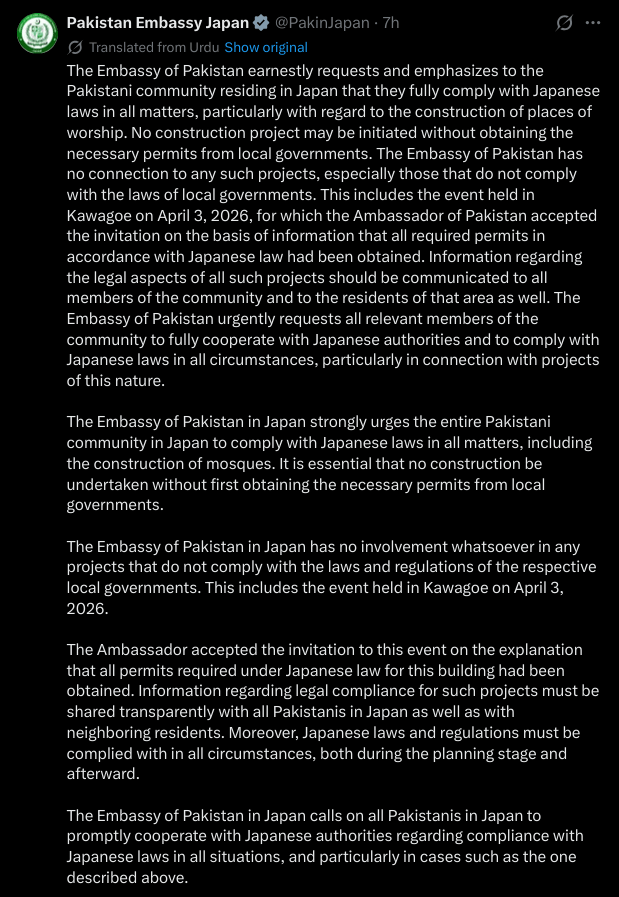
The embassy’s advisory is telling. When a diplomatic mission must publicly instruct its diaspora to follow basic laws, it signals that segments of the community view rules as flexible. The ambassador’s attendance, based on apparently false assurances, further muddies accountability. Similar dynamics have played out in Europe: parallel societies, demands for exemptions, and eventual political backlash when integration fails. Japan’s low-crime, high-trust homogeneity is not an accident. It stems from cultural cohesion and rigorous enforcement of shared norms.
Critics will call this “Islamophobia.” That reflexive label dodges the data. Mosques are houses of worship, but large ones with minarets function as community anchors that can accelerate demographic clustering. Japan’s birth rates are below replacement, and aging demands labor. However, importing groups with markedly different fertility rates, religiosity, and attitudes toward secular authority risks importing Europe’s mistakes—enclaves, grooming scandals, no-go pressures, and eroded social trust. Public opinion in Japan is shifting against unchecked change, as seen in resident complaints and protests.
Japan’s right to choose
Sovereignty means the Japanese people decide the pace and nature of immigration. They owe no apology for prioritizing their language, customs, Shinto-Buddhist heritage, and civic order. Successful minorities in Japan—Koreans, Chinese, Brazilians of Japanese descent—have integrated by accepting these terms. Religious freedom exists within the law, not above it. Building illegally and then negotiating demolition costs is not good faith.
The Kawagoe case should serve as a clarifying moment. Japan must enforce its codes without favoritism, monitor foreign-linked land purchases in sensitive zones, and tie residency more tightly to demonstrated respect for norms. Pakistan, for its part, should encourage its expatriates to be exemplary guests rather than presumptuous ones. Remittances and goodwill are valuable, but they do not purchase exemptions.
Nations are not hotels. They are inherited homes with rules refined over centuries. Japan has every right—indeed, a duty—to protect that inheritance. Tolerance is a two-way street. When communities treat the host’s laws as optional, the proper response is not accommodation but insistence on compliance. Demolish the unauthorized structure, apply the rules evenly, and signal clearly: Japan welcomes contributors who play by Japanese rules. Those who do not should not be surprised when the welcome ends.